Apple’s Mac mini is reportedly getting an update as memory shortages and local AI reshape the PC market

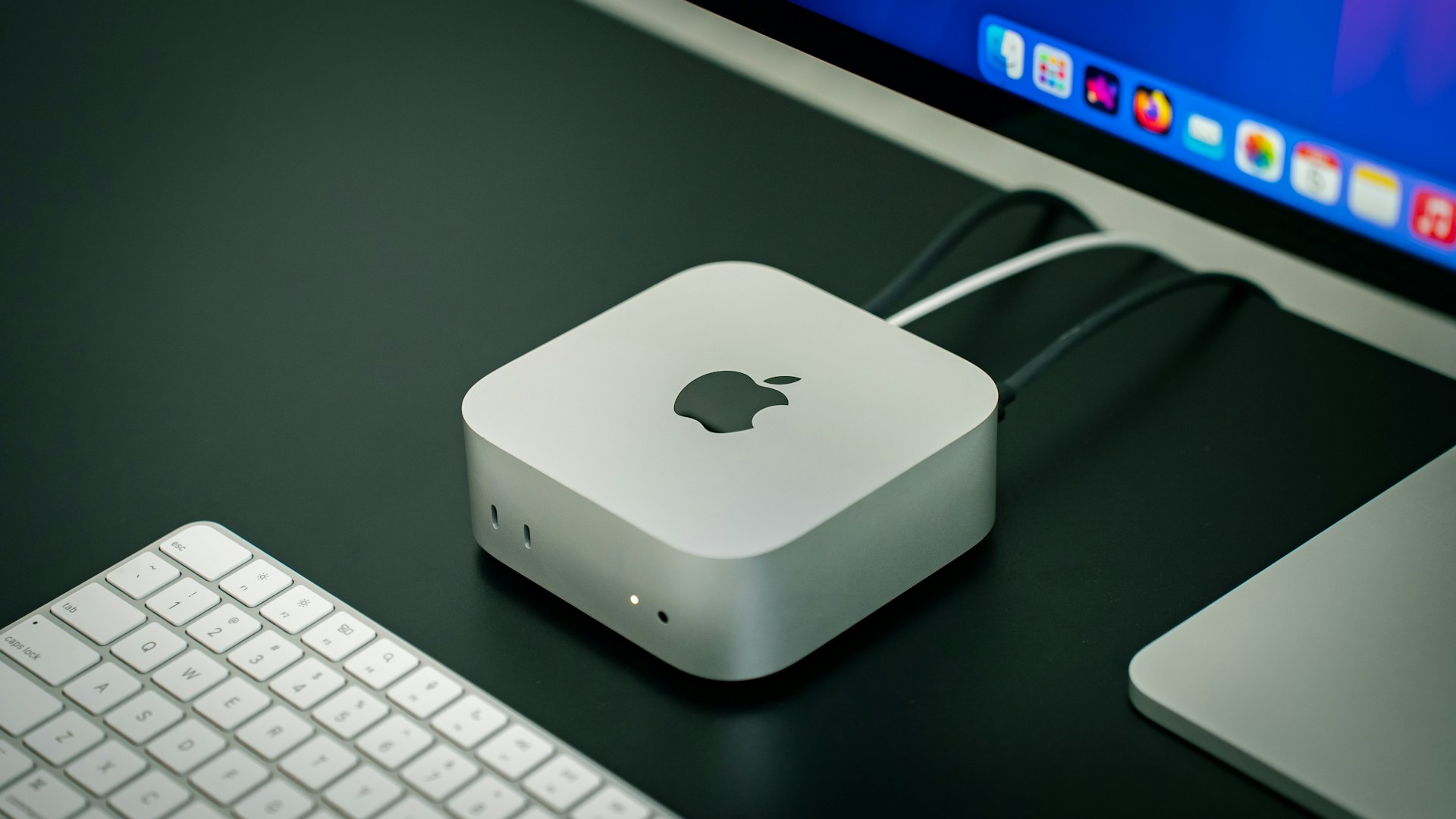
Apple could launch a new Mac mini within days, potentially before its expected September iPhone event, according to a new report.
The report says Apple has tested versions of the compact desktop with both M5 and M6 processors, although the company has not decided which chip will power the final product. The timing comes as the current Mac mini faces supply constraints and stronger demand from users running artificial intelligence applications locally.
That makes the reported Apple Mac mini 2026 refresh more interesting than a routine processor update. The machine has become one of the more accessible ways to run AI models and other demanding workloads without relying entirely on cloud services, while Apple’s ability to keep some configurations available has been affected by the wider memory shortage. Apple has already acknowledged pressure from higher memory costs across its hardware business, and reporting in recent months has linked the Mac mini’s supply problems to the same market conditions.
Apple may launch the Mac mini within days
The reported launch window is unusually close. Gurman’s latest report says Apple is preparing to introduce the next Mac mini in the coming days, which could put the announcement ahead of the company’s expected September event for its next iPhone generation. If that timetable holds, the Mac mini would arrive as a standalone hardware announcement rather than being bundled into Apple’s larger annual iPhone presentation.


Apple has not publicly confirmed the launch date, processor or specifications. The current Mac mini was introduced with M4 and M4 Pro options, so the uncertainty around the next chip is significant. Apple has reportedly tested both M5 and M6 versions, meaning even the generation of Apple silicon inside the next machine remains unsettled in the reporting.
The uncertainty also fits into a broader Apple silicon strategy that has been under scrutiny this year. Earlier Bloomberg reporting suggested Apple could take a different approach to its premium Mac processors, potentially moving high-end systems toward a future M7 generation while standard Macs continue on a more conventional path. That does not establish what will happen with the Mac mini, but it provides useful context for why Apple’s processor timetable may not look identical across every Mac category.

Local AI is changing the Mac mini’s appeal
The most revealing part of the latest report may have little to do with the processor itself. The Mac mini is reportedly seeing stronger demand because users are turning to it for local AI applications and models.
That matters because local AI changes the value proposition of a small desktop computer. Instead of serving mainly as a conventional machine for browsing, office work, coding or media, a compact Mac with sufficient memory can also become a relatively unobtrusive workstation for experimenting with models, development tools and other AI workloads.
Memory capacity is particularly important for these tasks. AI models can place substantial demands on system memory, which helps explain why configurations with larger memory capacities have attracted attention while the broader industry deals with tighter supplies. The Mac mini’s compact design also makes it easy to deploy in workspaces where a larger desktop would be excessive.
The result is a product category that sits at an interesting intersection of consumer computing and AI development. Apple does not need to turn the Mac mini into a dedicated AI machine for the market around it to change; users are already finding new reasons to buy a small, relatively powerful desktop.
M5 or M6? Apple has reportedly tested both
The processor question is likely to dominate discussion around the new model, but the available reporting leaves room for caution.
Apple has reportedly tested Mac mini versions using both M5 and M6 chips. That does not mean two versions will launch, nor does it establish that Apple will choose the newer architecture simply because it has tested it. The final configuration could depend on production schedules, supply and how Apple wants the Mac mini positioned against other Macs.
That distinction is important because Apple’s wider silicon roadmap appears to be becoming more segmented. The company’s reported plans for higher-end Macs suggest that different product categories may not move through processor generations at exactly the same pace.
For buyers, the practical question is therefore less about the name printed on the chip and more about what Apple does with memory, performance and pricing. Those factors will determine whether the new Mac mini is a meaningful upgrade for people already using an M4 model or simply a refreshed entry point for customers who have been waiting for the next generation.
Memory shortages complicate Apple’s Mac mini plans
The timing of the reported launch also puts Apple in an awkward supply environment.
The Mac mini has already experienced lengthy delivery estimates, with MacRumors reporting waits of four to 10 weeks for different configurations on Apple’s US online store. The publication linked the availability problem to the machine’s popularity for on-device AI alongside the ongoing memory chip shortage.
hat creates a difficult equation for Apple. Demand is being helped by a use case that requires capable processors and ample memory, while the components needed to support those configurations are themselves under supply pressure.
The problem extends beyond the Mac mini. AI infrastructure has increased demand for memory used in data centres, putting pressure on supplies available to consumer electronics manufacturers. TechCrunch reported earlier this month that Apple’s MacBook Air was also being affected by the global memory shortage, illustrating that the problem is no longer confined to smaller-volume Macs.
Apple is also preparing to assemble Mac mini computers in Houston later this year. The company has confirmed that the machines will be produced at its Houston facility, where Apple is expanding advanced manufacturing activity alongside its broader US production efforts.
That does not necessarily solve the immediate supply problem, but it gives the next Mac mini another dimension. Apple is preparing a new generation while also adding a US manufacturing location for the product, at a moment when demand and component availability are both putting pressure on its supply chain.
The Mac mini sits inside a busy Apple hardware pipeline
The Mac mini is only one part of an unusually crowded second half of Apple’s reported hardware calendar.
The September event is expected to bring new iPhones, including the company’s first foldable model, alongside new Apple Watch products. Bloomberg also expects Apple to introduce AirPods 5 as early as the September event, with two versions reportedly planned: one standard model and another with active noise cancellation.
The AirPods story is worth separating from Apple’s reported camera-equipped AirPods. The latter are reportedly being targeted for 2027, while the AirPods 5 could arrive much sooner. That distinction matters because Apple’s broader AI hardware ambitions are beginning to stretch across several product categories, but not every rumoured device belongs to the same launch cycle.
The iPad mini is another product to watch. MacRumors reported that Apple is planning a new iPad mini with an OLED display by the end of October. Earlier reports have pointed to other possible changes, including a new speaker system, greater water resistance and a newer processor, but those details remain less firmly established than the OLED timing.
Further Mac updates are also reportedly in development, including an M6 iMac and an entry-level MacBook Pro. A touchscreen MacBook Pro remains a longer-term project, reportedly involving an OLED display and redesigned chassis.
Taken together, those reports point to a packed Apple hardware pipeline, but the Mac mini occupies a particularly interesting position because its demand is being tied directly to the growing appetite for local AI computing.
What the Mac mini tells us about Apple’s AI strategy
Apple’s reported Mac mini plans connect closely with the silicon strategy discussed in earlier reporting this year. The company has been developing Apple silicon with machine learning capabilities at its core, while its wider hardware roadmap increasingly has to account for workloads that were far less important when the M1 arrived in 2020.
The Mac mini shows how that change can reach an ordinary desktop product. A computer that once competed mainly on size, price and general-purpose performance is now attracting users who care about memory capacity and sustained processing for AI workloads.
That does not mean every Mac buyer suddenly needs a machine for running AI models locally. For many consumers, cloud-based AI services will remain more convenient. But the growing interest in local processing gives Apple another reason to make its compact desktop more capable, particularly as developers and power users look for machines that can handle AI workloads without sending every task to a remote server.
The bigger question is whether Apple can keep supplying that hardware at a price that makes sense. A faster chip is only part of the equation when memory costs are rising and high-memory configurations are among the products facing supply pressure.
If the new Mac mini arrives in the coming days, the processor Apple chooses will get most of the attention. The more revealing story may be what the machine says about the changing economics of personal computing: AI is creating demand for more capable local hardware at the same time that the infrastructure behind AI is putting pressure on the components used to build it.
That makes the next Mac mini an important product to watch, not simply because it could be Apple’s next desktop refresh, but because it sits directly where Apple’s silicon ambitions, local AI demand and a strained memory market now meet.
Download the FREE Kaspersky Next Enterprise Security Guide here to explore the complete framework for simplifying security operations and building cyber resilience.
Go to TECHTRENDSKE.co.ke for more tech and business news from the African continent and across the world.
Follow us on WhatsApp, Telegram, Twitter, and Facebook, or subscribe to our weekly newsletter to ensure you don’t miss out on any future updates. Send tips to editorial@techtrendsmedia.co.ke