
Why Equity believes its technology platform is now as important as its KSh45.5bn half-year profit

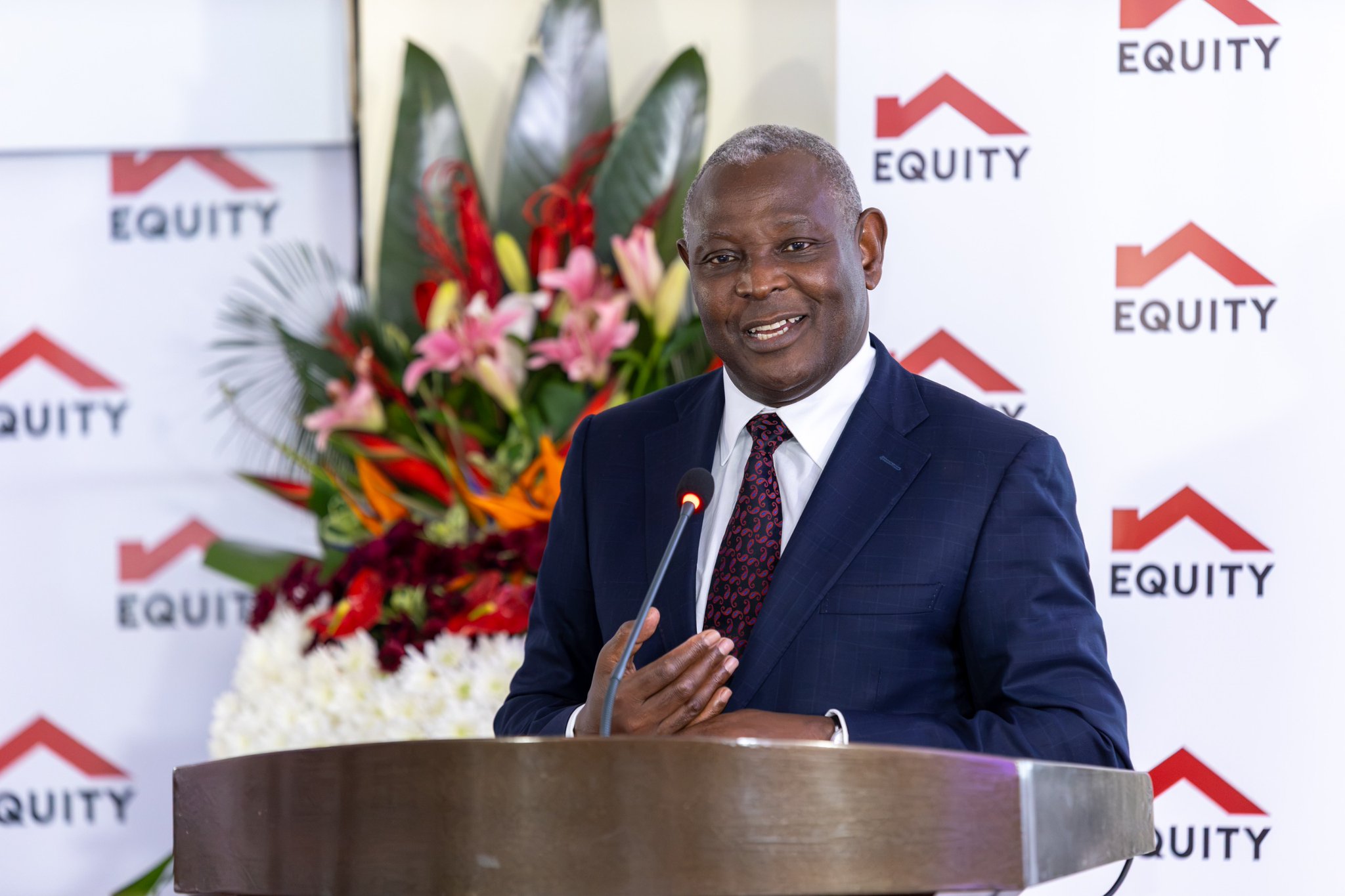
Equity opened the second half of 2026 with more than a strong set of earnings.
The group reported KSh45.5 billion in profit after tax, while double-digit growth in deposits and loans was matched by a story that ran deeper than the headline figures.
During its investor presentation, executives argued that the heavy lifting of the past five years has already been done, leaving the bank with a technology platform, regional footprint and operating model that they believe can deliver the same kind of performance across multiple markets with greater confidence.
The first half closed with customer deposits at KSh1.59 trillion, up 21%, net loans at KSh981 billion, up 19%, and total assets reaching KSh2.16 trillion.


Profit before tax climbed 39% to KSh57.8 billion, while return on equity reached 26.5%. Those numbers formed the headline, but the presentations and Q&A that followed spent more time explaining why management believes the operating model behind them can be repeated across East and Central Africa.
The headline numbers only tell part of the story
Equity’s income statement shows broad-based growth rather than one business carrying the results.

|
Metric |
H1 2025 |
H1 2026 |
Growth |
|---|---|---|---|
|
Interest income |
KSh84.3bn |
KSh91.2bn |
8% |
|
Net interest income |
KSh59.3bn |
KSh69.3bn |
17% |
|
Non-funded income |
KSh40.9bn |
KSh55.6bn |
36% |
|
Total income |
KSh100.2bn |
KSh124.9bn |
25% |
|
Staff costs |
KSh17.6bn |
KSh23.8bn |
35% |
|
Profit before tax |
KSh41.5bn |
KSh57.8bn |
39% |
|
Profit after tax |
KSh34.6bn |
KSh45.5bn |
32% |
|
Earnings per share |
KSh8.82 |
KSh11.61 |
32%
|
The fastest-growing line was non-funded income, which expanded 36%, comfortably outpacing net interest income. That matters because these revenues require less balance-sheet deployment than traditional lending, making them less dependent on loan growth alone.
During the Q&A, management said that growth came from several places at once: trade finance linked to cross-border business, loan appraisal fees as lending accelerated, higher transaction volumes through digital channels, and insurance income flowing into the broader “other income” category. James Mwangi went further, saying he expects that income stream to account for roughly half of revenue over time because of its stronger growth trajectory.
Digital banking has changed how Equity operates
The technology story sits at the centre of the presentation.
Nearly 89.7% of Equity’s customers now bank through digital channels, while 98.3% of all transactions happen outside bank premises.
That changes more than convenience; it changes how the bank uses its physical network.
Customer behaviour is already reflecting that transition. ATM usage fell 28%, branch transactions declined 1%, and activity continues moving toward mobile banking, internet banking, USSD, Equitel and POS channels.
Moses Nyabanda, Managing Director of Equity Bank Kenya, said the next phase isn’t about closing branches but changing what they do. Instead of acting primarily as transaction centres, branches are being repositioned as service and lead-generation points, allowing more customer interactions to happen digitally while staff focus on advisory services and business development.
Mwangi also outlined another ambition that stood out during the technology discussion.
“The next battle is to make social media channels transactional channels.”
That suggests the bank sees future growth in extending financial services into platforms where customers already spend their time, rather than expecting customers to return to traditional banking interfaces.
Management’s scorecard against its own targets
One of the presentation’s most revealing slides compared management’s guidance with the first-half outcome.
|
Metric |
2026 Guidance |
H1 2026 Actual |
|---|---|---|
|
Loan growth |
8–12.5% |
18.9% |
|
Deposit growth |
8–10% |
21.4% |
|
Return on equity |
25–30% |
26.5% |
|
Return on assets |
3.5–4.0% |
4.5% |
|
Cost-to-income |
46–49% |
48.6% |
|
NPL ratio |
7–9% |
9.5% |
Several growth measures exceeded expectations, particularly loans and deposits, while return on assets also finished above the annual target range. The main exception remains the NPL ratio, which sits above management’s upper target despite improving substantially from earlier periods.
Mwangi argued that forecasting performance accurately has become one of the group’s competitive advantages because the transformation programme has reached what he called an “equilibrium position,” where management understands how the business behaves.
Why East Africa sits at the centre of Equity’s growth thesis
The macroeconomic argument behind Equity’s strategy received almost as much attention as the financial results themselves.
Chief Economic Advisor Charlie Robertson argued that East Africa is entering conditions that resemble parts of Southeast Asia before their long industrial expansion, although he acknowledged that some pieces still need to fall into place.
His framework rests on three foundations:
-
stronger education outcomes,
-
cheaper and more reliable power over time,
-
favourable demographics.
“Education, power and demographics,” Robertson argued, are the combination that historically supported industrial take-off elsewhere.
He backed that view with country-specific examples.
The Democratic Republic of Congo has benefited from copper prices that strengthened export revenues and supported lower interest rates. Kenya has returned to double-digit loan growth after a period of weak lending. Uganda is approaching oil production, Rwanda continues expanding through infrastructure and construction, Tanzania’s reforms are opening investment opportunities, and South Sudan has seen oil exports recover.
Robertson also argued that East Africa’s combination of single-digit inflation across most markets, currency stability and continued investor appetite has left the region in a stronger position than several larger African economies often viewed as the continent’s main investment destinations.
Kenya and DRC are becoming the group’s defining growth markets
The discussion around Kenya and DRC became one of the presentation’s most compelling moments because management openly framed them as the two markets likely to shape the group’s next phase.
Nyabanda described Kenya’s recovery as the result of rebuilding customer relationships, tightening operational discipline and strengthening internal controls before returning to growth. He argued that Kenya’s role as East Africa’s gateway economy, combined with regional trade flows and a young population entering its earning years, creates a strong foundation for future expansion.
“Kenya’s position as a gateway to East Africa presents a significant opportunity for growth.”
Willy Mulamba, Managing Director of Equity BCDC, took a different approach.
He said DRC’s vast potential remains underdeveloped, but believes that greater access to financial platforms, credit and enterprise support can convert that potential into measurable growth within three years.
“DRC has always been known for its great potential. What we are seeing now is that potential beginning to convert into real growth.”
The bank’s own contribution figures show why this conversation matters. Operations outside Kenya now contribute roughly half of group assets, deposits and revenue, reinforcing management’s view that Equity has evolved into a regional business rather than one anchored primarily in Kenya.
Insurance has become more than a supporting business
Insurance occupied a surprisingly large part of the discussion, and the numbers explain why.
Gross written premiums grew 24%, total income rose 43%, profit climbed 34%, and assets expanded 27%.
The business has also reached a point where management describes its growth as self-funding, reducing the need for additional capital support from the wider group.
Mwangi made his boldest long-term prediction here, arguing that insurance could eventually become one of the group’s largest businesses because wealth creation naturally creates demand for protection, investment products and long-term savings.
That broader ecosystem thinking extends beyond insurance. Asset management has already secured its licence and is moving through its setup phase, giving the group another way to serve customers looking for higher-yield savings and investment products.
The balance sheet still has room to grow
The presentation repeatedly returned to liquidity because management believes it creates room for another phase of lending.
|
Metric |
H1 2026 |
|---|---|
|
Return on equity |
26.5% |
|
Return on assets |
4.5% |
|
Cost-to-income |
48.6% |
|
Loan-to-deposit ratio |
62% |
|
Cash and liquid assets |
61% |
|
NPL ratio |
9.5% |
Mwangi said 61% of the KSh2.16 trillion balance sheet sits in cash and liquid assets, while capital ratios remain comfortably above regulatory requirements.
Brent, another member of the executive team, argued that one of the next earnings drivers will come from moving more of those liquid assets into higher-yield lending, particularly among micro, small and medium-sized enterprises, while maintaining the operational efficiencies created through technology.
Management also highlighted that cost-to-income has already fallen from 51.7% to 48.6%, and believes further improvements remain achievable as digital distribution continues reducing the cost of serving customers.
What investors should watch next
The presentation closed with management outlining the factors it believes will determine whether the current pace of growth can continue.
Three themes stood out.
The first is asset mix: moving more capital from liquid assets into lending without compromising balance-sheet strength. The second is diversification, with insurance, technology and other non-bank businesses expected to grow faster than the core banking operation. The third is the maturation of regional subsidiaries, where management believes the path to Kenya-level profitability is shortening because the operating model has become easier to replicate.
That perspective also explains why the presentation spent so much time discussing execution rather than announcing a new strategy. The executives argued that the heavy lifting happened during the transformation programme, while the current phase is about proving that the same operating model can generate stronger earnings, higher returns and faster growth across multiple markets at the same time.
Whether that ambition plays out over the next few years will depend on conditions beyond the bank’s control, from commodity prices to interest rates and regional reforms. Even so, the first-half numbers make one point difficult to ignore: Equity’s growth story is now being written as much through software, trade finance, insurance and regional execution as it is through the balance sheet itself.
Download the FREE Kaspersky Next Enterprise Security Guide here to explore the complete framework for simplifying security operations and building cyber resilience.
Go to TECHTRENDSKE.co.ke for more tech and business news from the African continent and across the world.
Follow us on WhatsApp, Telegram, Twitter, and Facebook, or subscribe to our weekly newsletter to ensure you don’t miss out on any future updates. Send tips to editorial@techtrendsmedia.co.ke


