KCB Investment Bank eyes $3 billion fund as Kenya seeks a stronger domestic buyer for large investor exits

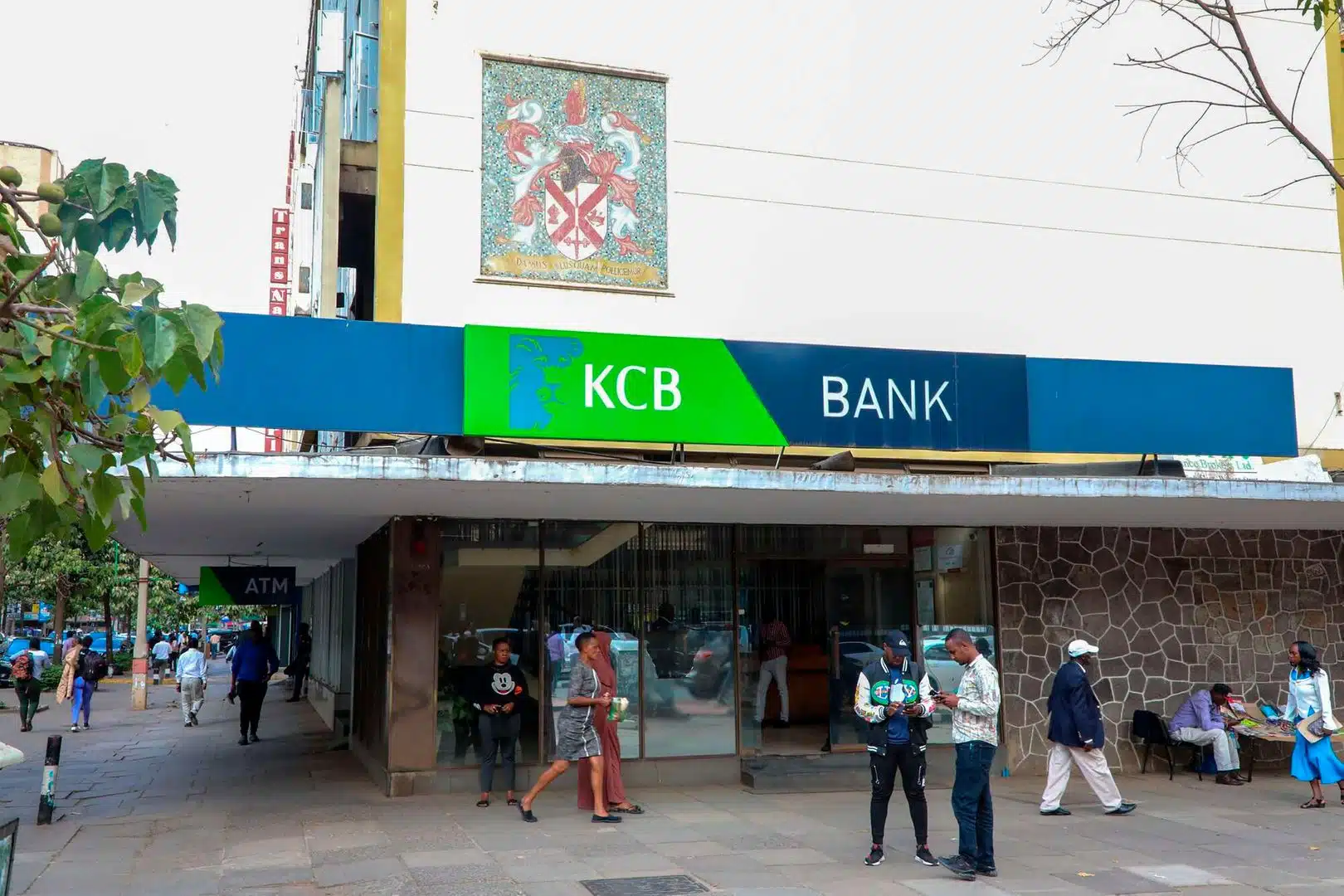
A deal worth KSh204 billion can disappear into a single headline, but the months of work behind it rarely make the front page. KCB Investment Bank has built its reputation advising on some of East Africa’s biggest transactions, from the Government of Kenya’s sale of a 15% Safaricom stake to Vodafone Group to the Bamburi Cement acquisition and large infrastructure financing deals across the region
Now, KCB Investment Bank Managing Director Maurice Opiyo is putting forward a broader idea, one that reaches beyond individual deals and into the architecture of Kenya’s capital markets. He argues that the country already has roughly KSh3.8 trillion in domestic institutional savings but has not organised that capital well enough to become a reliable buyer when large investors want to exit corporate stakes.
The ambition sits around a vehicle of roughly US$3 billion. More importantly, Opiyo frames it as an attempt to bring together long-term institutional capital that can participate in strategic investments rather than leaving large exits to depend solely on foreign buyers or negotiated private transactions.
KCB sees a gap in Kenya’s exit market
Opiyo’s assessment is that the Nairobi Securities Exchange has not yet become a sufficiently viable exit route for investors holding sizeable positions in Kenyan companies. One reason, he argues, is the valuation gap between private and public markets.


According to Opiyo, investors selling through private-market transactions can often achieve valuations that are roughly 30% to 50% above what public markets are willing to pay. That creates a strong incentive to avoid the exchange when exiting a large stake.
His proposed answer is to strengthen the domestic buyer base rather than relying solely on daily market liquidity. The idea is to bring together institutional investors and fund managers capable of participating in transactions that are much larger than ordinary portfolio flows.

A KSh3.8 trillion pool with limited coordination
The scale of the opportunity is one of the strongest parts of Opiyo’s argument.
He estimates Kenya’s pension schemes and collective investment schemes together hold close to KSh3.8 trillion that can be deployed across different asset classes, from government securities to private investments.
The issue, he argues, is not whether capital exists. The issue is whether enough of it can be coordinated around opportunities that require sizeable tickets, long investment horizons and the ability to take meaningful ownership positions.
KCB Investment Bank wants to play a leading role in bringing fund managers together around that objective, combining both capital and investment expertise so institutional investors can participate more actively in strategic investments and provide another source of buyers when existing shareholders are ready to exit.
Why KCB is targeting a $3 billion vehicle
The figure attached to the proposal is roughly US$3 billion.
Opiyo argues that a vehicle of that scale could materially change the market’s ability to participate in large transactions, particularly when recent deals have involved tickets of roughly $250 million to $400 million.
The important distinction is that this should not be understood as a launched or fully capitalised fund.
Instead, the interview points to a target or ambition around building a larger institutional investment platform that could bring together long-term investors with both capital and governance expertise.
That also explains why Kiza should be treated separately. Opiyo describes Kiza as an internally built platform with an initial SME focus, while also discussing broader engagement with institutional investors. The interview does not establish that Kiza itself is the proposed US$3 billion vehicle.
East Africa’s capital story goes beyond Kenya
One of the strongest themes running through the wider interview is that Opiyo rejects a common assumption about African markets.
His argument is straightforward: East Africa does not lack capital.
Instead, he says the bigger challenge is moving that capital efficiently across the region without introducing unnecessary currency risk. Pension money already moves between markets such as Uganda, Rwanda and Kenya, while businesses continue expanding across borders as regional integration deepens.
He also argues that African risk is often priced more aggressively than the underlying macroeconomic picture justifies. Better local-currency investment infrastructure, in his view, would allow more domestic capital to flow into productive investments without creating additional foreign-exchange risk.
That broader regional perspective makes the proposed vehicle less about one country and more about positioning Nairobi as a stronger centre for East African capital.
The case for active domestic ownership
Another notable feature of Opiyo’s proposal is that it extends beyond passive investing.
Throughout the interview, he describes investment banking as a process built on due diligence, legal work, tax structuring, strategic advice and governance, long before a transaction reaches the public.
The same thinking carries into his vision for institutional capital.
Rather than simply holding shares, long-term investors could take a more active role in businesses through governance, board participation and long-term value creation.
The return argument also forms part of that case. While government infrastructure bonds may offer attractive lower-risk yields, Opiyo says equity investments target materially higher returns because they involve ownership, business growth and eventual exits.
Where the NSE and new investment products fit
The proposal arrives as Kenya’s capital markets are also developing products aimed at broadening participation.
The Capital Markets Authority has approved the WSA Banking Index ETF, a locally domiciled exchange-traded fund being developed by Wall Street Africa and managed by Tradiam Asset Managers. The product is intended to track the NSE Banking Sector Index and give investors exposure to a basket of listed banks through a single security, although it still requires NSE approval before trading begins.
That development serves a different purpose from KCB’s institutional proposal.
The banking ETF is designed to simplify diversified exposure for investors, while KCB’s proposal addresses a different challenge altogether: assembling enough institutional capital to absorb large corporate stakes when investors seek exits.
Digital investment platforms such as Ziidi Trader also widen access from another direction, making listed investing more accessible for retail participants.
Taken together, these developments suggest Kenya’s capital markets are expanding both the ways smaller investors enter the market and the ways larger pools of capital could eventually support bigger transactions.
What the proposal could mean for Kenya’s capital markets
If the structure reaches the scale Opiyo describes, its significance would extend beyond daily trading volumes on the NSE.
A stronger domestic buyer base could give companies and existing shareholders another route for large transactions while allowing more Kenyan institutional capital to participate directly in businesses that might otherwise remain in private ownership or be acquired by foreign strategic investors.
It could also reshape how pension money participates in corporate ownership. Instead of remaining concentrated in conventional portfolios and fixed-income instruments, larger pools of domestic savings could become more active participants in strategic equity investments where governance and long-term value creation matter alongside financial returns.
Kenya already has substantial institutional savings, a stock market valued at more than KSh4 trillion, new investment products and digital trading platforms.
The bigger question is whether those different pools of capital can be connected in ways that work for companies raising capital, investors seeking returns and shareholders looking for credible exit routes.
What remains uncertain
The US$3 billion figure remains an ambition rather than committed capital, and several questions will determine how much difference the proposal ultimately makes.
Those include how much money pension schemes and fund managers would commit, what investment mandate the vehicle would operate under, how governance would work and how investors would eventually realise returns.
The same caution applies to the valuation argument. Opiyo’s assessment of the private-market premium reflects his view of how large transactions are priced and should not be interpreted as evidence that every private deal commands a 30% to 50% premium over an exchange valuation.
What the interview makes clear is the problem KCB Investment Bank is trying to solve.
Kenya already has substantial domestic savings. The challenge, in Opiyo’s view, is organising that capital into a buyer with enough scale, expertise and patience to participate in the kind of corporate transactions that have long shaped East Africa’s biggest deals.
Download the FREE Kaspersky Next Enterprise Security Guide here to explore the complete framework for simplifying security operations and building cyber resilience.
Go to TECHTRENDSKE.co.ke for more tech and business news from the African continent and across the world.
Follow us on WhatsApp, Telegram, Twitter, and Facebook, or subscribe to our weekly newsletter to ensure you don’t miss out on any future updates. Send tips to editorial@techtrendsmedia.co.ke