

The Nairobi Securities Exchange (NSE) is exploring a secondary vehicle that could help private equity and development finance investors exit stakes in Kenyan businesses, as the bourse works with the Nairobi International Financial Centre (NIFC) to strengthen the country’s capital-market architecture.
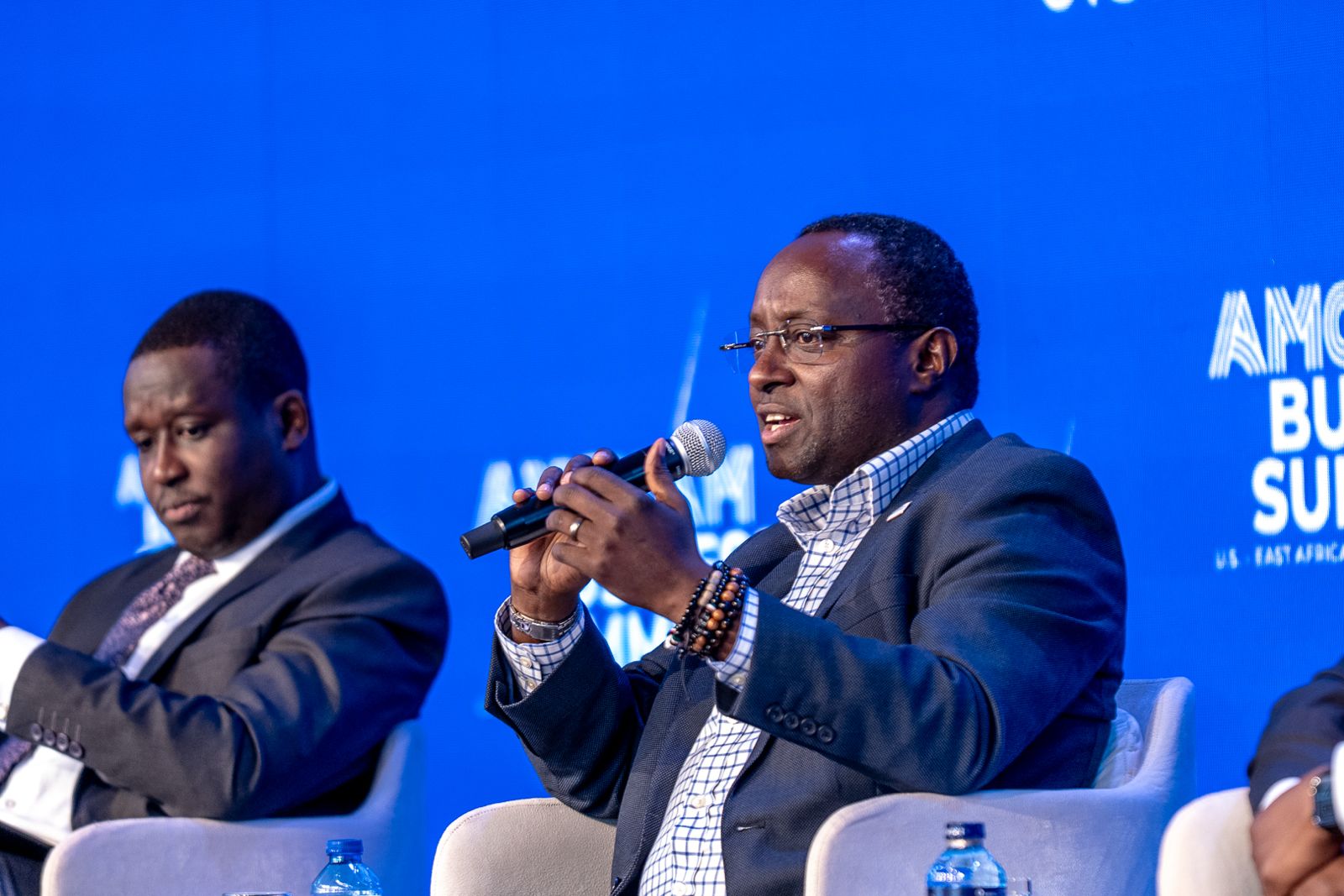
NSE Chief Executive Frank Mwiti disclosed the proposal during a panel themed “Building the Capital Architecture for Regional Growth” at the 2026 American Chamber of Commerce Kenya Summit. He said the exchange is considering a secondary fund or vehicle whose mandate would be to act as an exit route for investors holding stakes in portfolio companies that have reached the point where their backers want to sell.
“We’re in the process of exploring enlisting a secondary fund, or let’s call it a secondary vehicle, whose mandate will be to ideally act as an exit ramp for entities looking to exit their portfolios,” Mwiti said.
NSE explores secondary vehicle for PE and DFI exits
The proposed vehicle is primarily intended to address the difficulty private equity and DFI investors face when seeking to exit otherwise healthy portfolio companies. These investors typically commit capital with a defined investment horizon, but selling a stake can become difficult when there are few willing buyers, valuation expectations diverge, or the public market cannot readily absorb the transaction.

Mwiti said the NSE wants to bridge the gap between investors seeking exits at valuations that make sense and the solutions the exchange can provide. In Kenya, such exits have often taken place through secondary buyouts, where another strategic or financial investor acquires the stake of the exiting shareholder.
A secondary vehicle could offer a more structured route by creating a potential buyer or facilitating transactions involving investors seeking to unwind their positions. However, the NSE has not yet disclosed the proposed vehicle’s capitalisation, ownership structure, investment mandate, launch date or whether it would directly purchase stakes. The initiative remains under exploration.

The proposal forms part of the NSE’s broader effort to make the public market more useful to businesses and investors. The exchange has also been working on company-readiness initiatives, including its Ibuka Programme, which supports businesses preparing for eventual access to capital markets through governance, capital structuring and investor-readiness support.
Family-owned businesses emerge as another target
The NSE is also developing a separate proposition for family-owned enterprises, particularly businesses navigating intergenerational wealth transfer.
Mwiti said the exchange had identified a need for a differentiated approach that recognises the specific circumstances of family-owned businesses. Such enterprises may be considering partial ownership sales, succession arrangements, broader shareholder participation or a way to provide liquidity to family members while retaining a stake in the business.
“The requirement there is to have a very differentiated proposition that speaks to the uniqueness, the peculiarities, and the customized solutions that family-owned businesses want,” he said.
The family-business proposition is distinct from the proposed secondary vehicle for PE and DFI exits, although both initiatives address the broader question of how owners and investors can realise value from businesses through the capital markets.
The NSE’s recent work to bring more closely held businesses into public markets provides relevant context. Family Bank, for example, joined the exchange through a listing by introduction in 2026, illustrating how a business can transition into a public ownership and governance environment without following a conventional IPO fundraising process.
NIFC backs deeper capital-market structures
NIFC Chief Executive Daniel Mainda said the organisation is partnering with the NSE on the initiative, describing the effort as part of a broader push to create a functioning “360-degree loop of capital”.
Mainda said financial centres need to support market depth and innovation in financial services, arguing that investors who put money into startups and other businesses should have credible ways to exit their investments.
“If now we can create a system whereby PEs and VCs can actually exit through the exchange on their assets, then we have actually succeeded in that whole loop,” he said.
He added that NIFC’s focus is on collaboration with institutions including Invest Kenya and the NSE, with the aim of improving the structures through which capital is raised, deployed and eventually realised.
His comments also point to a structural issue in Kenya’s financial system: the country has substantial pools of capital, but the mechanisms connecting that money to investable businesses and exit transactions remain underdeveloped.
KCB’s proposed $3 billion reserve adds institutional capital context
The NSE’s proposal comes as KCB Investment Bank leads a separate industry initiative to establish a US$3 billion, or approximately KSh388 billion, reserve aimed at supporting investor exits through the NSE.
KCB Investment Bank Managing Director Maurice Opiyo said the proposed reserve would bring together institutional capital from pension funds, collective investment schemes and other fund managers to help unlock exits and support large transactions. The supplied reporting places the proposed vehicle’s expected operational start in the fourth quarter of 2026.
Opiyo said Kenya’s pension funds and collective investment schemes represent a combined pool of approximately KSh3.8 trillion in assets under management, but that the capital needs to be organised more effectively to support domestic businesses and investor exits.
“We realised that to see exits happen via the NSE demands that we reorganise our market,” Opiyo said in an interview.
The KCB-led initiative is separate from the secondary vehicle being explored by the NSE. While both proposals address the challenge of investor exits, the KCB plan focuses on mobilising institutional capital, whereas Mwiti’s announcement concerns a potential exchange-linked vehicle whose mandate would be to serve as an exit ramp for PE and DFI investors.
Opiyo has also pointed to the valuation gap between private and public markets as a barrier to exits. He said private-market transactions can sometimes command premiums over public-market valuations, creating a challenge for investors seeking to transition from one market to the other. Such claims require careful interpretation because valuations vary by company, transaction structure, market conditions and investor expectations.
Kenya’s exit market still faces liquidity and valuation hurdles
The proposed vehicles are intended to address a persistent weakness in Kenya’s capital markets: the difficulty of converting ownership in a private or closely held business into cash at a valuation acceptable to the seller.
For private equity and DFI investors, the challenge is often tied to the end of an investment horizon. A company may have strong operations and growth prospects, but its shareholders still need a credible buyer when they decide to exit. Where a secondary buyer is unavailable, an IPO may offer an alternative, although that route involves preparation, regulatory requirements, investor demand and the ability to sustain trading after listing.
The NSE’s market-development efforts, including its work to expand the investor base and prepare companies for public-market participation, address parts of this problem. Yet a larger number of trading accounts or a higher aggregate market capitalisation does not automatically create the depth needed to absorb a sizeable institutional exit.
The exchange recently crossed KSh4 trillion in market capitalisation, demonstrating its importance within Kenya’s financial system. Its market value remains concentrated among a relatively small number of large counters, however, which underscores the difference between the size of the market and the liquidity available for every potential issuer or shareholder.
Real ESG impact doesn’t happen in panels alone, it happens in the rooms where financiers, operators, and policymakers actually align. Our GreenShift Forum 2026 cuts the noise, bringing together the people rewiring Africa’s sustainability and energy frameworks for one focused day in Nairobi. Secure your seat.
Go to TECHTRENDSKE.co.ke for more tech and business news from the African continent and across the world.
Follow us on WhatsApp, Telegram, Twitter, and Facebook, or subscribe to our weekly newsletter to ensure you don’t miss out on any future updates. Send tips to editorial@techtrendsmedia.co.ke