CBK approves Nedbank’s 66% stake in NCBA as questions turn to the premium valuation

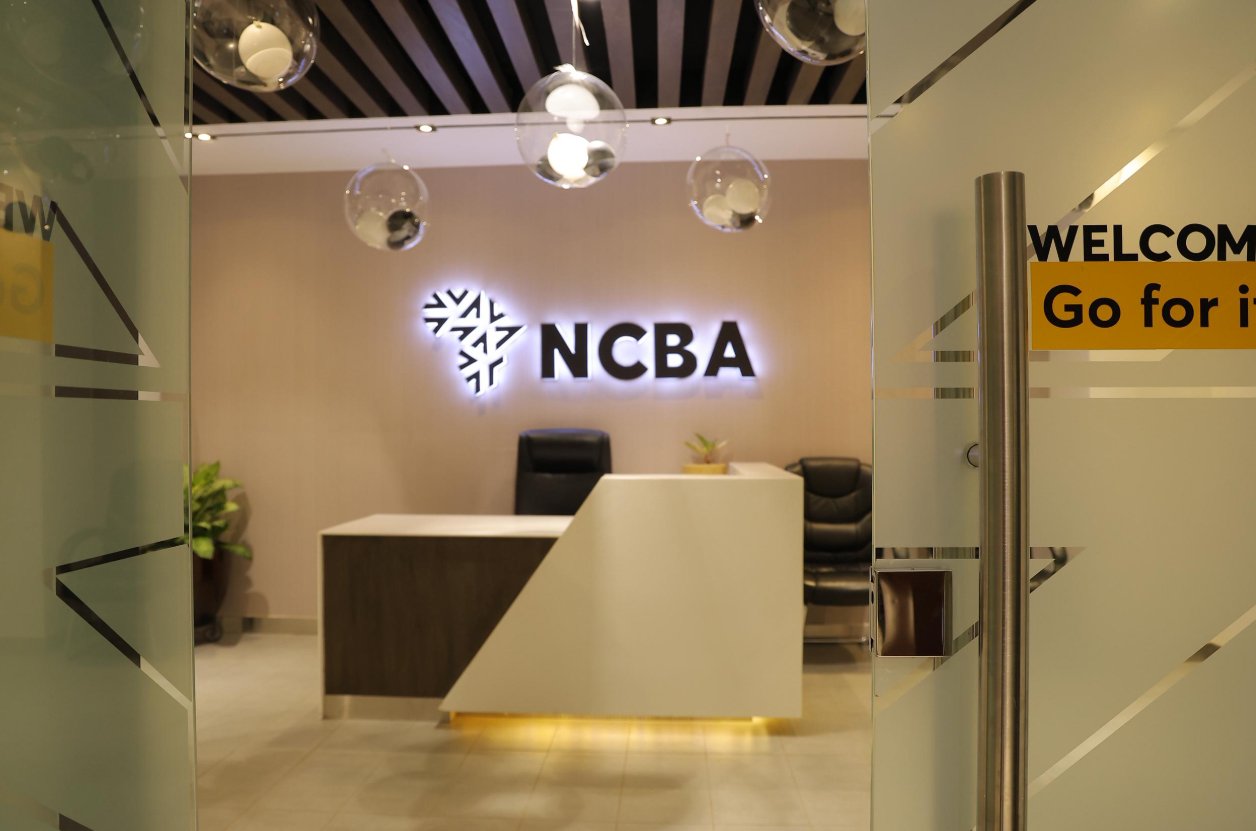
The Central Bank of Kenya has approved Nedbank Group Limited’s acquisition of up to 66 percent of NCBA Group, taking the KSh116.3 billion transaction into its final stretch.
CBK granted the approval on August 28, 2026, under Section 13(4) of the Banking Act. The acquisition will take effect once the transaction becomes unconditional and the remaining conditions are satisfied.
There is more to the latest development than the regulatory clearance. NCBA says Nedbank’s tender offer, which closed on July 10, attracted valid acceptances representing approximately 79.9 percent of the company’s issued ordinary shares, against the 66 percent stake sought. Completion is expected toward the end of the third quarter of 2026.
That puts the deal much closer to its closing point and gives a clearer picture of how shareholders have responded to Nedbank’s offer.

Nedbank is closer to taking control of NCBA
The 79.9 percent acceptance figure needs to be read carefully. It represents valid acceptances received under the tender offer, rather than the final percentage Nedbank will necessarily own.
Still, the level of participation is significant. The acceptances represented an oversubscription of 121 percent against the shares sought under the offer, which NCBA described as evidence of broad shareholder support for the transaction.

The remaining process is now largely about satisfying the outstanding conditions. NCBA says a number of regulatory approvals have already been obtained, including from South Africa’s Prudential Authority and Financial Surveillance Department, Kenya’s Capital Markets Authority, the National Bank of Rwanda, the Bank of Tanzania and several regional competition authorities.
The company says the remaining regulatory approvals are progressing according to their respective timelines and sequencing.
Once the offer becomes unconditional, accepting shareholders are expected to receive settlement within 14 trading days, subject to satisfaction of the remaining conditions.
NCBA Managing Director John Gachora said the bank welcomed CBK’s review and approval and would focus on managing the transition responsibly.
For NCBA, therefore, the transaction is no longer a proposal sitting on the horizon. The ownership transition is now approaching the point where execution becomes the main issue.
Why Nedbank was willing to pay a premium for NCBA
The valuation remains one of the most interesting aspects of the acquisition.
Nedbank is paying about 1.4 times NCBA’s book value, putting the transaction above several recent banking deals in the region. Access Bank’s acquisition of National Bank of Kenya was priced at about 1.25 times book, Equity Group’s acquisition of Rwanda’s Cogebanque at about 1.26 times, while a consortium acquiring a 39 percent stake in Sidian was valued at about 0.95 times book.
Nedbank CEO Jason Quinn does not dispute that the NCBA deal carries a premium. His argument is that the South African bank needed control and that a controlling stake commands a higher price.
When Quinn took over at Nedbank, he said the bank conducted a strategic review of its operations and capital allocation. One conclusion was that Nedbank should put capital into businesses where it could exercise meaningful control.
That thinking helped explain the bank’s decision to exit its roughly 22 percent holding in Ecobank Transnational.
Nedbank had a substantial investment in Ecobank, but Quinn said the minority position limited its ability to influence the bank’s strategy. He also pointed to difficulties around extracting dividends from the West African business.
After the exit, Nedbank was looking for a banking business with stronger links to Southern and Eastern Africa and where it could have control.
NCBA fitted that requirement.
Quinn’s case is therefore built around more than the price of NCBA’s financial assets.
NCBA’s digital business is central to the valuation
The strongest part of Nedbank’s argument for the premium concerns NCBA’s technology.
“NCBA has amazing technologies,” Quinn said when discussing the transaction.
That assessment reflects the scale NCBA has reached in digital financial services. The bank’s digital lending business has become a major contributor to group earnings, while its technology platform has expanded into areas beyond consumer credit.
In 2025, NCBA reported KSh23.4 billion in profit after tax and KSh73.3 billion in operating income. Digital lending reached about KSh1.4 trillion during the year, while the digital business contributed roughly KSh9 billion in profit before tax.
The bank has also been building its corporate technology capabilities. Its ConnectPlus platform, for example, was designed around cloud-native architecture, microservices and open banking APIs, covering areas such as payments, liquidity management, collections and trade finance.
That is important to Nedbank because conventional price-to-book analysis does not capture the full value of technology that can potentially be deployed across multiple markets.
Quinn argued that NCBA has capabilities Nedbank can take into South Africa and other markets. If those systems and products can be adapted successfully elsewhere, Nedbank is acquiring something that has value beyond NCBA’s existing customer base.
That does not make the 1.4 times book valuation automatically cheap. It does explain why Nedbank is looking at NCBA differently from a conventional bank acquisition.
The dividend record adds another layer to the valuation
NCBA’s dividend history also formed part of Nedbank’s case for the price.
Quinn pointed to the bank’s ability to generate cash and return it to shareholders as one of the factors supporting the valuation.
NCBA paid KSh11.7 billion in dividends for 2025, up from KSh9.1 billion in 2024. The group has therefore been able to combine investment in its business with meaningful shareholder distributions.
That matters to an acquirer paying a premium because part of the value comes from the earnings the target is already producing.
Nedbank is not betting exclusively on a future turnaround. It is acquiring a profitable institution with an established dividend record and then looking for additional value from its digital capabilities and regional footprint.
What Nedbank brings to NCBA
The investment case also runs in the other direction.
Nedbank expects to bring capabilities that can strengthen areas of NCBA’s business where the South African group has greater depth. Quinn highlighted corporate banking and investment banking, as well as opportunities around energy and resources.
That could give NCBA access to greater expertise and capacity for large corporate transactions, infrastructure financing, trade and capital markets.
The two businesses therefore bring different strengths to the combination.
NCBA has a strong Kenyan franchise, a growing digital business and operations across East Africa. Nedbank brings capital, a large South African banking operation and deeper experience in several institutional banking segments.
For Nedbank, the attraction is not simply owning another bank in Kenya. It is having an established East African platform that can work alongside its Southern African operations.
NCBA will retain its brand
Customers should not expect NCBA to disappear once the transaction closes.
Quinn has said Nedbank sees substantial value in the NCBA brand and intends to retain it.
That makes commercial sense. NCBA already has a recognised name in Kenya and a customer base across the region. Replacing that identity with Nedbank would risk throwing away part of what the South African bank is paying for.
The likely model is for NCBA to continue operating under its existing brand while being part of the wider Nedbank Group.
Quinn has described NCBA as Nedbank’s route into the Kenyan market.
That means the acquisition is designed around using an existing local franchise rather than rebuilding one from scratch.
Kenya gives Nedbank an East African platform
The geographical logic behind the transaction extends beyond Kenya.
Quinn sees Nedbank’s existing Southern African operations and NCBA’s East African presence as complementary pieces of a broader African banking strategy.
NCBA already operates in Kenya, Uganda, Tanzania and Rwanda, with a joint venture in Côte d’Ivoire, while Nedbank has operations across several Southern African markets.
The combined footprint gives Nedbank a stronger position to pursue corporate banking and trade opportunities across the continent.
Quinn has also pointed to growing commercial relationships between African economies and markets such as China and India. For Nedbank, a stronger East African presence creates another route into those trade flows.
The strategy therefore depends on NCBA remaining a strong local bank while gaining access to capabilities and relationships within the wider Nedbank Group.
NCBA shareholders are getting exposure to Nedbank
The consideration structure gives the transaction another interesting dimension.
The deal offers NCBA shareholders a combination of cash and Nedbank equity, with the consideration structured around an 80:20 equity-to-cash split.
Quinn said the structure was designed to give shareholders a liquidity option while allowing those who prefer to remain invested to participate in Nedbank’s future performance.
If all NCBA shareholders offered the equity option take it up, Quinn said they would collectively hold about 9 percent of Nedbank.
That would turn some existing NCBA investors into shareholders of the South African banking group that will control NCBA.
The Johannesburg Stock Exchange component also gives participating investors access to a deeper and more liquid capital market.
For shareholders who choose the equity route, the transaction therefore represents more than a change in the ownership of NCBA. Their investment exposure moves into a larger regional banking group.
The shareholder response gives Nedbank a strong starting point
The 79.9 percent level of valid acceptances is particularly important because it provides a clearer picture of shareholder participation than the original offer alone.
Nedbank sought approximately 66 percent of NCBA’s issued ordinary shares. By the time the tender offer closed on July 10, valid acceptances had been received for approximately 79.9 percent of the company’s issued ordinary share capital.
That does not mean Nedbank will simply walk away with 79.9 percent. The offer mechanics and final settlement determine the ownership outcome.
It does, however, show that the proposed acquisition attracted enough acceptances to exceed the stake Nedbank was seeking.
NCBA itself described the participation as reflecting broad support for the transaction and confidence in its strategic rationale.
That gives Nedbank a relatively strong starting position as it prepares to complete the acquisition.
What happens to NCBA’s dividends?
One question that will remain important for existing shareholders is whether NCBA’s dividend policy changes after Nedbank takes control.
Quinn has been careful on that point.
He said dividend decisions would remain a matter for the NCBA board and indicated that Nedbank was comfortable with the bank’s existing approach.
That leaves room for the policy to evolve as the business changes, but there is no basis to assume that Nedbank intends to radically alter it immediately.
The same principle applies to the wider business. Nedbank is acquiring NCBA because of the qualities it already possesses, so preserving the earnings engine will be central to making the transaction work.
Basel III differences are unlikely to derail the deal
The acquisition also brings NCBA into a group operating under South Africa’s more comprehensive implementation of Basel III, while Kenya has taken a phased and selective approach to some elements of the framework.
Quinn does not view that difference as a major obstacle.
He has described NCBA as adequately capitalised and expressed confidence in Kenya’s prudential framework and CBK’s supervision of the banking sector.
The regulatory requirements will still have to be managed once NCBA becomes part of Nedbank Group, but the difference in capital frameworks does not appear to have weakened Nedbank’s conviction in the transaction.
The real test begins after completion
CBK’s approval brings the acquisition close to its final stage, but it does not settle the bigger question surrounding the KSh116.3 billion price.
Nedbank has already received valid acceptances representing about 79.9 percent of NCBA’s issued shares against the 66 percent sought. Completion is expected toward the end of the third quarter, provided the remaining conditions and regulatory approvals are satisfied.
The shareholder response gives the transaction a strong base. The harder part comes after completion, when Nedbank has to demonstrate that the qualities it identified in NCBA can produce the returns behind the premium.
That means getting value from NCBA’s digital capabilities without weakening the business that built them. It means using Nedbank’s corporate and investment banking expertise to deepen NCBA’s regional business. It also means making the two banks’ geographical footprints work together in a way that produces more than either could achieve alone.
The 1.4 times book valuation will eventually be judged on those results.
For now, Nedbank has secured CBK approval, its tender offer has attracted acceptances well above the stake it sought, and completion is expected before the end of the third quarter.
The acquisition is moving from negotiation and regulatory review toward ownership and execution. That is where Nedbank’s KSh116.3 billion bet on NCBA will face its real test.
Real ESG impact doesn’t happen in panels alone, it happens in the rooms where financiers, operators, and policymakers actually align. Our GreenShift Forum 2026 cuts the noise, bringing together the people rewiring Africa’s sustainability and energy frameworks for one focused day in Nairobi. Secure your seat.
Go to TECHTRENDSKE.co.ke for more tech and business news from the African continent and across the world.
Follow us on WhatsApp, Telegram, Twitter, and Facebook, or subscribe to our weekly newsletter to ensure you don’t miss out on any future updates. Send tips to editorial@techtrendsmedia.co.ke