
iPhone 18 Pro preview: The iPhones that changed Apple’s formula and what comes next

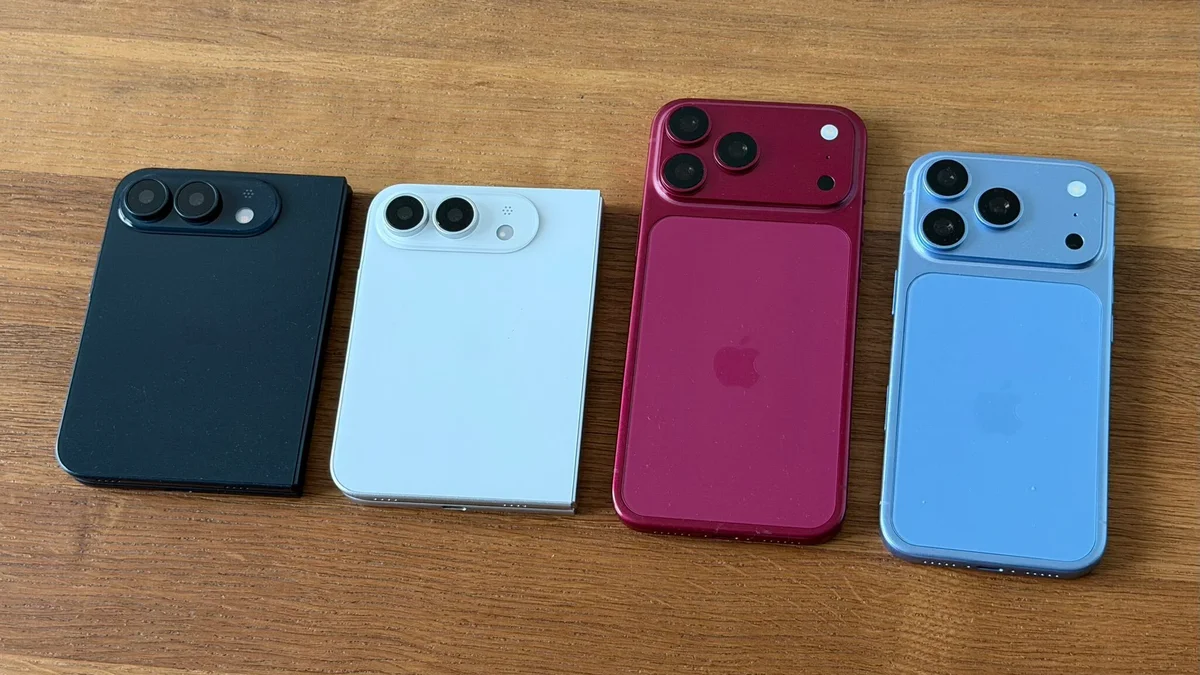
Apple will unveil the iPhone 18 Pro later today, alongside its first foldable iPhone, according to the company’s announced launch plans. Reports ahead of the event point to a familiar Pro design with several significant changes under the surface, including a new A20 Pro chip, a variable-aperture main camera, a smaller Dynamic Island, 12GB of RAM and Apple’s C2 modem.
Most of those specifications remain unconfirmed until Apple takes the stage. But the 18 Pro arrives with a more interesting problem than simply improving on the 17 Pro. After almost two decades of iPhone releases, Apple has to keep refining a product whose basic formula is already highly mature.
That raises a useful question before tonight’s launch: what actually makes an iPhone great?
The answer has changed considerably since the original iPhone. Some generations stand out because they introduced technologies that became defining parts of the platform. Others are remembered because they established a formula that Apple continued refining across subsequent models.

The iPhone 18 Pro belongs to the second category unless Apple has a surprise in store.
The iPhones that changed the formula
The strongest historical iPhones were not always the fastest models available when they launched.

The iPhone 4 introduced the Retina display and a design that became one of Apple’s most recognisable. The iPhone 5S paired Touch ID with Apple’s first 64-bit smartphone processor while retaining the compact aluminium design of the iPhone 5. The iPhone X then removed the Home button, introduced Face ID and moved the iPhone to an OLED display with gesture navigation.
Those changes affected how people used the device rather than simply improving a specification.
The iPhone 5S is particularly interesting because it combined several mature elements into a compact product at a point when smartphone hardware was still developing quickly. Its design also gave Apple a distinctive premium identity that remained influential long after the model disappeared from sale.
The iPhone X had a different effect. Face ID, the notch and gesture navigation established the interaction model that Apple would continue using through subsequent generations. The phone looked and operated differently enough from previous iPhones to make the change immediately obvious.
That kind of transformation is harder to achieve now. Smartphones have settled around a familiar rectangular form, large displays, multiple cameras and increasingly powerful processors. There are fewer fundamental components left for Apple to introduce for the first time.
The 11 Pro established the modern Pro camera
Apple’s modern Pro strategy became much clearer with the iPhone 11 Pro.
The three-camera system brought together wide, ultrawide and telephoto perspectives in a single iPhone. Improvements in computational photography and low-light performance made the system substantially more versatile, giving Apple a camera platform that could compete more directly with the best smartphone photography systems.
The importance of the 11 Pro goes beyond the hardware introduced in that generation. Subsequent Pro models continued developing the same basic approach.
The 13 Pro added ProMotion and further camera improvements. The 15 Pro changed the physical construction with titanium and replaced Lightning with USB-C, giving the Pro line a more useful connection for high-speed data transfers and professional video workflows.
The 17 Pro continued that camera-focused progression. Its telephoto camera moved to a 48MP sensor and a 4x focal length, while the three rear cameras became more closely matched in capability.
That progression shows how Apple’s Pro strategy has evolved. The company is no longer adding cameras simply to increase the number of available focal lengths. It is trying to make the entire camera system more consistent and useful across different shooting situations.
The problem with annual Pro upgrades
The same history also shows why recent iPhones can be difficult to distinguish from one another.
The iPhone 16 Pro introduced the A18 Pro, a 48MP ultrawide camera, 5x telephoto capability and Camera Control, alongside larger displays and thinner bezels. It was a highly capable phone, but the changes were less obvious to someone upgrading from the previous Pro generation.
The 15 Pro had a clearer set of physical and functional changes. Titanium reduced the phone’s weight, USB-C altered how users could connect accessories and storage, and the cameras received substantial improvements.
The 17 Pro again brought meaningful camera and performance improvements, but its biggest advances became more apparent when compared with older Pro models than when placed directly beside the previous generation.
That distinction is important for the 18 Pro. A phone can be substantially better than an iPhone from several generations earlier while still offering an unconvincing reason for someone with a 17 Pro to upgrade.
Apple’s challenge is therefore partly about accumulated improvements. A new Pro model has to work within a formula that already delivers strong cameras, high-end displays, fast processors, long software support and premium construction.
The iPhone’s advantage extends beyond hardware
Apple’s position also makes the hardware comparison more complicated.
An iPhone is part of a wider platform involving services, accessories and other Apple devices. Features such as AirDrop, iMessage, FaceTime and AirTags become more useful when the people and devices around the user are also within Apple’s ecosystem.
That creates switching costs that a specification comparison does not capture.
It also gives Apple room to introduce improvements gradually. A camera does not have to become dramatically better every September for the overall product to remain competitive. The same applies to processors, displays and battery efficiency.
The company’s premium positioning reinforces that approach. Apple has generally maintained relatively high prices across its flagship range rather than relying heavily on discounting, helping its products retain a strong resale market and a consistent premium position.
The result is a product that can remain attractive even when an individual generation brings relatively modest changes.
That does not remove the need for meaningful hardware improvements. It changes where those improvements need to appear.
What could make the iPhone 18 Pro different
The reported variable-aperture main camera could be the most interesting hardware change.
Previous Pro generations have improved photography through larger or higher-resolution sensors, additional lenses and computational processing. A variable aperture would give the main camera another form of control by allowing the lens to regulate how much light reaches the sensor.
That could affect exposure and depth of field, giving photographers more control over the image before computational processing is applied.
It would also represent a different kind of camera development from simply increasing megapixels.
The A20 Pro is another potentially important change. Reports point to a 2nm manufacturing process, which could improve performance and power efficiency. The reported increase to 12GB of RAM would also provide additional memory for demanding applications and on-device processing.
The smaller Dynamic Island would be a more visible change, although a relatively modest one. Moving more of the Face ID hardware beneath the display would give Apple additional screen area without abandoning the biometric system that replaced Touch ID on the flagship iPhone.
Apple’s C2 modem could also reduce its reliance on external modem technology if the reported hardware makes it into the final device.
None of these changes guarantees that the 18 Pro will become one of the most memorable iPhones. Their importance will depend on how Apple implements them and whether users notice the benefits outside a specification sheet.
Then there is the foldable iPhone
The iPhone 18 Pro is expected to share Apple’s September spotlight with a much more radical product.
Reports indicate that Apple’s first foldable could use a book-style design, with an outer display of roughly 5.3 to 5.5 inches and an internal screen around 7.6 to 7.8 inches. Other reported specifications include a high-end processor and a price potentially approaching or exceeding $2,000.
Apple has yet to confirm those details.
The product would arrive after Samsung and several Chinese manufacturers have already spent multiple generations developing foldable hardware. That gives Apple a different challenge from the one facing the conventional iPhone.
The foldable needs to justify its price through more than a larger display. Hinge durability, thickness, battery life, camera capability and software designed for the internal screen will determine whether the form factor provides a meaningful advantage.
The software may be particularly important. A large internal display creates room for multitasking and other experiences that are difficult to reproduce on the conventional iPhone.
That gives Apple two very different products at the top of its iPhone range. The 18 Pro would refine the established flagship design, while the foldable could change the physical relationship between the user and the device.
What September 9 says about Apple’s iPhone strategy
The September launch also comes shortly after John Ternus became Apple’s CEO on September 1. The products being unveiled were developed well before that transition, so the 18 Pro should not be treated as a product created under Ternus’s leadership.
The larger product strategy is more relevant.
Apple is reportedly separating the iPhone 18 family across different launch periods, with the Pro models arriving in September while the standard iPhone 18 and other models are expected later. That would give Apple’s premium phones a more prominent position in the company’s biggest annual hardware event.
The foldable could sit above both.
That creates a clearer distinction between the conventional iPhone and Apple’s more experimental hardware. A customer who wants the familiar iPhone design could choose the 18 Pro. Someone willing to pay considerably more for a larger internal display could choose the foldable.
The strategy also gives Apple room to continue improving the conventional iPhone without requiring every Pro generation to introduce a new physical design.
The 18 Pro has a different job from the iPhones that came before it
Looking across the iPhone timeline, different generations became important for different reasons.
The iPhone 4 established a design and display benchmark. The 5S combined performance, biometrics and compact design in a particularly influential package. The X changed the interface and removed the Home button. The 11 Pro established the multi-camera formula that still defines the Pro range. The 15 Pro changed the materials and connectivity of the premium iPhone. The 17 Pro pushed Apple’s camera system further toward professional photography and video.
The iPhone 18 Pro does not need to outperform all of them in every category.
It needs to make its improvements useful enough that users can identify what changed.
If the variable-aperture camera delivers better control and image quality, the A20 Pro brings noticeable efficiency gains, and Apple’s modem and display changes improve everyday use, the 18 Pro could become an important refinement of the conventional iPhone.
If those improvements remain difficult to notice outside benchmarks and specification comparisons, the 18 Pro may be remembered mainly as the generation that arrived alongside Apple’s first foldable.
That is the central question for September 9. Apple has spent almost two decades refining the smartphone it created. Now it has to show whether the conventional iPhone still has meaningful room to develop, while a foldable model offers the company another route to a genuinely different iPhone.
Real ESG impact doesn’t happen in panels alone, it happens in the rooms where financiers, operators, and policymakers actually align. Our GreenShift Forum 2026 cuts the noise, bringing together the people rewiring Africa’s sustainability and energy frameworks for one focused day in Nairobi. Secure your seat.
Go to TECHTRENDSKE.co.ke for more tech and business news from the African continent and across the world.
Follow us on WhatsApp, Telegram, Twitter, and Facebook, or subscribe to our weekly newsletter to ensure you don’t miss out on any future updates. Send tips to editorial@techtrendsmedia.co.ke


