
Battery swapping opens Kenya’s electric motorcycle market to 10 more manufacturers

More than 10 electric motorcycle and three-wheeler manufacturers are preparing to enter Kenya after Indian battery technology company SUN Mobility launched a shared battery-swapping network in Nairobi and Mombasa.
The group includes manufacturers from India, China, Italy and Kenya, potentially widening vehicle choice for commercial riders while intensifying competition among manufacturers, battery-network operators and financiers.
The more consequential part of the development, however, sits beneath the motorcycles. SUN Mobility is building infrastructure that allows competing vehicle manufacturers to use a common battery-swapping system, reducing one of the biggest costs and operational hurdles involved in bringing an electric two- or three-wheeler to Kenya.
That gives overseas manufacturers a way into the market without first having to build their own battery inventory, swap stations and supporting technology.

Sun Mobility Removes a Major Barrier to Entry
SUN Mobility launched its Kenyan network with 35 swap stations across Nairobi and Mombasa. The stations support electric motorcycles, scooters, tuk-tuks and cargo three-wheelers from multiple manufacturers, using an open-architecture model rather than infrastructure tied to one vehicle brand.
The company says about 30 original equipment manufacturers use its battery technology and swap network globally, mostly in India and China, while 10 have so far confirmed plans to enter Kenya. The group includes China’s Afrina Neopower, QJ-YY, Sprocomm, VMoto and Wylex; India’s BGauss, Motovolt and Odysse; Italy’s Piaggio; and Kenya’s Fika Mobility.

For a manufacturer considering Kenya, that distinction matters. Building an electric motorcycle is one problem; making sure a commercial rider can obtain a charged battery wherever the motorcycle operates is another. A manufacturer that has to solve both problems itself must spend heavily before it has established a meaningful customer base.
SUN Mobility is effectively offering the second part as infrastructure.
Its partnership with Vivo Energy, which operates Shell and Engen fuel stations in Kenya, also gives the company access to established roadside locations. That could become important as the network expands because battery swapping depends heavily on convenient locations rather than simply a large number of stations.
For commercial riders, the calculation is straightforward: a swap point close to a normal route can keep a motorcycle working; a network that requires a significant detour can undermine the economics.
Kenya’s Battery-Swapping Market Is Becoming a Platform
The development builds on a market structure that has already been forming around battery swapping.
Electric motorcycles have a particular problem that conventional passenger EVs do not face to the same degree. A boda boda rider earns while moving passengers or goods, so several hours connected to a charger can represent lost income. Battery swapping addresses that downtime by allowing a depleted battery to be exchanged for a charged one rather than waiting for the motorcycle itself to recharge.
That has encouraged several companies to build their own networks or partner with infrastructure providers.
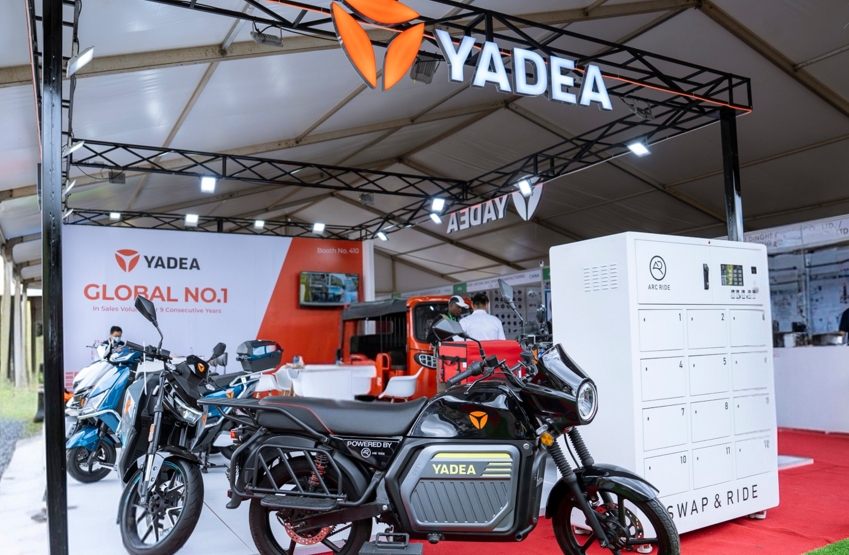
Yadea, one of the world’s largest electric two-wheeler manufacturers, entered Kenya with five electric motorcycle models and partnered with Arc Ride for battery swapping. Kibo Africa has pursued another route, combining local manufacturing ambitions with large-scale motorcycle deployment and battery infrastructure.
Other companies are building infrastructure around different models. E-Safiri, based in Kisumu, supports multiple manufacturers and has focused on expanding battery swapping beyond Kenya’s largest cities. Spiro has developed its own network while working with partners to extend its reach, while other operators have experimented with automated cabinets and solar-powered infrastructure.
The result is a market where the motorcycle is only one component of the proposition. Battery availability, financing, servicing, software and route coverage all affect whether a rider can make an electric motorcycle work as a commercial asset.
SUN Mobility’s open architecture could accelerate that model by separating the vehicle from the energy network.
The Open Model Could Challenge Proprietary Ecosystems
Kenya’s battery-swapping market also has an infrastructure problem: building stations is expensive, particularly where rider density is low.
Operators have to finance civil works, electrical systems, batteries, safety equipment and staffing before a station generates meaningful revenue. The economics are easier in dense urban markets where batteries circulate rapidly, while rural locations can require similar upfront investment with fewer riders.
That is one reason battery infrastructure has become a bottleneck for manufacturers.
A company can have a competitive motorcycle, but if riders cannot conveniently obtain a charged battery, the product becomes difficult to operate commercially. Fika Mobility is an especially useful example. The Kenyan manufacturer had been unable to launch its electric motorcycles at scale partly because it lacked access to a battery-swapping provider.
The arrival of a multi-manufacturer network changes that equation.
Instead of asking every vehicle manufacturer to finance its own battery ecosystem, a shared network can spread infrastructure costs across several brands. A manufacturer can concentrate its capital on the motorcycle, distribution and customer acquisition while relying on the infrastructure provider for battery access.
That creates the possibility of a platform economy around batteries.
The model only works, though, if compatibility is reliable. A rider needs confidence that the battery available at a station is compatible with the motorcycle they are operating. Manufacturers also need confidence that the network will remain available as their installed vehicle base grows.
That makes the architecture behind the network as important as the physical stations.
Foreign Manufacturers Arrive as Local Competition Scales
The incoming manufacturers are entering a Kenyan market that already has a growing domestic and regional supply base.
Fika Mobility is particularly revealing because it is itself a Kenyan manufacturer among the companies preparing to deploy through SUN Mobility. Its inclusion shows that access to battery infrastructure can constrain local manufacturers as well as overseas entrants.
The competitive pressure will therefore come from several directions.
Indian and Chinese manufacturers bring production scale and experience from markets where electric two-wheelers have already become a major category. Kenyan companies have the advantage of local market knowledge, established relationships and familiarity with the economics of commercial riders. Meanwhile, infrastructure operators can influence which vehicles are easiest to operate in particular locations.
That creates two broad approaches.
One links a vehicle manufacturer closely to its own battery and swapping ecosystem. The other allows several manufacturers to share infrastructure operated independently of any one vehicle brand.
Neither model has won the market.
The attraction of the shared approach is straightforward: it can lower the infrastructure burden for manufacturers and give riders more vehicle choice. The attraction of a proprietary system is equally clear: controlling the battery, software and vehicle ecosystem can give an operator greater control over the customer relationship and operating economics.
That competition could become more important as more motorcycles enter service.
The Economics Will Depend on Riders, Not Just Vehicles
The number of manufacturers preparing to enter Kenya is impressive, but vehicle count alone will not determine which companies survive.
For a commercial rider, the calculation remains practical: how much does the motorcycle cost, what is the daily energy expense, how much time is lost obtaining that energy, how much does maintenance cost and what does the rider have left after financing payments?
The financing side is already showing signs of scale. M-KOPA has financed more than 10,000 electric motorcycles in Kenya, tying vehicle ownership to riders’ daily cash flow rather than requiring the entire cost upfront.
That matters because a lower-cost electric motorcycle can still be difficult to adopt if the financing structure does not work for a rider’s income.
Battery-as-a-service adds another layer. Removing the battery from the vehicle purchase can lower the initial price, but the recurring cost of accessing batteries becomes part of the ownership equation.
The market will therefore have to reveal whether riders prefer paying more upfront for a vehicle with its own battery or paying for access to a shared battery network over time.
The answer may differ between private users, boda boda riders, delivery fleets and tuk-tuk operators.
Electric tuk-tuks also broaden the opportunity. RhingGo’s expansion into Kisumu, alongside operations in other Kenyan towns, illustrates how battery swapping can support commercial three-wheelers as well as motorcycles.
For these operators, uptime can matter more than the headline purchase price. A motorcycle or tuk-tuk that spends less time waiting for energy can potentially generate more revenue during the working day.
The Next Battle Is Over Network Coverage and Interoperability
SUN Mobility’s arrival gives foreign manufacturers a lower-cost route into Kenya, but it does not remove the harder question of scale.
Thirty-five stations are enough to establish a network in Nairobi and Mombasa; they are not enough to support a national electric commercial transport system on their own.
The next stage will depend on whether the company can expand coverage as vehicle numbers rise, maintain sufficient battery inventories and provide riders with convenient swap points. That becomes particularly difficult outside dense urban corridors, where station utilisation can be lower and infrastructure costs harder to recover.
Rival infrastructure providers face the same problem.
E-Safiri already supports multiple manufacturers, while Arc Ride, Spiro and other operators have built different approaches around battery swapping. The competition therefore extends beyond which company sells the most electric motorcycles. It also concerns which infrastructure network can attract enough vehicles to justify wider coverage.
That creates a feedback loop. More compatible motorcycles can improve the economics of a shared network because the same stations and battery pool can serve more customers. A larger network, in turn, makes compatible motorcycles more attractive to riders and fleets.
The risk is fragmentation if manufacturers and infrastructure companies settle into incompatible ecosystems.
Kenya’s efforts to establish common standards for electric-vehicle charging could help address part of the wider infrastructure problem, but battery swapping introduces another layer of technical compatibility involving battery design, management systems and safety requirements.
Kenya Is Becoming a Proving Ground for a Different EV Business Model
The significance of SUN Mobility’s Kenyan launch lies in what it does to the economics of market entry.
A foreign manufacturer no longer necessarily has to arrive with a complete proprietary infrastructure stack. It can bring the vehicle while relying on an independent network for battery access, just as a financing company can fund the motorcycle without manufacturing it and a fleet platform can provide customers without owning the vehicle.
That is a more modular electric-mobility market than the one Kenya had at the beginning of its current EV expansion.
It also explains why manufacturers from India and China are paying attention. Their home markets have produced large electric two-wheeler industries, giving companies access to manufacturing capacity, component supply chains and vehicle designs suited to high-utilisation commercial transport.
Kenya offers a market where those products can be deployed without every entrant having to recreate the entire energy infrastructure from scratch.
The immediate result will be more choice for Kenyan riders and tougher competition among manufacturers.
The longer-term question is who controls the infrastructure that makes those vehicles useful.
If SUN Mobility can build a dense, reliable network around multiple competing brands, the battery could become a shared utility rather than a proprietary component of each motorcycle. That would lower one of the barriers to entry for manufacturers and give Kenya’s electric two- and three-wheeler market a much broader competitive field.
For the manufacturers preparing to arrive, the motorcycles are only the beginning. The real race will be over who can keep those motorcycles moving.
Real ESG impact doesn’t happen in panels alone, it happens in the rooms where financiers, operators, and policymakers actually align. Our GreenShift Forum 2026 cuts the noise, bringing together the people rewiring Africa’s sustainability and energy frameworks for one focused day in Nairobi. Secure your seat.
Go to TECHTRENDSKE.co.ke for more tech and business news from the African continent and across the world.
Follow us on WhatsApp, Telegram, Twitter, and Facebook, or subscribe to our weekly newsletter to ensure you don’t miss out on any future updates. Send tips to editorial@techtrendsmedia.co.ke


