
NBO2 data centre opens as Kenya steps up its cloud, AI and regional infrastructure ambitions

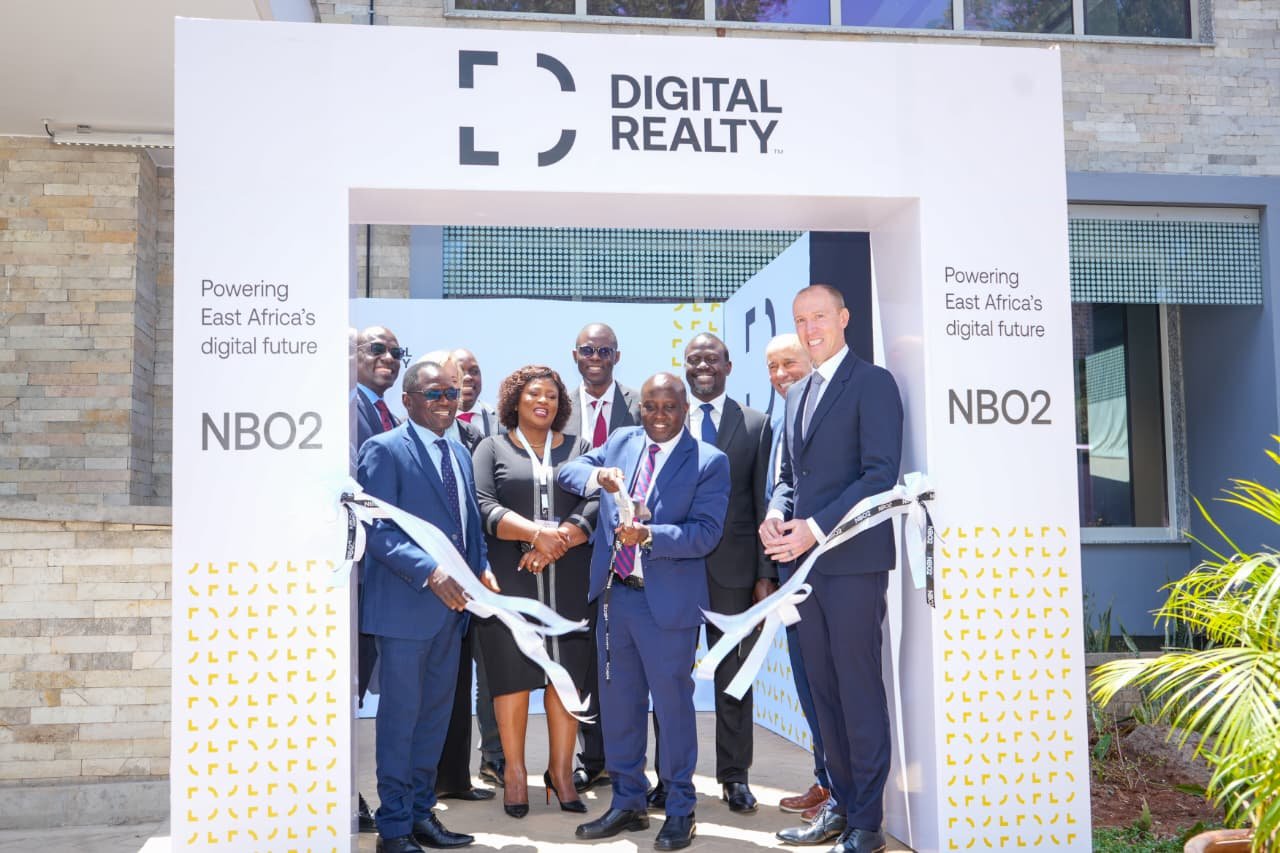
Kenya’s digital infrastructure ambitions gained another major piece with the launch of the NBO2 data centre in Nairobi, a facility designed to serve cloud providers, financial institutions, enterprises and internet service providers.
The facility, operated by iColo and now officially part of Digital Realty, adds capacity to the infrastructure supporting cloud computing, artificial intelligence, enterprise technology and regional interconnection.
The launch comes as Kenya seeks to position Nairobi as a technology gateway for East and Central Africa. That ambition rests on more than data-centre capacity. International submarine cables, national fibre networks, cross-border connectivity, cloud infrastructure and facilities capable of hosting demanding computing workloads all have to work together if Kenya is to serve companies operating across the region.
At the launch, Principal Secretary for ICT and the Digital Economy Eng. John Tanui and Principal Secretary for Broadcasting and Telecommunications Stephen Isaboke joined Digital Realty executives, technology-sector leaders and representatives of the Kenyan and U.S. governments. The presence of senior officials from both countries placed the facility within a broader conversation about investment, digital infrastructure and Kenya’s role in the regional technology economy.


NBO2 Adds Capacity to Nairobi’s Digital Infrastructure
NBO2 is being positioned as infrastructure for companies that need secure and scalable facilities with access to multiple networks and service providers. That carrier-neutral role matters because a data centre can serve as a meeting point for telecommunications operators, cloud platforms, internet service providers and enterprises, allowing them to exchange traffic and connect their infrastructure without relying solely on distant facilities.
Digital Realty’s presence also gives the project a wider regional context. The company operates a global data-centre platform, while iColo has built a significant position in Kenya’s colocation and interconnection market. NBO2 therefore adds to an existing infrastructure base rather than establishing Nairobi’s data-centre market from scratch.

The timing is important. Kenya’s technology market has moved beyond basic questions of internet access and connectivity towards the infrastructure required to host cloud services and computationally intensive applications locally. Oracle Cloud Infrastructure’s Nairobi presence, the expansion of Microsoft’s Africa Development Centre, AWS’s development operations and other technology investments have added demand for the underlying networks, facilities and skills that support digital services.
Artificial intelligence raises the infrastructure requirements further. AI workloads can require substantial computing power, electricity, cooling and high-speed networking, making the availability of suitable data centres a practical constraint on where companies can deploy new services. NBO2 is part of the wider build-out, although the country’s ability to accommodate large AI workloads will depend on how quickly power and high-capacity infrastructure can expand alongside data-centre development.
Policy Reforms Are Part of Kenya’s Investment Pitch
The government is presenting the NBO2 investment alongside policy measures intended to make Kenya more attractive to international technology companies. Those measures include removing local shareholding requirements for ICT investments, addressing taxes affecting digital exports, introducing the Kenya Cloud Policy and launching the National AI Strategy 2025–2030.
In his remarks, Eng. John Tanui highlighted the government’s commitment to creating an enabling environment for digital growth while emphasizing Kenya’s strategic position as a regional digital gateway.
“Work will continue on the policy space to position Kenya as an attractive investment destination, with opportunities being unlocked for young people to take their place in this fast-growing digital economy,” PS Tanui further added.
PS Stephen Isaboke underscored that the government has prioritized the Digital Superhighway and creative economy as key focus areas, adding that “Kenya is actually a knowledge-driven economy, with a well-educated youth population that is tech-savvy”.
These policies matter because data-centre investment depends on more than the availability of a suitable building. Operators and their customers need predictable regulation, reliable connectivity, access to power and a business environment in which regional digital services can be developed and exported.
Power and Connectivity Will Shape the Next Data-Centre Wave
The next phase of Kenya’s data-centre development will put greater pressure on infrastructure outside the facilities themselves. The government says it will soon issue guidelines identifying priority locations for future data-centre investments, with a coordinated multi-agency approach focused on power availability, fibre connectivity, land, water, security, skills and investment facilitation.
That list reflects the practical requirements of a sector moving towards larger facilities and more demanding computing workloads. Fibre can connect a data centre to the rest of the world, but high-capacity computing also requires dependable electricity, cooling infrastructure and suitable sites with room for expansion.
The question of power is particularly important as AI infrastructure expands. Large computing facilities can place substantial demands on electricity networks, which means Kenya’s ambitions for cloud and AI infrastructure will depend partly on whether new projects can secure sufficient power at competitive costs.
The proposed priority-location framework could therefore influence where the country’s next generation of data centres is built. Nairobi has advantages in network connectivity, business customers and technical talent, but a broader geographic strategy could give investors access to sites where power, land and other infrastructure can be developed at larger scale.
Konza Technopolis is one example of how Kenya has sought to build technology infrastructure outside the traditional Nairobi commercial core, while developments in Nairobi and surrounding areas continue to attract private-sector data-centre investment.
From Nairobi Infrastructure to a Regional Digital Gateway
The government’s regional ambition is supported by Kenya’s position as a major connectivity point for East Africa, but the strength of that position will ultimately depend on what companies do with the infrastructure.
A useful way to view the country’s digital infrastructure is as a connected system. Submarine cables bring international capacity into Kenya; national and cross-border fibre networks distribute that capacity; data centres provide locations where networks, cloud providers and businesses can connect; and cloud and AI infrastructure allows increasingly sophisticated workloads to be processed closer to users.
NBO2 strengthens one part of that system.
The wider market is also becoming more competitive. Other facilities and planned investments are adding capacity, including major projects designed around hyperscale cloud, enterprise computing and AI workloads. Competition between operators can benefit customers by increasing choice and network diversity, while a denser interconnection ecosystem can make Nairobi more useful to companies that need to serve several African markets from one regional base.
The challenge is converting infrastructure into sustained economic activity. A larger data-centre footprint can support jobs, cloud services, enterprise technology and digital exports, but those gains depend on sufficient demand, investment and technical capacity. Kenya’s policy reforms will therefore have to work alongside infrastructure development if the country wants its regional technology-gateway proposition to endure.
Universities and Industry Form Part of the Wider Ecosystem
The choice of the Catholic University of Eastern Africa as the venue for the launch added another dimension to the event. The institution is also associated with the establishment of IBM’s presence in Kenya about 13 years ago, a connection the government used to illustrate how university, industry and government partnerships can develop into longer-term technology ecosystems.
The launch brought together senior figures from government, diplomacy and the technology sector, including PS Stephen Isaboke; U.S. Assistant Secretary of State for African Affairs Frank Garcia; U.S. Embassy Nairobi Chargé d’Affaires Susan M. Burns; Ambassador Philip Thigo, Special Envoy on Technology for the Republic of Kenya; Communications Authority of Kenya Director General David Mugonyi; Deputy Data Protection Commissioner John Walubengo; Frontier Optical Networks and KeNIC Deputy CEO James Turuthi; TESPOK CEO Dr. Fiona Asonga; Michael Jacobs of Pembani Remgro Infrastructure Managers; Digital Realty Managing Director, Africa, Marcel Louw; and Digital Realty Kenya Country General Manager Wanja Muriithi.
Their participation reflects the number of institutions now involved in Kenya’s digital infrastructure story. Telecommunications operators, data-centre companies, cloud providers, regulators, universities, investors and government agencies each control a piece of the ecosystem required to support the next stage of digital growth.
Coming ahead of the AmCham Business Summit, the NBO2 launch also provides a clear investment pitch: Kenya wants more capital directed towards cloud computing, artificial intelligence, data centres, digital services and advanced manufacturing.
Whether that pitch succeeds will depend on the infrastructure being able to support the scale of investment being sought. NBO2 gives Kenya another important facility in that network, while the government’s planned data-centre location guidelines point to a broader effort to prepare for what comes next.
Real ESG impact doesn’t happen in panels alone, it happens in the rooms where financiers, operators, and policymakers actually align. Our GreenShift Forum 2026 cuts the noise, bringing together the people rewiring Africa’s sustainability and energy frameworks for one focused day in Nairobi. Secure your seat.
Go to TECHTRENDSKE.co.ke for more tech and business news from the African continent and across the world.
Follow us on WhatsApp, Telegram, Twitter, and Facebook, or subscribe to our weekly newsletter to ensure you don’t miss out on any future updates. Send tips to editorial@techtrendsmedia.co.ke


