HELB, Universities Fund and TVET board face merger under new funding authority

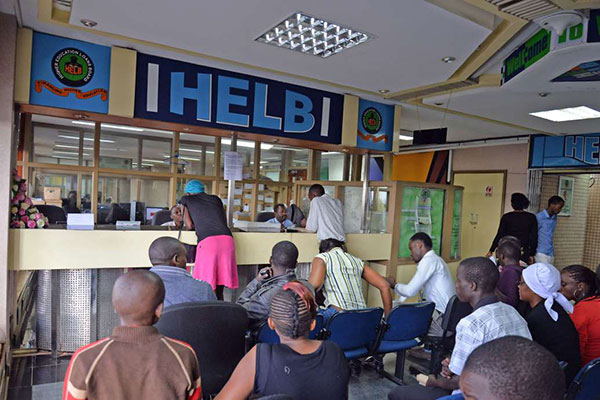
Kenya is preparing to replace the Higher Education Loans Board (HELB), the Universities Fund and the TVET Funding Board with a single Tertiary Education Funding Authority (TEFA), as the government redesigns how tertiary education is financed. The proposed Tertiary Education Placement and Funding Bill, 2026, would give the new authority responsibility for student loans, scholarships, funding data and loan recovery, while giving it broader powers to mobilise money from financial markets and private sources. The proposed overhaul is now tied to an even bigger change: the government says university funding will move out of the normal national budget and into a market-based financing model from October 2026.
A single authority for tertiary education funding
The proposed Tertiary Education Funding Authority would bring together functions currently handled by separate institutions. HELB administers student loans and recovers repayments, while the Universities Fund and TVET funding structures support other parts of tertiary education.
Under the proposed law, TEFA would become the central institution for financing learners in universities, colleges and TVET institutions. It would administer scholarships and loans, maintain a national database on tertiary education funding and recover loans from beneficiaries.
The consolidation comes as the government prepares to replace the funding model introduced in 2023, under which students receive varying combinations of scholarships, loans and household contributions based on their assessed financial need.


President William Ruto has criticised that system, arguing that it did not provide universities with adequate resources and left some institutions facing serious financial pressure.
The government’s proposed alternative is broader. Students admitted to universities from September 2026 are expected to receive full funding covering tuition and upkeep during their studies, with repayment taking place after they secure employment.

That promise, however, creates a much larger financing requirement, making the structure of TEFA important beyond the question of what happens to HELB.
Government wants university funding outside the annual budget
The most consequential development came on August 24, when David Ndii, Chairperson of the President’s Council of Economic Advisors, said university funding would be removed from the national budget from October and moved into a market-based financing model.
Ndii said the government would capitalise a fund over an extended period, after which the fund would raise additional money from financial markets. That would change the way the state finances universities, moving away from relying primarily on annual budget allocations towards a fund designed to mobilise capital from the market.
The proposal fits closely with the financing powers contained in the Tertiary Education Placement and Funding Bill, 2026. The Bill would allow the proposed authority to raise money through Treasury bills, government bonds, concessional loans, government grants, savings schemes, unit trusts and commercial partnerships.
TEFA could also seek capital from domestic pension funds, collective investment schemes, sovereign wealth funds, private investors and climate-finance sources.
That means the proposed authority would have a considerably wider financial mandate than HELB. It would potentially sit at the centre of a funding structure that combines public capital, student repayments and money raised from financial markets.
The distinction matters. Moving university financing into a fund does not necessarily mean the government would stop providing financial support. Instead, the proposed model appears to involve the state providing capital to establish and support the fund, while the fund raises additional financing from outside the annual budget.
The unanswered question is how large that initial government contribution would need to be, and how much additional money the fund would have to raise to sustain the government’s promise of full student funding.
The proposed model could change how education debt works
The Bill’s proposed funding structure also raises questions about the role of student repayments.
Under the existing HELB system, loan repayments replenish the pool available for future beneficiaries. A larger TEFA could operate on a similar principle, but within a much broader financing structure that includes capital raised from investors and other institutions.
If the government capitalises a fund and that fund borrows from financial markets, repayment obligations become an important part of the model. The cost of raising that money, the terms attached to it and the extent to which the government guarantees the financing could determine how sustainable the system becomes.
This is where the proposed market-based approach deserves close scrutiny. Financial markets can provide access to larger pools of capital, but the money is not free. Borrowing creates obligations, and those obligations have to be matched against the future cash flows generated by student repayments, government support and other sources of income.
The Bill’s proposal to create a savings product for people preparing for tertiary education adds another layer. Families could potentially save through an education-focused scheme, giving the system a source of domestic capital while allowing households to prepare for future education costs.
Whether such a product would attract meaningful savings will depend on its design, returns, accessibility and the ability of households to set money aside.
What happens to existing HELB loans?
Replacing HELB would not eliminate existing student debt.
The proposed authority would take over loan recovery functions, meaning the transition would have to account for existing beneficiaries, repayment records, outstanding balances and borrowers who have fallen behind on payments.
That makes the transition arrangements one of the most important details to watch as Parliament considers the Bill.
Students and graduates will need clarity on where they make repayments, how existing loan accounts are transferred and whether the terms of their current obligations change.
The government will also need to preserve the institutional knowledge and systems required to manage a large loan portfolio. A change in the name and legal structure of the institution should not create uncertainty for borrowers or disrupt collections.
Governance will become more important
The proposed authority would be governed by a board chaired by a person appointed by the President. Its membership would include the chief executive as an ex-officio member, the Principal Secretaries responsible for university education and TVET, the Treasury Principal Secretary and four members who would not be public servants.
The chairperson and appointed board members would serve three-year terms and could be reappointed once, subject to satisfactory performance.
That structure puts significant government representation around an institution that could eventually manage public money, student repayments and capital raised from private and institutional investors.
The governance framework therefore matters as much as the financing model. If TEFA is allowed to borrow, invest or enter commercial financing arrangements, the legislation will need clear safeguards around procurement, conflicts of interest, disclosure, investment decisions and oversight.
The involvement of pension funds and collective investment schemes would make those safeguards particularly important because the proposed model could connect tertiary education financing to pools of institutional savings.
The October deadline raises another question
The government’s timetable adds urgency to the legislation.
The administration wants the new funding approach to support students admitted from September, while Ndii has said university funding will move out of the ordinary budget from October. Yet the Bill establishing the institutional framework remains before Parliament.
That leaves a relatively short period for Parliament to debate the legislation, resolve outstanding issues and establish the machinery needed to operate the new system.
The transition also involves more than replacing HELB. The government would have to establish TEFA, determine how existing institutions and their functions are transferred, put the funding database in place, structure the new financing vehicle and determine how market-based borrowing would work.
Universities, students and lenders would all need clarity before the new arrangements take effect.
The real test is whether the financing model is sustainable
The proposed Tertiary Education Funding Authority could give Kenya a more unified way of financing higher education and technical training. Bringing loans, scholarships and funding data under one institution could simplify administration, while access to capital markets could give the government more options than annual Treasury allocations alone.
But market financing also changes where the financial risk sits.
The government will still need to determine how much public money is committed, how much the fund can borrow, what returns or repayments are expected, whether borrowing carries a government guarantee and how the system responds if student repayments fall below expectations.
Those questions become particularly important under a model that promises full funding for students while also taking university financing outside the conventional budget process.
The proposed reform is therefore much bigger than the abolition of HELB. Kenya is attempting to redesign the institution that finances tertiary education and, at the same time, change the source of money used to support universities.
Whether that produces a more reliable funding system will depend less on the creation of TEFA itself than on the financial rules built around it. The legislation will determine how much the state puts in, how much the market can provide, what students eventually repay and how the risks are shared when the model faces pressure.
For students, the measure will be straightforward: whether funding arrives when it is needed and whether the new system makes tertiary education more predictable to finance. For the government, the harder question is whether a market-funded education system can deliver that certainty without simply moving the cost and risk elsewhere in the public finances.
Download the FREE Kaspersky Next Enterprise Security Guide here to explore the complete framework for simplifying security operations and building cyber resilience.
Go to TECHTRENDSKE.co.ke for more tech and business news from the African continent and across the world.
Follow us on WhatsApp, Telegram, Twitter, and Facebook, or subscribe to our weekly newsletter to ensure you don’t miss out on any future updates. Send tips to editorial@techtrendsmedia.co.ke