
Inside Safaricom's Plan to Make My OneApp the Front Door to Its Digital Business
My OneApp's latest updates reflect a broader platform strategy that brings telecom and financial services into one experience as Kenya's mobile money market enters a more mature stage.

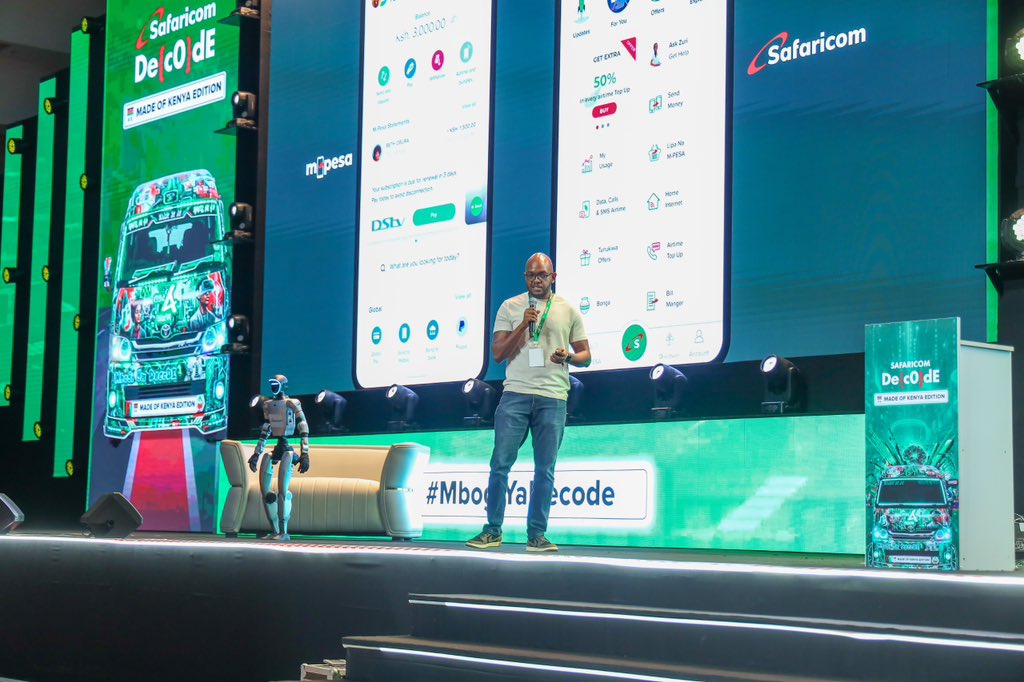
When Safaricom introduced My OneApp, the conversation centred on replacing separate customer applications with a single platform. Customers immediately noticed what had changed. M-PESA services, telecom account management and a growing collection of digital products were now accessible through one interface. The rollout also attracted criticism from users adjusting to a different experience, prompting a steady stream of refinements over the months that followed.
The latest updates point to a much broader objective.
Zero-rated access, biometric authentication, expanded QR payment capabilities, Home Internet Family Share, Send to Bank Hakikisha and deeper service integration are connected by a common strategy. Together, they show how Safaricom wants customers to experience its digital business over the coming years.
The company’s ambition is straightforward. My OneApp is becoming the single place where customers begin every interaction with Safaricom, whether they want to send money, pay a merchant, manage a Home Internet account, purchase airtime, access savings products or use services developed by third-party partners.


Peter Gichangi, Safaricom’s Head of Digital Commerce and Loyalty Services, has outlined that vision around a single platform where customers no longer have to decide which Safaricom application they need before completing a task. The company continues bringing telecom services, M-PESA capabilities and partner experiences into one environment that can expand without forcing customers to learn a new application each time another service is introduced.
The platform already supports a growing ecosystem of financial services, commerce, customer care, entertainment and mini apps, allowing new capabilities to be added within a familiar experience instead of through standalone applications.
That strategy reflects a broader change taking place across Kenya’s digital finance market.
According to the Communications Authority, Kenya recorded 53.4 million mobile money subscriptions during the third quarter of the 2025/26 financial year, representing 100.1 percent population penetration. The country also had 602,470 registered mobile money agents, giving customers one of the world’s largest physical digital finance networks.
Those figures do not mean every Kenyan actively uses mobile money. They illustrate a market where access has reached national scale and where future growth depends less on bringing new people into digital finance than on encouraging existing customers to make greater use of the services already available.
That creates a different commercial challenge for operators such as Safaricom.
M-PESA remains one of Africa’s most successful mobile money platforms, but customer acquisition alone can no longer sustain the next phase of growth. The opportunity now lies in becoming the platform customers rely on throughout the day to pay merchants, settle bills, manage savings, access credit, redeem rewards, control connectivity and discover new digital services.
My OneApp sits at the centre of that ambition.
If customers can complete more financial and telecom activities without leaving a single platform, every additional service strengthens the value of the ecosystem as a whole. Someone opening the app to purchase airtime can also transfer money, pay a merchant, manage Home Internet, redeem Bonga Points or access another service available inside the same environment.
That approach also explains why Safaricom continues expanding My OneApp instead of launching separate applications for every new initiative. Each standalone app asks customers to download new software, build another habit and remember another destination. A unified platform reduces those decisions while creating one familiar entry point into Safaricom’s digital business.
The approach reflects a broader evolution across digital platforms worldwide, where companies compete by becoming the place customers begin everyday digital activities rather than by offering isolated products. Safaricom is applying that model to Kenya’s telecom and financial services market by bringing its expanding ecosystem together through a single customer experience.
A Platform Built for Daily Use Rather Than Occasional Transactions
The strategy behind My OneApp becomes clearer when viewed alongside the way Kenya’s digital economy is evolving.
Mobile money has reached a level of adoption where registration is no longer the industry’s defining challenge. The Communications Authority’s latest sector statistics show the supporting infrastructure continuing to expand even as customer acquisition slows. More than 602,000 mobile money agents now operate across the country, reinforcing a network that already reaches most households and businesses.
The next phase depends on how frequently customers use digital financial services after they register.
Merchant adoption is already moving in that direction. Safaricom says Pochi la Biashara reached 2.1 million merchants during the financial year ended March 2026, overtaking Lipa na M-PESA business tills as micro traders increasingly adopt digital payment tools designed around everyday commerce. The shift reflects the growing role of food vendors, kiosk operators, boda boda riders and other small businesses in Kenya’s digital economy, where practical features such as separating business and personal funds and protecting completed payments from reversals can matter as much as accepting digital payments themselves.
Every merchant payment handled through products such as Pochi creates another routine interaction within Safaricom’s financial ecosystem. As more businesses rely on digital payments throughout the day, the value of giving both merchants and consumers a single place to manage those financial activities continues to grow.
Every merchant payment, utility bill, savings deposit, loan repayment, QR transaction and business payment deepens customer engagement with the platform handling those activities. That places greater emphasis on the software customers interact with every day.
Safaricom’s response is to reduce the number of decisions customers make before reaching a service.
Instead of treating M-PESA, telecom services and digital products as separate destinations, My OneApp brings them into a common environment where customers move naturally between different tasks. Someone paying a utility bill can immediately purchase airtime, manage a Home Internet account, transfer money, access a savings product or redeem Bonga Points without leaving the application.
The objective is to make everyday digital services feel connected rather than separate.
That thinking explains many of the updates Safaricom has introduced over recent months.
Zero-rated access removes one of the practical barriers that discouraged some customers from opening the application. Customers can establish an internet connection through mobile data or Wi-Fi and continue using My OneApp without consuming Safaricom data bundles. Support for Wi-Fi and access beyond Safaricom’s mobile network extends that flexibility, allowing the platform to remain available regardless of how customers connect.
Those improvements may appear technical, but they influence how often customers return. A platform that is consistently accessible has more opportunities to become part of everyday routines.
Performance improvements, faster navigation and defect fixes serve the same purpose. They reduce friction during routine tasks that customers perform repeatedly, from checking balances to completing payments.
Trust forms the second foundation of that strategy.
As My OneApp expands beyond telecom account management into savings, lending, investments and payments, different services require different levels of identity verification. Fingerprint and Face ID authentication allow customers to approve access quickly while maintaining stronger protection around products such as M-Shwari, KCB M-PESA, Mali and Faraja.
Authentication therefore becomes part of the platform’s design rather than an additional security step layered onto individual services. Customers experience faster access while financial products continue operating within appropriate regulatory and security requirements.
The architecture supporting My OneApp also gives Safaricom room to grow without repeatedly rebuilding the customer experience.
Mini apps allow new services and partner integrations to appear inside an interface customers already understand.
The same architecture also creates room for Safaricom’s merchant products to become part of a broader digital experience instead of existing as isolated payment tools. As services such as Pochi la Biashara continue expanding among micro-enterprises, a unified platform allows customers and small businesses to move more easily between payments, connectivity, financial services and partner applications without adopting a different interface for each activity.
Instead of asking users to download another application whenever a new product launches, Safaricom can extend the existing platform while preserving familiar navigation and account relationships.
That flexibility becomes more valuable as digital finance expands beyond peer-to-peer transfers into commerce, household services, business payments and embedded financial products. The platform evolves alongside those services instead of fragmenting into multiple applications competing for the customer’s attention.
The direction also aligns with changes taking place beyond Safaricom.
Parliament’s recent decision to preserve VAT exemptions on mobile money transfers reflected growing recognition that digital payments now underpin a significant share of Kenya’s economy. As policymakers seek to encourage greater use of digital financial services, the platforms connecting customers to those services become more important.
My OneApp fits within that broader environment. The platform is designed to make digital finance easier to reach, easier to trust and easier to use repeatedly as customers carry out more of their daily financial activity through a single experience.
My OneApp Is Becoming the Digital Front Door to Safaricom
The individual updates introduced over recent months make the most sense when viewed as part of the same strategy.
Send to Bank Hakikisha gives customers greater confidence when transferring money to bank accounts by allowing recipient details to be verified before a transaction is completed. Enhanced QR payments simplify merchant transactions. Home Internet Family Share gives households more control over broadband access. Daima integration brings another customer service into the same platform.
Each feature addresses a specific customer need. Together, they reduce the number of separate applications and processes customers navigate during everyday digital tasks.
That reflects a broader evolution in digital finance.
The first phase of mobile money focused on digitising payments. The next phase centres on bringing payments, connectivity, savings, lending, rewards, commerce and customer support into one experience that customers can return to throughout the day.
My OneApp has become the platform through which Safaricom intends to deliver that experience.
The company’s investment decisions increasingly support that direction. Rather than launching standalone applications for every new product, Safaricom can introduce new services inside an environment customers already know. Existing account relationships, navigation patterns and authentication methods remain consistent as the platform expands.
The same model also allows external partners to become part of the ecosystem.
Mini apps extend My OneApp beyond Safaricom’s own products, allowing third-party services to operate inside the platform while maintaining a consistent customer experience. Customers gain access to a broader range of services without creating new accounts or moving between multiple applications.
That creates advantages for both sides of the platform. Customers spend less time switching between digital services, while service providers gain access to an established customer base through a familiar interface.
The wider market reinforces that strategy.
Kenya’s mobile money ecosystem has reached a point where success depends on participation as much as access. Merchant behaviour increasingly reflects that shift. Pochi la Biashara, which was introduced to help micro businesses separate business income from personal funds while reducing disputes caused by payment reversals, now serves more merchants than Lipa na M-PESA business tills. The growth illustrates how digital finance is spreading deeper into everyday commercial activity, particularly among small traders who make up much of Kenya’s informal economy.
Parliament’s decision to preserve VAT exemptions on mobile money transfers reflected similar recognition that digital payments now underpin a significant share of economic activity. Policymakers are also working to improve recovery of mistaken mobile money transfers, recognising that trust remains essential as more financial activity moves through digital channels.
Those developments point in the same direction. The next phase of digital finance will be shaped by how confidently customers can use digital services and how naturally those services fit into everyday life.
My OneApp addresses both questions.
Removing data barriers encourages more frequent access. Biometric authentication strengthens confidence around financial services. Mini apps expand the range of activities available inside the platform. Performance improvements make routine interactions more dependable. Together, those changes support a platform designed for regular use rather than occasional transactions.
Viewed individually, each update appears incremental.
Viewed together, they reveal a long-term strategy.
Safaricom is no longer organising its digital business around separate customer applications. It is organising those products around one platform that connects telecom services, M-PESA and partner experiences through a single entry point.
As Kenya’s mobile money market continues to mature, competition will depend less on who can register the next customer and more on who becomes the platform customers choose every time they need to pay, save, borrow, connect or manage their digital lives.
That is the role My OneApp is being built to perform.
Go to TECHTRENDSKE.co.ke for more tech and business news from the African continent and across the world.
Follow us on WhatsApp, Telegram, Twitter, and Facebook, or subscribe to our weekly newsletter to ensure you don’t miss out on any future updates. Send tips to editorial@techtrendsmedia.co.ke


