
Safaricom Keeps Refining My OneApp Around a Simpler Goal: Access
What began as a push to bring M-PESA, MySafaricom and mini apps into one experience is increasingly becoming an effort to reduce the friction that shaped the platform's early months.

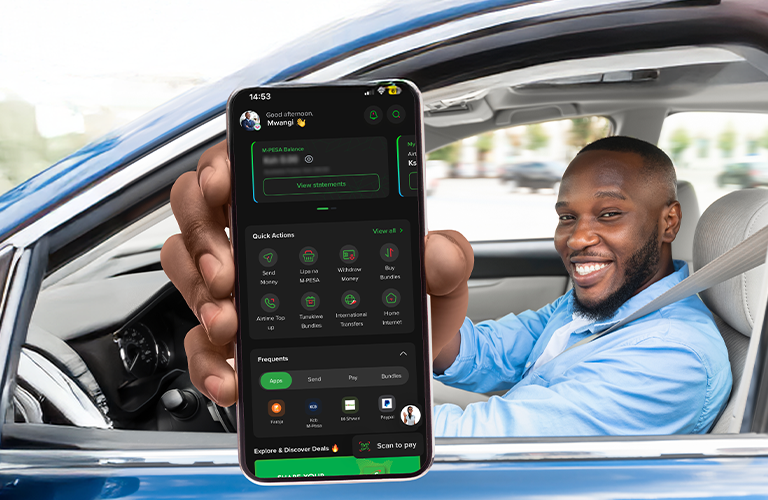
On April 16, Safaricom publicly apologised to customers after the rollout of My OneApp left some users struggling to access services. The problems were especially visible among roaming and diaspora customers, many of whom reported login failures and difficulties accessing M-PESA functions outside the company’s network environment.
Two months later, the conversation around Safaricom My OneApp updates looks markedly different.
The latest release introduces zero-rated access, new verification tools, expanded service integrations and performance improvements. Viewed in isolation, those additions resemble a routine product update. Viewed alongside the platform’s rollout history, they reveal a company steadily removing barriers between customers and services that have become part of everyday life.
Access Has Become the Central Theme of My OneApp’s Evolution
The newest update allows customers to continue using My OneApp without consuming data bundles after establishing an internet connection. It follows earlier changes that expanded access through Wi-Fi, rival mobile networks and roaming connections.

Taken together, these decisions point toward a consistent objective. Safaricom is making the platform less dependent on a specific network environment and easier to reach regardless of how customers connect.
That matters because My OneApp sits on top of services that many customers use daily. Payments, account management, rewards, loans and savings products increasingly exist within a single interface. Any obstacle that delays access affects activities that have already become routine.
The scale of those routines is difficult to ignore. Communications Authority data shows Kenya had more than 45 million active mobile money subscriptions during the quarter ended March 2026, underlining how deeply mobile financial services have become embedded in everyday transactions across the country.
The company is gradually treating accessibility as a platform feature rather than a connectivity feature.
Early Rollout Problems Forced Reliability to the Top of the Agenda
When My OneApp launched in April, Safaricom positioned it as a unified platform that would bring together M-PESA, MySafaricom and a growing ecosystem of mini apps.
The strategic logic was straightforward. Customers would move between fewer applications while developers gained access to a larger audience through embedded services.
The rollout exposed a more immediate challenge.
Login failures, stalled transactions, performance issues and connectivity restrictions quickly overshadowed the platform’s broader ambitions. Customers who depended on the app for financial services judged it less by the number of features it offered and more by whether they could reliably reach those features when needed.
That distinction is particularly important for financial platforms. Entertainment applications can tolerate occasional disruption. Mobile money platforms operate much closer to essential infrastructure. Expectations change once customers depend on a service to move money, pay bills or manage accounts.
Each Update Has Removed a Different Layer of Friction
Safaricom’s response since launch has followed a discernible pattern.
Version 5.1.5 restored customer favourites and improved navigation. Subsequent updates expanded connectivity support beyond Safaricom’s own network. Biometric authentication introduced fingerprint and Face ID approvals for supported transactions. The latest release adds zero-rated access while introducing Send to Bank Hakikisha, enhanced QR functionality, Daima Service integration and Home Internet Family Share capabilities.
The common thread is not feature expansion alone.
Each update addresses a point where customers previously encountered friction. Some changes reduce authentication effort. Others reduce connectivity dependence. The newest release reduces the cost of reaching the platform itself.
The result is a platform that is becoming easier to access, easier to authenticate into and easier to use.
Platform Trust Depends on Everyday Access
Trust in digital platforms is often discussed in terms of security, privacy and compliance. Those elements remain important, particularly as My OneApp hosts services linked to payments, savings, credit and investments.
Reliability creates its own form of trust.
Customers develop confidence in a platform when they can consistently access it under different conditions. A mobile money service that works across networks, across locations and across devices becomes more predictable. Predictability shapes behaviour. Customers are more likely to incorporate a platform into daily routines when access feels dependable.
The commercial logic behind that effort is visible in the broader market. Communications Authority data shows Safaricom controlled roughly 89 percent of Kenya’s mobile money subscriptions during the quarter ended March 2026 while accounting for about two-thirds of mobile subscriptions. The gap illustrates how much of the company’s influence now sits within financial services rather than connectivity alone.
A disruption inside My OneApp therefore carries implications beyond a conventional telecom application. The platform increasingly functions as an access point to services that millions of customers use to manage payments, savings, credit and account activity.
This dynamic has become increasingly important as telecom operators expand beyond connectivity and into broader digital ecosystems. The challenge is no longer simply attracting users. It is ensuring that essential services remain available whenever customers need them.
The Next Phase of My OneApp Is Being Built Around Continuity
Safaricom introduced My OneApp as part of a larger effort to consolidate telecom services, financial products and third-party experiences within a single environment.
The platform still serves that strategic purpose. Mini apps continue to expand its functionality while M-PESA remains at the centre of the experience.
What has changed since launch is the company’s emphasis.
Recent Safaricom My OneApp updates suggest that continuity of access now sits alongside feature development as a core objective. Network flexibility, biometric authentication, performance improvements and zero-rated access all move in the same direction.
The company’s position within Kenya’s mobile money ecosystem helps explain why. As financial activity becomes increasingly concentrated within digital platforms, reliability becomes inseparable from customer experience. Access failures are no longer measured as technical glitches alone. They directly affect services that many customers treat as part of their daily financial infrastructure.
The platform is still expanding. It is also becoming easier to reach and more predictable to use. For a service increasingly positioned as a gateway to everyday financial activity, that may prove just as important as any new feature added to the app.
Go to TECHTRENDSKE.co.ke for more tech and business news from the African continent and across the world.
Follow us on WhatsApp, Telegram, Twitter, and Facebook, or subscribe to our weekly newsletter to ensure you don’t miss out on any future updates. Send tips to editorial@techtrendsmedia.co.ke