

Pochi Is Helping Kenyan Women Entrepreneurs Keep Business Money Separate
The findings suggest separating business and household money is becoming a practical strategy for women entrepreneurs seeking greater financial control, stronger savings and more consistent business growth.

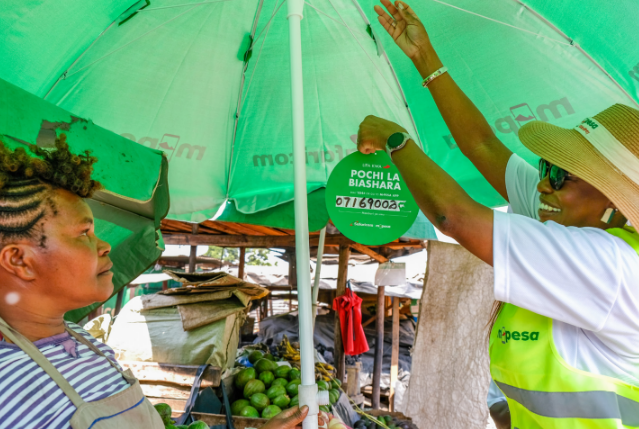
For thousands of Kenyan women running small businesses, one of the biggest obstacles to business growth is no longer attracting customers but rather ensuring business earnings don’t disappear into everyday household expenses.
A new study by the GSMA’s Connected Women programme, conducted in partnership with Safaricom and supported by research from IDinsight and YUX Design, showed that more Kenyan women entrepreneurs are deliberately separating business income from personal finances through Pochi la Biashara. The shift is helping them save more, track profits, reinvest in their businesses and exercise greater control over their finances.
The findings have reflected a growing change in how women are managing their enterprises. Rather than treating business earnings as household cash, many women are adopting financial habits that allow them to preserve working capital, make informed investment decisions and build more sustainable businesses.
Among women who recently adopted Pochi la Biashara, 35.6% said they now save more money, making it the most commonly reported benefit. Another 24.2 % said they had made more sales, while 11.3% reported earning higher incomes. A further 10.5 % said they were investing more in their businesses after adopting the platform.

The behavioural shift is also reflected in the adoption trends. Between December 2024 and December 2025, the number of women actively using Pochi la Biashara grew by approximately 92%, compared with 78% growth among men. By the end of 2025, women accounted for just over 52% of active Pochi users, representing more than 900,000 merchants.
The study also revealed the rapid uptake reflects the platform’s ability to address challenges women entrepreneurs have consistently identified, including separating business and personal finances, tracking earnings more effectively and protecting customer payments through non-reversible transactions.
Additionally, for many women entrepreneurs, separating business and household finances has become a practical solution to a long-standing challenge. Business income is often used to cover immediate family needs, making it difficult to determine whether an enterprise is actually making a profit or simply financing day-to-day living expenses.
The ability to separate funds has also made it easier for business owners to understand how their enterprises are performing. Instead of relying on memory or estimating daily sales, some women said transaction histories and mini-statements allow them to monitor revenue, calculate profits and compare business performance from one day to another.
Furthermore, the improved visibility is influencing how women invest. Rather than spending business earnings as they come in, many entrepreneurs reported using their profits to purchase more stock, acquire business assets and gradually expand their operations. Others said having a clearer picture of their finances had enabled them to plan household spending without compromising business capital.
The research also found that women are becoming more intentional about how they spend money. Better financial tracking has encouraged many to distinguish between business needs and household expenses, allowing them to make decisions that support long-term growth instead of short-term consumption.
Women interviewed during the study said keeping business money in a separate wallet had reduced the temptation to spend it on unplanned household purchases.
“I experienced a change because when I transfer money into Pochi, I will not be able to withdraw it for personal use. When I save my money in Pochi it is safe. When I was not saving there, I would see items and buy unnecessarily. My savings have increased with Pochi,” one entrepreneur from Kajiado said.
“Before Pochi, I’d use the same money to buy supper. Now, I know what belongs to the shop, “another entrepreneur said, describing how separating finances has improved accountability in her business.
“Pochi makes me feel like the CEO of my business. I’m in control, I track my money, and I’m able to support my family,” another entrepreneur added.
The research comes at a time when women continue to dominate Kenya’s informal economy. Yet despite playing a central role in micro-enterprise, many women entrepreneurs still face difficulties growing their businesses because profits are frequently absorbed into household expenditure before they can be reinvested.
By creating a clear boundary between business and household money, more women are beginning to treat their enterprises as independent financial entities rather than extensions of the family budget. That shift is helping them build savings, understand their profits, invest with greater confidence and position their businesses for long-term growth.
Beyond improving day-to-day financial management, the findings suggest that separating business money from household cash is becoming a key strategy for women entrepreneurs seeking to build resilient businesses. As more traders embrace digital tools that strengthen financial discipline such as Pochi la Biashara, the ability to preserve profits and reinvest them may prove just as important as increasing sales in determining long-term business success.
Go to TECHTRENDSKE.co.ke for more tech and business news from the African continent and across the world.
Follow us on WhatsApp, Telegram, Twitter, and Facebook, or subscribe to our weekly newsletter to ensure you don’t miss out on any future updates. Send tips to editorial@techtrendsmedia.co.ke


