

Gov’t Begins Distribution of Digital Learning Devices for JSS Schools

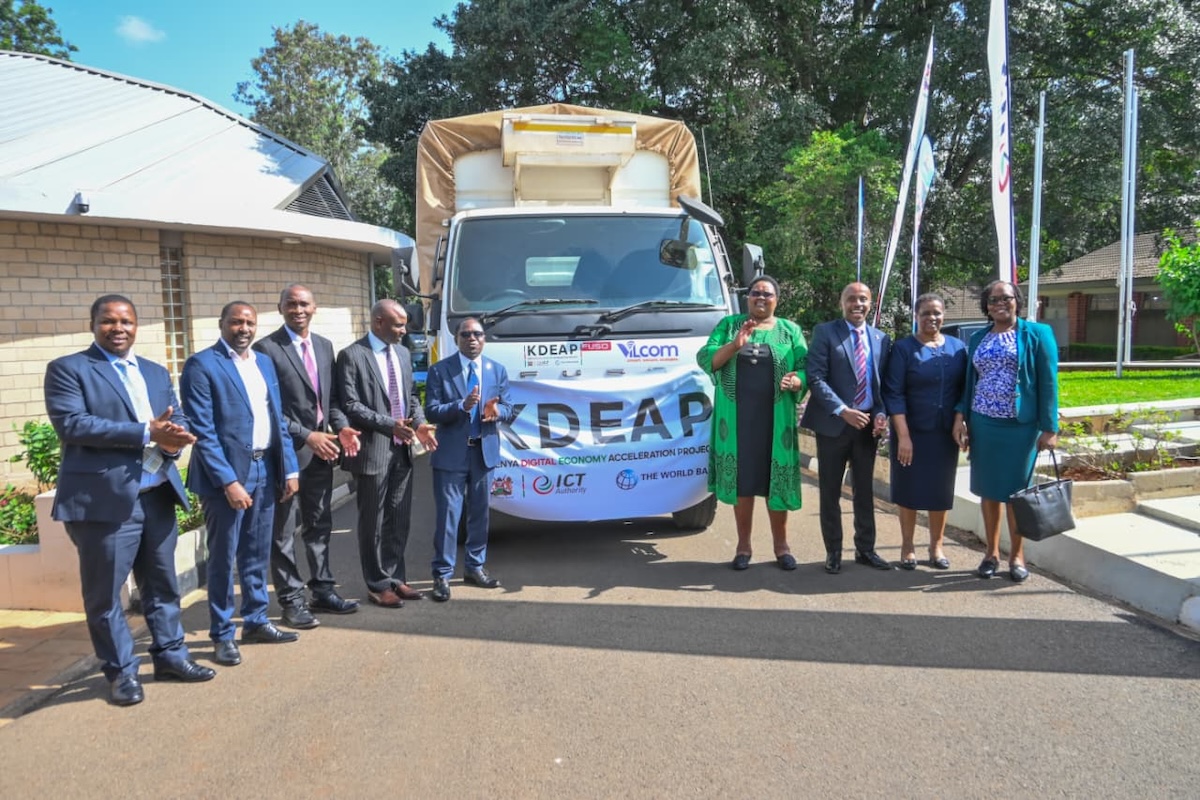
The Kenyan government has begun rolling out laptops and 65-inch interactive smart boards to 10,382 Junior Secondary Schools nationwide on Tuesday.
The launch was held at CEMASTEA in Nairobi, with officials drawn from the Ministry of Information, Communications and the Digital Economy, the Ministry of Education, Parliament, the World Bank, and the ICT Authority. The event included a live smart board demonstration featuring students from New Mukuru Primary School.
The rollout is being executed by the ICT Authority under the Kenya Digital Economy Acceleration Project (KDEAP), with World Bank support. Each school will receive one teacher laptop and one smart board through a phased deployment.
Principal Secretary for Broadcasting and Telecommunications Stephen Isaboke framed the initiative as a human capital investment. “We want our learners not to merely consume technology, but to create it, innovate through it, and apply it to solving challenges facing their communities and our nation,” he said.


ICT Authority CEO Jessy Maruti said the measure of success would be classroom impact, not device numbers. “The true value of this programme will not be measured by the number of devices delivered, but by the impact they create in classrooms,” he said.
World Bank KDEAP Task Leader Aneliya Muller said the devices would strengthen digital literacy early. “These devices will make lessons more visual, interactive, and engaging, supporting digital literacy from an early stage,” she noted.
Dagoretti South MP John Kiarie, who chairs the National Assembly’s Committee on Communication, Information and Innovation, called it a milestone in Kenya’s digital transformation. “We are equipping learners with the skills needed to thrive in the Fourth Industrial Revolution,” he said.
The device rollout is one component of a wider programme that also covers teacher training, digital content, internet connectivity, power infrastructure, technical support, and performance monitoring.
On broader infrastructure, the government says over 30,000 km of fibre optic cable has been laid toward a 100,000 km national target, with more than 8,000 public institutions now connected to the internet.
Go to TECHTRENDSKE.co.ke for more tech and business news from the African continent and across the world.
Follow us on WhatsApp, Telegram, Twitter, and Facebook, or subscribe to our weekly newsletter to ensure you don’t miss out on any future updates. Send tips to editorial@techtrendsmedia.co.ke


