

Kenya’s Hustler Fund Loses Budget Support as NYOTA Gains Ground
Treasury has stopped setting aside new money for the Hustler Fund as the government leans more heavily toward jobs and enterprise programmes for young people

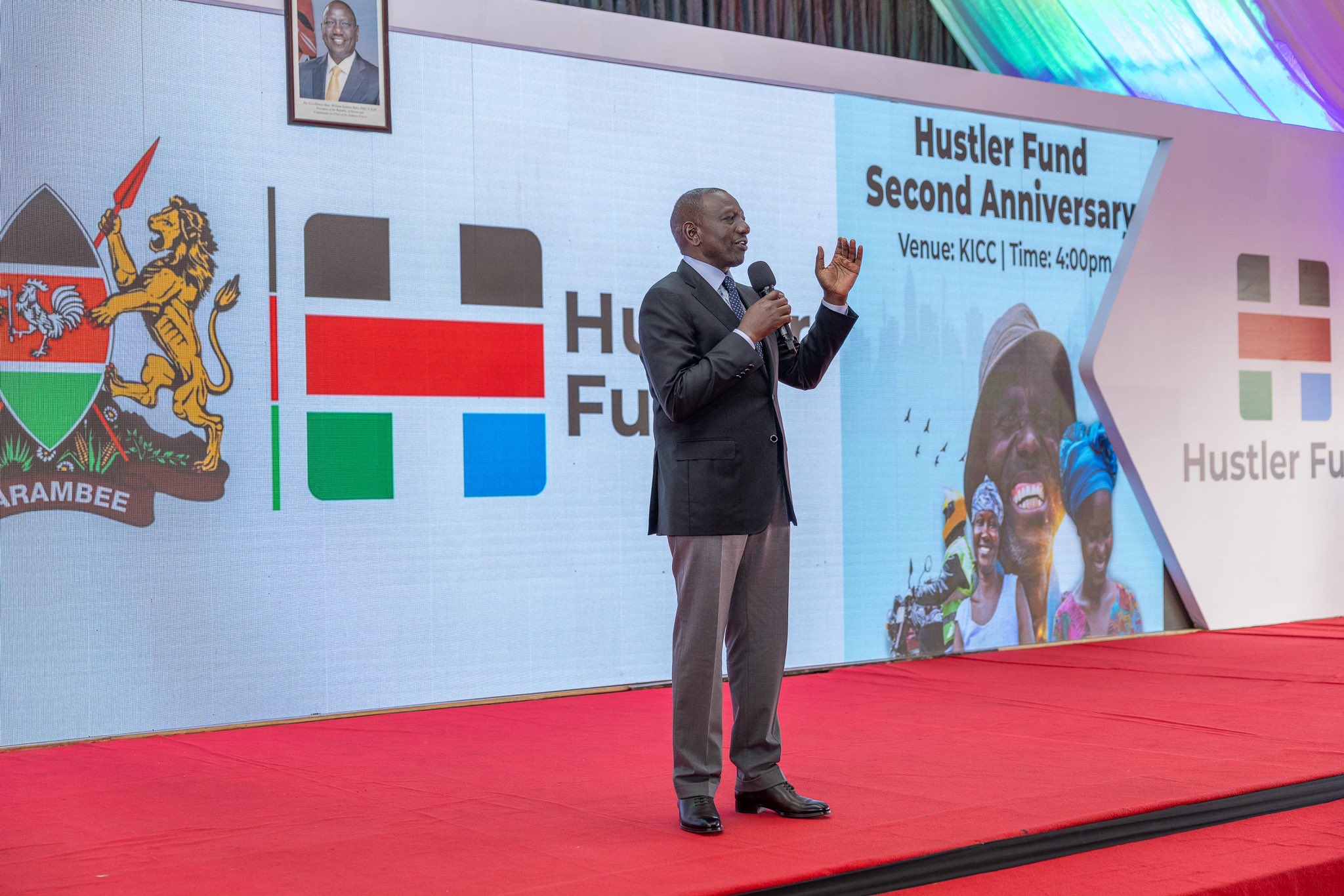
Fresh state funding for the Hustler Fund will end in the next budget cycle after the National Treasury removed the programme from planned development spending, closing a major financing chapter for one of President William Ruto’s signature economic projects.
Budget projections before Parliament show no allocation for the Financial Inclusion Fund from July 2026 onward, even as millions of Kenyans continue borrowing through the mobile-based credit scheme. Treasury officials say the programme now has enough capital to operate through recovered loans and repayments.
The move comes amid mounting fiscal pressure on the government and a broader reordering of spending priorities inside the Kenya Kwanza administration. More resources are being directed toward youth employment and business support initiatives tied to development partners, including the NYOTA programme backed by the World Bank.
The Hustler Fund entered the market in November 2022 as a central pillar of Dr Ruto’s bottom-up economic agenda. The scheme targeted informal workers and low-income borrowers locked out of conventional banking systems because of weak credit histories or lack of collateral.

At launch, the government committed Sh20 billion to the programme and outlined plans for eventual support amounting to Sh50 billion. Treasury records show total Exchequer releases had reached Sh14.8 billion by mid-2025.
Annual allocations have steadily narrowed since the rollout phase. The fund received Sh5 billion during the 2023/24 financial year after the initial launch injection. That figure later fell to Sh2 billion before dropping to Sh300 million in the current fiscal period ending June 2026.
Treasury budget director Albert Mwenda said the programme was structured to recycle repayments into new lending instead of depending on continuous public financing.
“Given the initial capital, the fund is adequately funded at the current uptake of loans,” Mr Mwenda said.
The withdrawal of fresh allocations reflects deeper budget constraints facing the government as debt repayment obligations continue weighing on public finances. It also points to a changing approach in how the administration intends to support small businesses and younger workers.
Treasury spending plans show the NYOTA programme will continue receiving funding over the medium term. The initiative has been allocated Sh4.78 billion in the current financial year, followed by Sh1.6 billion in 2026/27 and Sh2.65 billion annually in the following two years.
That spending pattern places greater emphasis on enterprise support, skills development and employment creation instead of direct mobile lending.
The Hustler Fund expanded rapidly after launch as borrowers turned to short-term digital loans for household spending and small business operations. Users accessed unsecured credit through mobile phones at an annualised interest rate of 8 percent, with repayment periods capped at 14 days.
The government later introduced the Bridge Loan facility for borrowers with strong repayment records. The product increased borrowing limits and extended repayment timelines to 30 days while retaining the existing pricing structure.
Data presented to Parliament by the State Department for Micro, Small and Medium Enterprises showed cumulative lending had reached Sh83 billion by March 2026. Repayments stood at Sh71 billion over the same period.
Officials also disclosed that the department was seeking Sh300 million to support recovery efforts tied to approximately Sh12.5 billion in unpaid loans.
Former Treasury Cabinet Secretary Njuguna Ndung’u previously defended the programme as an attempt to address structural exclusion within the financial system.
“The Hustler Fund is an instrument to correct market failures at the bottom of the pyramid,” Prof Ndung’u said during the programme’s early phase.
At the same time, auditors have raised concerns over loan verification and account management processes linked to the scheme.
Auditor-General Nancy Gathungu reported that 104,631 loans valued at Sh116.5 million were issued without matching national identification records in the customer database used for verification.
Her office also questioned the closure of 386,735 accounts connected to Safaricom SIM cards before borrowers cleared outstanding balances amounting to Sh377.5 million.
The audit findings intensified scrutiny over controls inside the rapidly expanding lending platform, particularly as default recovery efforts became more prominent within government operations.
Despite the end of new Treasury allocations, the administration maintains the fund remains operational and continues to broaden access to formal credit. During his State of the Nation address last year, President Ruto said millions of borrowers had rebuilt damaged credit profiles through the scheme and gained entry into the formal financial system.
He also acknowledged that access to loans on its own could not fully address unemployment and economic vulnerability among young Kenyans, a position increasingly reflected in the government’s evolving spending priorities.
Go to TECHTRENDSKE.co.ke for more tech and business news from the African continent and across the world.
Follow us on WhatsApp, Telegram, Twitter, and Facebook, or subscribe to our weekly newsletter to ensure you don’t miss out on any future updates. Send tips to editorial@techtrendsmedia.co.ke