

Cloud Technology Is Helping Bring Better MRI Scans to Rural Uganda
Researchers from Spain and Uganda are using Microsoft Research's cloud imaging platform to enhance scans from low-cost MRI systems, with implications for diagnostic access across Sub-Saharan Africa.

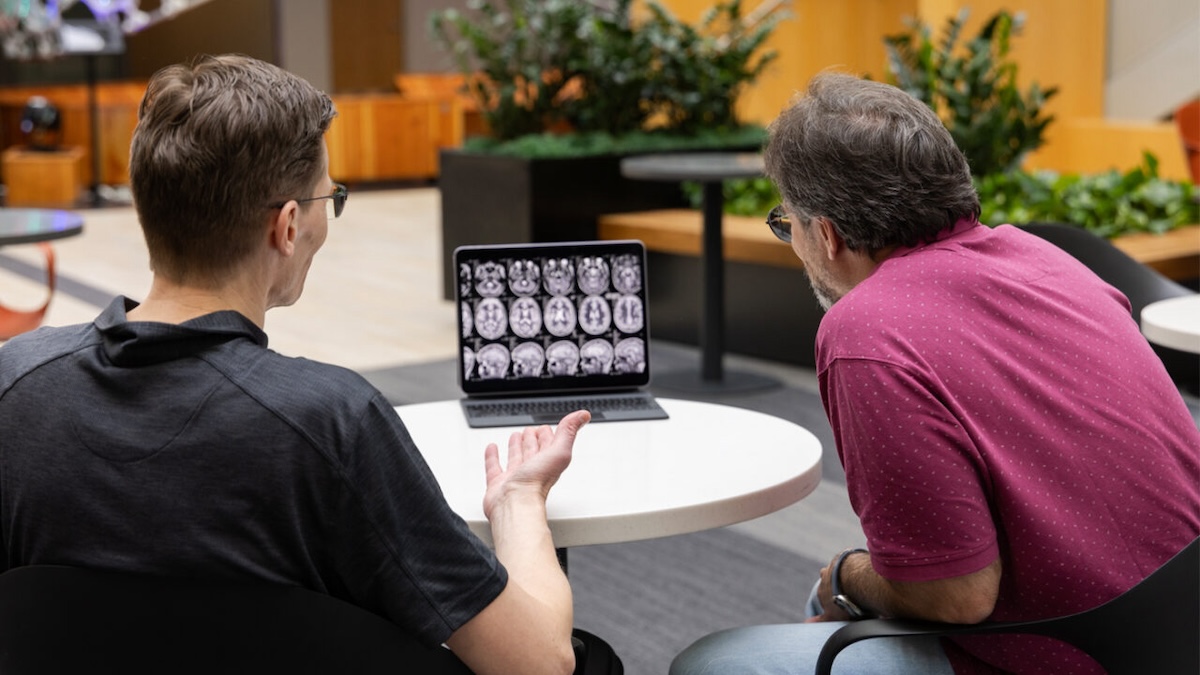
Researchers from Spain and Uganda are using cloud computing to improve the quality of MRI scans produced by ultra-low-field systems, in a development that could expand access to advanced medical imaging in underserved communities across Africa.
The project brings together the Institute of Instrumentation for Molecular Imaging (I3M) in Spain and Mbarara University of Science and Technology (MUST) in Uganda. Using Microsoft Research’s cloud-based imaging platform, Tyger, the teams are able to perform complex image reconstruction and denoising remotely, producing clearer, more diagnostically useful scans without the need for costly on-site computing infrastructure.
Conventional MRI systems depend on powerful magnets, specialised facilities, and high-performance computing hardware. Tyger shifts the image processing workload to the cloud, allowing scanners to focus solely on signal acquisition. Within the I3M-MUST project, raw MRI signals are transmitted to Microsoft Azure, where denoising and distortion-correction tools, including SNRAware, a Microsoft Research-developed model, enhance image quality before results are returned to researchers.
The collaboration addresses a persistent challenge in Sub-Saharan Africa, where converting captured MRI signals into usable images has been hampered by noise, limited computing resources, and weak infrastructure.


The approach has particular relevance for Uganda, where MRI facilities are scarce and patients frequently travel long distances for imaging — a barrier that can delay diagnosis and worsen outcomes for conditions requiring urgent intervention, including stroke, traumatic brain injuries, and hydrocephalus.
“For many patients, travelling to distant hospitals for imaging is simply not feasible,” said Eng. Dr. Johnes Obungoloch, Dean of the Faculty of Applied Sciences and Technology at MUST. “Technology like this could help bring advanced imaging to communities that have never had access to it.”
The collaboration began in 2023 following discussions between I3M and Microsoft Research on addressing MRI imaging challenges in low-resource environments. Since then, the teams have evaluated advanced reconstruction techniques and integrated the Ugandan MRI system with Tyger’s platform.
Progress has been tangible. “We have scanned dozens of volunteers since 2025,” said Obungoloch. “Early on, we could only image part of the head. Today, we can acquire full-head images.”
Beyond research output, the project is investing in skills development at MUST, training engineering and medical students, as well as community healthcare workers, in MRI technology and image reconstruction. Students are gaining hands-on experience in electronics, system design, and signal processing.
Michael Hansen, General Manager of Medical Imaging at Microsoft Research Health Futures, said the project demonstrated a broader principle. “By enabling image reconstruction and enhancement in the cloud through Tyger, researchers can produce clearer MRI images without relying on expensive local computing infrastructure. This opens new possibilities for making high-quality diagnostic imaging more accessible in underserved communities,” he said.
Go to TECHTRENDSKE.co.ke for more tech and business news from the African continent and across the world.
Follow us on WhatsApp, Telegram, Twitter, and Facebook, or subscribe to our weekly newsletter to ensure you don’t miss out on any future updates. Send tips to editorial@techtrendsmedia.co.ke


