
Western Data Center Plans in Africa Keep Running Into the Same Wall
Western-backed infrastructure plans in Africa continue to run into the financing realities China learned to absorb years ago

Plans for a major data center development in Kenya backed by Microsoft and Abu Dhabi-based G42 have effectively fallen away after comments from President William Ruto confirmed the project is no longer moving forward. The outcome points to a recurring obstacle in Africa’s technology sector: securing enough capital and patience to build expensive infrastructure in markets where revenues mature slowly.
The failed proposal also highlights a widening gap between strategic interest in Africa and the ability to operate there profitably. International technology firms continue to describe the continent as a future growth engine for cloud services, connectivity, and artificial intelligence systems. Turning those ambitions into functioning infrastructure has proven far more complicated.
China solved part of that equation years ago through state-backed financing.
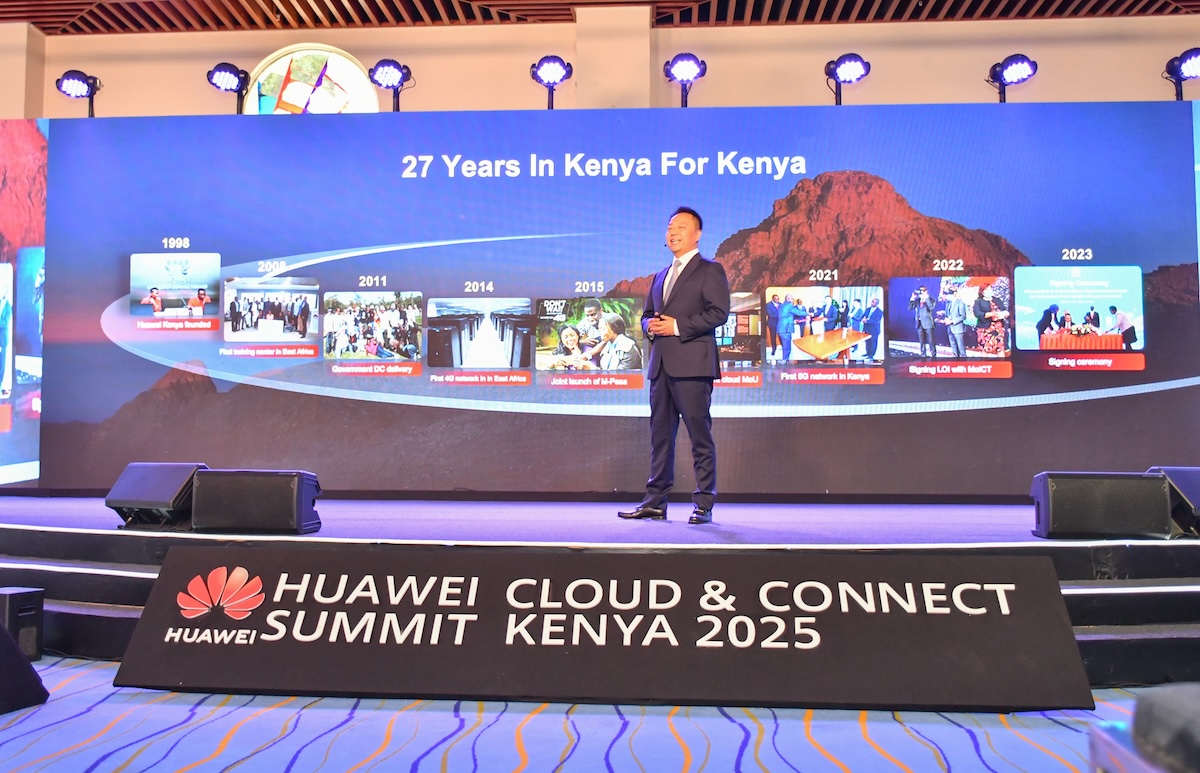
Chinese telecommunications suppliers entered African markets with lending support from Beijing’s policy banks, allowing governments to expand network coverage without relying entirely on domestic budgets or high-cost commercial borrowing. That framework helped firms such as Huawei become deeply embedded across the continent’s telecom sector. Huawei is estimated to account for about 70% of Africa’s 4G infrastructure footprint.


The importance of that position extends beyond tower construction and equipment sales. Once national networks are built around a particular vendor, operators often continue relying on the same companies for software updates, technical servicing, replacement hardware, and workforce training. Over time, that creates long operational relationships that competitors struggle to displace.
Western companies generally operate under a different financial structure.

American and European infrastructure investors usually depend on commercial return models that demand clearer profitability timelines. African markets can present difficult conditions for those calculations. Consumer purchasing power remains limited in many countries, currencies can swing sharply, and political transitions sometimes reshape regulatory priorities before projects recover their initial costs.
Those pressures become even heavier in data infrastructure projects, where operators must fund power systems, cooling equipment, land acquisition, fiber connectivity, and long construction timelines before demand fully develops.
The Kenya project became one example of that broader mismatch.
Announcements tied to artificial intelligence infrastructure and sovereign cloud capacity have accelerated across Africa as governments push for local data storage and digital industrialization. Many of those projects still face unresolved questions around financing structures, electricity reliability, and long-term customer demand.
Washington has repeatedly argued that dependence on Chinese telecommunications infrastructure creates security vulnerabilities, including concerns around surveillance exposure and critical systems disruption. Yet Western governments and companies have struggled to produce financing mechanisms capable of competing at comparable scale across emerging African markets.
That imbalance may shape the next phase of global technology competition more than public debate around artificial intelligence itself.
Control over digital infrastructure increasingly carries economic and geopolitical weight similar to transport corridors, ports, and energy systems in earlier industrial eras. Countries and companies that finance and maintain those systems can secure long-term influence over data flows, commercial platforms, and communications networks.
Africa sits near the center of that contest because of its demographic trajectory and low connectivity base. By 2050, the continent is expected to represent roughly one-quarter of the global working-age population, creating enormous future demand for digital services and online commerce.
The largest gains, however, may still remain inside African economies themselves. Expanded digital public infrastructure and interoperable systems could lower trade friction between countries, widen access to financial services, and strengthen regional commercial integration.
For outside powers, the challenge is becoming increasingly clear. Announcing billion-dollar partnerships is relatively easy. Building durable infrastructure businesses across fragmented and lower-income markets requires financing models willing to absorb risk over long periods, often with uncertain near-term returns.
Go to TECHTRENDSKE.co.ke for more tech and business news from the African continent and across the world.
Follow us on WhatsApp, Telegram, Twitter, and Facebook, or subscribe to our weekly newsletter to ensure you don’t miss out on any future updates. Send tips to editorial@techtrendsmedia.co.ke


