
Kenya Moves Deeper Into AFC’s Infrastructure and Tech Capital Plans
AFC is using Kenya to test financing structures that rely less on sovereign borrowing

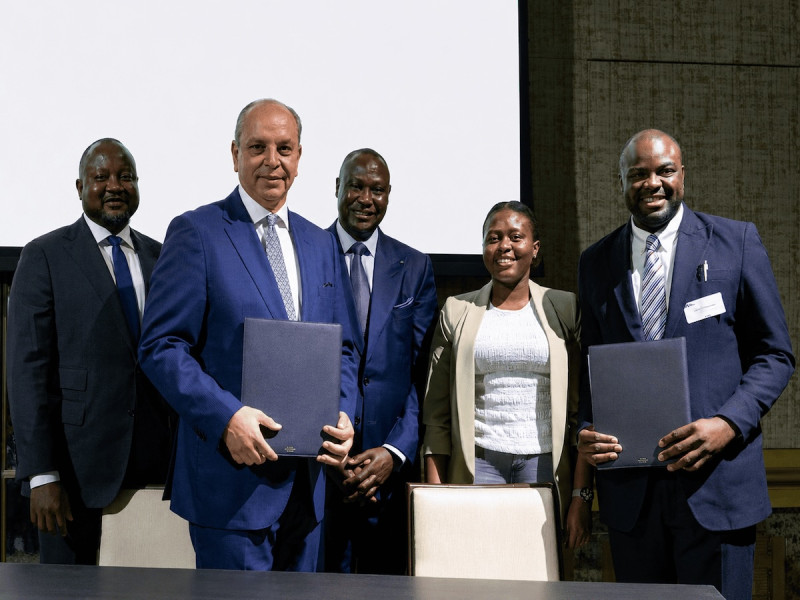
The Africa Finance Corporation is widening its role in Kenya beyond infrastructure lending as it builds new channels for African institutional money to flow into transport networks, industrial projects and technology investment funds.
The lender said it plans to mobilise and deploy more than $1 billion across East Africa over the next three to five years, with Nairobi now serving as its regional operating base. The expansion comes as governments across the region face tighter borrowing conditions and investors search for alternatives to sovereign-backed infrastructure financing.
AFC president Samaila Zubairu said the traditional model of relying heavily on state balance sheets has become increasingly constrained.
“We have to move beyond the assumption that infrastructure finance must sit primarily on sovereign balance sheets,” he said.

The institution is instead concentrating on financing structures designed to attract pension funds, insurers and long-term private capital into sectors that have historically depended on government borrowing or foreign lenders.
Part of that effort in Kenya runs through AFC’s investment in Dhamana Guarantee Company, a platform intended to improve access to infrastructure financing by providing guarantees and credit enhancement products for local debt markets.

The model mirrors InfraCredit in Nigeria, where guarantees are attached to infrastructure-related instruments to make them investable for domestic institutional funds.
For African financial markets, the underlying challenge has become less about the absence of capital and more about where that capital flows.
Pension funds across the continent continue to allocate large portions of their portfolios into short-duration government securities while infrastructure, logistics and industrial projects struggle to secure long-term financing in local markets.
AFC is now applying similar capital allocation logic beyond infrastructure.
The corporation recently approved commitments worth up to $100 million for venture and growth-stage investment funds operating across Africa, extending its financing strategy deeper into the technology sector at a time when startup funding conditions remain weak globally.
Rather than financing individual startups directly, AFC is placing money with fund managers already operating across African technology markets.
The first allocations under the programme include commitments to Lightrock Africa Fund II and Future Africa Fund III. Additional technology-focused investments are under consideration.
The move adds another layer to AFC’s broader effort to build African-owned financing platforms capable of funding businesses across multiple stages of growth.
Technology companies across fintech, digital commerce, software and infrastructure services are expected to benefit indirectly from the programme as venture investors face a more difficult fundraising environment following the pullback in global startup financing over the past two years.
AFC estimates Africa’s digital economy could generate more than $700 billion in economic output by 2050 as internet access, smartphone adoption and digital business systems expand across the continent.
The financing strategy also ties into AFC’s regional infrastructure ambitions in East Africa.
Executives at the institution argue that economic integration across the region continues to lag because infrastructure systems are still largely planned and financed at national level instead of corridor level.
Cross-border electricity trading within the East Africa Power Pool reached roughly 2.95 terawatt-hours in 2025, though investors and energy planners say regional industrial demand remains substantially higher.
Transport infrastructure continues to present another financing challenge.
The Naivasha-Malaba-Kampala standard gauge railway connection remains under construction, leaving freight operators dependent on road transport and ageing metre-gauge rail systems across sections of the Northern Corridor.
Industrial processing projects are also drawing increasing attention from financiers targeting regional supply chains. During the Africa We Build Summit, Dangote Industries announced plans linked to a proposed 650,000 barrels-per-day refinery project in Tanga, Tanzania.
Currency exposure remains one of the largest risks affecting long-term infrastructure financing across African markets where revenues are often earned in local currencies while debt repayments sit in dollars.
AFC says it is relying more heavily on local-currency structures, blended finance arrangements and hedging mechanisms to reduce those mismatches.
Kenya’s financial system is becoming central to that strategy because of the scale of its pension industry, banking sector and position within regional trade corridors stretching across East Africa.
The corporation’s expanding activity across infrastructure guarantees, venture capital allocation and regional financing platforms points toward a broader institutional objective: moving more African savings into long-duration productive assets rather than short-term government debt.
Go to TECHTRENDSKE.co.ke for more tech and business news from the African continent and across the world.
Follow us on WhatsApp, Telegram, Twitter, and Facebook, or subscribe to our weekly newsletter to ensure you don’t miss out on any future updates. Send tips to editorial@techtrendsmedia.co.ke


