Why a SpaceX-Tesla Merger Would Redraw the Economics of Musk’s AI Empire
The merger talk comes as SpaceX prepares for a public market debut that could tighten scrutiny around Musk’s companies

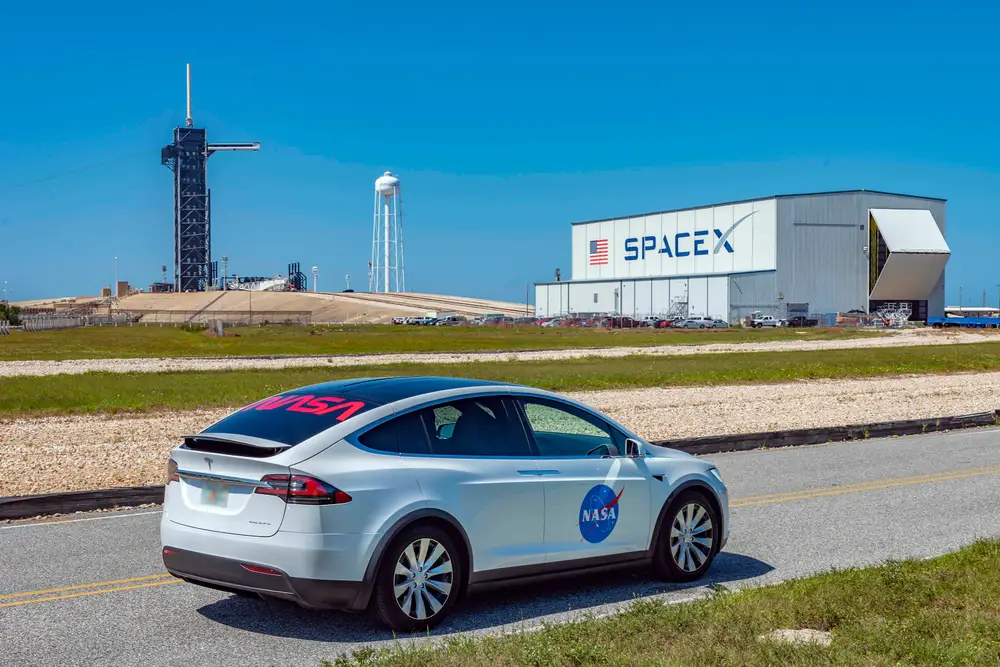
Wall Street has spent years trying to decide whether Tesla belongs in the car industry, the software sector, or the AI trade. A reported proposal involving a SpaceX-Tesla merger pushes the question into a different category altogether.
The discussion surfaced ahead of an anticipated SpaceX public listing on Nasdaq. People close to early investment rounds in the rocket company reportedly view consolidation between the two firms as increasingly likely rather than speculative.
That timing matters more than the merger talk itself.
Private companies operate with fewer disclosure obligations, especially around related-party transactions and internal resource allocation. Once listed, governance hardens. Minority shareholders gain procedural leverage. Executive decision-making becomes more exposed to litigation risk and institutional scrutiny. Folding assets together before or around a listing changes how control is distributed before public investors fully arrive.

Musk’s businesses have already begun collapsing inward.
Earlier this year, SpaceX absorbed xAI, the artificial intelligence company Musk launched to compete in the generative AI market. The transaction did not resemble a conventional acquisition strategy aimed at diversification. It looked closer to infrastructure stacking.

The overlap between the companies has widened in practical ways long before any formal merger discussion became public. Tesla engineers have crossed into aerospace manufacturing projects. Software talent moves between units. Computing demands have become shared operational concerns rather than separate corporate priorities.
Inside the market, Tesla’s valuation has also drifted away from automotive metrics.
Vehicle deliveries still shape quarterly reactions, but investor expectations increasingly sit around autonomous systems, humanoid robotics, training compute, energy storage, and AI deployment. The company’s long-term narrative depends less on EV manufacturing volume than on whether it can commercialize machine intelligence at industrial scale.
SpaceX brings a different layer to that equation.
Starlink controls a fast-growing satellite communications network with strategic importance for military logistics, remote connectivity, and data transmission infrastructure. Launch capability remains one of the hardest industrial systems to replicate globally. Those assets carry geopolitical weight in addition to commercial value.
A merged structure would place transportation hardware, orbital communications, robotics development, AI model training, and energy infrastructure inside one executive chain.
Some investors may view that as operational efficiency. Others will see concentration risk expanding faster than governance can keep pace.
There is already discomfort in parts of the market around how dependent Musk-linked companies have become on his direct intervention. Tesla’s stock volatility has repeatedly tracked political controversies, platform activity, and legal disputes unrelated to vehicle production. Combining SpaceX with Tesla could deepen that exposure by tying aerospace contracts and satellite operations more closely to the same public-facing executive center.
The financial engineering would also be difficult.
SpaceX remains privately valued at levels that fluctuate through secondary-market transactions rather than continuous public trading. Tesla trades in open markets with daily repricing pressure. Determining exchange ratios, shareholder dilution, and voting structures would become a central fight in any serious merger process.
The bigger industrial story sits elsewhere.
Large technology firms increasingly want ownership across the entire AI delivery chain: compute infrastructure, connectivity, energy supply, hardware manufacturing, data distribution, and user-facing systems. Most companies assemble those pieces through partnerships. Musk’s network of firms has moved toward internal consolidation instead.
That approach carries advantages during capital-intensive cycles. It can reduce dependency on outside suppliers and align engineering priorities across subsidiaries. It also builds unusually dense executive control around sectors that governments already treat as strategically sensitive.
A decade ago, Tesla and SpaceX were often discussed separately — one attached to electric vehicles, the other to commercial launches.
The boundary has weakened.
The companies now orbit the same commercial thesis: machine autonomy operating across physical infrastructure. Cars, satellites, robotics, energy systems, communications networks, launch vehicles. The sectors differ. The computational logic underneath them increasingly does not.
Go to TECHTRENDSKE.co.ke for more tech and business news from the African continent and across the world.
Follow us on WhatsApp, Telegram, Twitter, and Facebook, or subscribe to our weekly newsletter to ensure you don’t miss out on any future updates. Send tips to editorial@techtrendsmedia.co.ke