Adil El Youssefi | How Africa’s Data Centres are Evolving to Support the Continent’s AI Surge

Across Africa, artificial intelligence (AI) has moved from being a futuristic concept to a daily reality. Banks are using it to detect fraud, logistics firms to optimise routes, hospitals to support diagnostics, and government departments to manage citizen records and service delivery. This raises interesting questions about the continent’s infrastructure readiness. Instead of asking whether AI will be adopted, we should ask whether our physical infrastructure is ready to support its rapid, large-scale adoption.
We already know the answer: Without modern, AI-ready data centre infrastructure, the pace and quality of AI growth in emerging markets will remain under pressure.
AI is changing Africa’s industry sectors
In the financial services industry, for instance, African banks are using machine learning models to analyse transaction behaviour in real time, flag anomalies, and reduce fraud losses. These models are compute-intensive and need constant training and retraining. Pushing these workloads offshore because local facilities can’t support them has consequences, including increased latency and higher costs, along with data sovereignty and consumer trust concerns.


In logistics, AI enables organisations to forecast demand, manage their fleets, and improve cross-border supply chains. Fast, reliable data access across regions is essential for this to work smoothly and effectively. When systems are relied on to coordinate ports, warehouses, and vehicles, a delay of milliseconds can quickly translate into real inefficiencies.
Essential healthcare solutions such as AI-assisted imaging, patient record storage and analysis, and predictive health models all require secure, high-performance compute environments. Sending sensitive health data halfway around the world for processing is not always acceptable to regulators or patients, and it certainly doesn’t build long-term trust in digital health systems.
Local data centres need to be ready to manage these realities.
African data centres that meet African needs
The reality is that many data centres across the continent were designed for a different era. They were built to host enterprise IT systems, basic cloud workloads, and storage. AI changes the equation. Africa’s data centre demand is projected to grow to about 1.5 to 2.2 gigawatts by 2030, which poses challenges that must be addressed sooner rather than later:
- Power is the most obvious constraint. AI workloads need consistent, high-quality electricity. Grid instability, voltage fluctuations, and limited capacity make it difficult to reliably support these high compute requirements. Data centres need to invest in hybrid power strategies that combine grid supply, on-site generation, and renewable power sources.
- In regions with high ambient temperatures, traditional air-cooling approaches quickly become inefficient and expensive. This has led to growing interest in liquid cooling and other advanced techniques to maintain performance without wasting energy.
- AI workloads generate vast amounts of data that must move quickly between users, platforms, and regions. High-bandwidth, low-latency connectivity within and between African markets is essential to avoid overreliance on offshore infrastructure. Regional hubs with strong fibre interconnections keep data closer to where it’s generated and used.
This is why developing local data centre capacity is so important. When AI processing happens on the continent, businesses flourish, investor confidence rises, and economies become more resilient.
Building independent digital ecosystems in Africa, for Africa
The good news is that Africa is rising to the challenge, with companies like Cassava Technologies investing heavily in GPU capacity and partnerships that bring advanced computing closer to African markets. Design also matters. Modular data centre architecture allows capacity to be added as demand grows, rather than requiring large upfront builds that may be underutilised. This approach suits emerging markets, where growth can be unpredictable, but fast once it starts.
At Africa Data Centres, we see this firsthand. Clients are no longer asking only about space and uptime. They want to know whether facilities can support high-density racks, whether solutions can scale, and whether connectivity will keep pace with their AI ambitions.
Investing in the physical foundations that support growth
The implications of these conversations are straightforward. If we want AI to contribute meaningfully to economic growth, job creation, and better public services, we must prioritise the physical foundations that make it possible. Skills programmes and software adoption are important, but they rest on infrastructure.
Emerging markets can support AI growth through deliberate investment in power-secure, well-connected, climate-appropriate, and AI-ready data centres. The opportunity is there. The demand is too. The question is whether we can move fast enough to meet it.
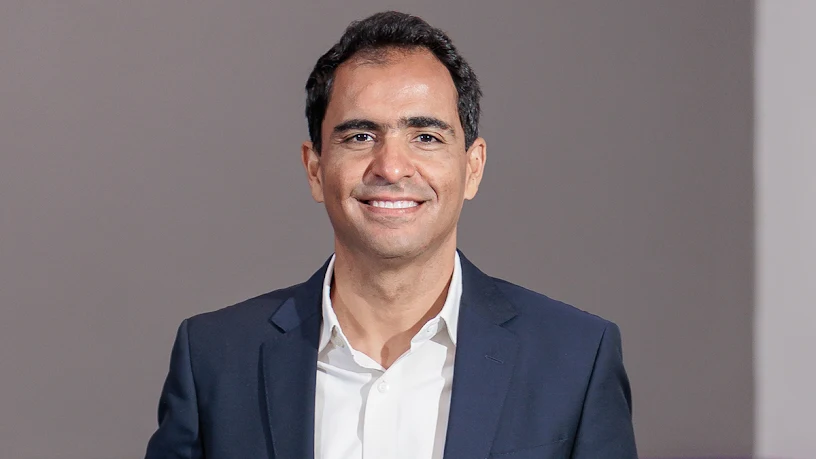
Adil El Youssefi, is the Chief Executive Officer at Africa Data Centres.
Go to TECHTRENDSKE.co.ke for more tech and business news from the African continent and across the world.
Follow us on WhatsApp, Telegram, Twitter, and Facebook, or subscribe to our weekly newsletter to ensure you don’t miss out on any future updates. Send tips to editorial@techtrendsmedia.co.ke