The TechTrends Podcast | Samsung Galaxy S26 Series: Evolution or Safe Upgrade?

Samsung’s Galaxy S26 series launched globally in February, going on sale on March 11 and the questions around it have been hard to ignore. Did Samsung play it safe? Is AI replacing hardware? And is the privacy display a genuine leap or a gimmick?
In the latest episode of The TechTrends Podcast, host Nixon Kanali sat down with Ryan Mule, Product Manager at Samsung Electronics East Africa, for a deep dive into everything the S26 lineup brings to the table.
Defining categories, not chasing numbers
Mule was unequivocal from the outset: Samsung did not play it safe with the S26. But more importantly, the goal was never to win a spec sheet war.
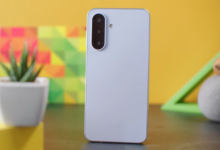

“We’re keen on defining categories within the smartphone space,” Mule said. “It’s not necessarily just chasing numbers. It’s how we introduce something new that sets the standard for everyone else.”
That philosophy, he explained, now extends from hardware design all the way into AI, reflecting a broader industry shift from the smartphone era into what Samsung is calling the AI era.

Design language: the Porsche 911 argument
One of the episode’s sharper exchanges came around Samsung’s design consistency. Critics note the S26 looks much like its predecessors. Mule’s counter was disarming: he placed an S26 Ultra, an S26 Plus, an A57, and an A37 in front of the camera, and I could barely tell them apart.
That, Mule argued, is precisely the point. “Our brand identity is that premium look and feel, and we want our customers to be 100% confident that even when they buy an A07 or an A17, they’re getting a premium-looking device they’re proud to showcase.” He drew a parallel with the Porsche 911, a car whose silhouette has barely changed in five decades and is stronger for it.
Now Nudge and the proactive AI shift
On Galaxy AI, Mule zeroed in on Now Nudge as the feature that best captures Samsung’s direction. Unlike AI tools that sit buried in settings menus, Now Nudge works contextually within messaging apps, WhatsApp, email, and SMS, to surface relevant actions before the user has to ask.
The examples were practical: if someone messages you to meet for lunch at 2pm, Now Nudge reads that context, checks your calendar, and flags a conflict. If someone asks you to share a contact, it identifies and populates it automatically. “The goal is to make the AI experience a lot more proactive and personalised,” Mule said. “It appears and helps you with your day-to-day life right there in front of you.”
He also pointed to Gemini-powered agentic actions, a feature that can, for instance, open the Uber app and set a booking end-to-end from a single voice instruction, rather than just returning instructions for the user to act on themselves.
Photo Assist: creativity tool, not authenticity threat
The conversation around photography was one of the episode’s most nuanced. Kanali pressed Mule on where Samsung draws the line between AI-enhanced creativity and image manipulation that erodes authenticity. Mule’s position: the line belongs to the user, not the technology.
“The intention behind Photo Assist is to unlock and stretch your creativity and make it more accessible,” he said. Samsung has built in automatic Galaxy AI tagging on any AI-edited image, and Mule noted that detection tools exist externally as well. “The authenticity and the intent boil down to the user. Legislation and verification will catch up eventually.”
Photo Assist on the S26 has moved beyond object erasing, now the best on any smartphone, Mule claimed, to support prompt-based and voice-based edits, adding elements to images, and generating content through Creative Studio.
Camera: hardware and AI as partners, not rivals
On the question of whether AI-driven improvements are replacing the need for camera hardware upgrades, particularly relevant since the base S26 and S26 Plus received no hardware camera changes this year, Mule was clear: it is a synergistic relationship, not a substitution.
The S26 Ultra, however, did receive meaningful hardware changes. A wider aperture main sensor draws in significantly more light, critical, Mule stressed, because light is the bread and butter of photography. The new all-lens-on-prism telephoto system improves zoom quality and speed. And the 200MP sensor, he explained for non-technical listeners, exists specifically because smartphone sensors are physically constrained in size; more pixels compensate for what a smaller sensor loses relative to a full-frame camera.
On video, the S26 Ultra supports 8K at 30fps, both a creative tool for high-end indie filmmakers today and a future-proofing play for when 8K displays become mainstream. The horizon lock feature, which mimics a handheld gimbal, was Mule’s personal standout feature, making the phone genuinely viable for run-and-gun videography without additional equipment.
Privacy display: hardware innovation, real-world utility
The privacy display, the S26 Ultra’s most-discussed feature, limits screen visibility to the person holding the phone, blocking side-angle views. Mule described it as genuinely complex technology, combining hardware-level light control with AI to switch photons on and off selectively across the display.
“I think everyone immediately associated how it helps them in their real-world life,” he said, whether on public transport, in an SGR coach, or simply typing sensitive information in a public space. It also eliminates the need for third-party privacy screen protectors, which typically degrade brightness and clarity. Mule confirmed the feature is currently exclusive to the Ultra but expects it to eventually trickle down across the lineup.
Charging and batteries: the deliberate approach
On charging, a long-standing point of criticism for Samsung, the S26 lineup now offers 25W, 45W, and 60W across the range. Mule pushed back gently on the framing of Samsung, “catching up” to rivals offering 80W or higher.
“We are more focused on what the device environment is and how it is drawing power from that battery,” he said. Higher wattage charging introduces battery degradation and safety considerations that Samsung’s testing process takes seriously. The 60W rating delivers around 75% charge in 30 minutes, and in Mule’s view, most users only need a quick top-up before heading out, not a full charge. Battery life itself is protected through power-efficient processors and software optimisation through One UI updates.
Pricing and value
The S26 starts at KES 120,000, the Plus at approximately KES 135,000 (converted from $1,099), with the Ultra retaining its launch price on base storage. The removal of the 128GB base option, now replaced by 256GB as standard, reflects both the storage demands of AI software and the shift in what the premium market actually uses. Mule also pointed to global memory shortages and local taxation as factors behind price movement across the industry, not just Samsung.
Financing is available through Loop, with 3–6 month instalment plans across Samsung Experience Stores. Samsung Care Plus is available on the entire S26 lineup, and extends down to the A series, offering heavily discounted screen repair costs compared to out-of-warranty pricing.
The devices are available at Samsung Experience Stores in major malls across Nairobi, Mombasa, and Kisumu. Those wanting a hands-on preview before visiting a store can download the Try Galaxy app, which runs a virtual simulation of the S26 interface on any Android device.
Listen to the full conversation on The TechTrends Podcast, available on Spotify, Apple Podcasts, Afripods and YouTube.
Go to TECHTRENDSKE.co.ke for more tech and business news from the African continent and across the world.
Follow us on WhatsApp, Telegram, Twitter, and Facebook, or subscribe to our weekly newsletter to ensure you don’t miss out on any future updates. Send tips to editorial@techtrendsmedia.co.ke