
Vivo V70 vs V70 FE: Which Vivo Model Is Worth the Money?

Smartphone buying decisions often narrow down to one uncomfortable question: which compromises will you actually notice after a few months of use?
That question sits at the center of the recently launched Vivo V70 and Vivo V70 FE, which are now on sale in the country. On paper, the V70 is the stronger device. It has the better processor, stronger materials, faster storage, and a more flexible camera system. It also costs KSh 84,999 in Kenya. The V70 FE starts at KSh 57,999, stretches battery life far beyond most phones in its class, and trims back features that fewer buyers consistently use.
The result is not a simple hierarchy. These phones are built around different assumptions about how people use their devices.
V70 FE is designed around endurance before anything else
The defining feature of the V70 FE is not the camera or the display. It is the battery.


A 7000mAh cell changes ownership patterns in ways that spec sheets rarely capture. Charging becomes less frequent. Long commutes, streaming sessions, navigation, and photography stop carrying the same low-battery anxiety that shapes behavior on smaller devices.
Testing reflects that difference clearly. The FE reached an active use score of 20:41 hours, while the V70 stopped at 16:52 hours. Both phones support 90W charging, though the larger battery in the FE naturally takes longer to refill.

That trade is visible across the device. The FE prioritizes continuity of use above outright performance.
The V70 earns its price through refinement, not just speed
At KSh 84,999, the V70 enters a category where buyers expect more than competent hardware.
Vivo addresses that expectation through cumulative upgrades rather than one headline feature. The phone uses an aluminum frame instead of plastic, faster UFS 4.1 storage instead of UFS 3.1, and an ultrasonic fingerprint reader instead of an optical sensor.
None of those changes dramatically alter the experience in isolation. Together, they create a device that feels more complete.
The Snapdragon 7 Gen 4 also gives the V70 more breathing room under heavier workloads. Gaming stability improves, multitasking feels less constrained, and sustained performance holds longer.
Those advantages become noticeable over time rather than immediately.
Camera differences reveal who each phone is actually for
The largest practical separation between the two devices appears in the camera systems.
The V70 uses a 50MP main sensor alongside a 50MP periscope telephoto camera with 3x optical zoom. That setup expands the kinds of shots the phone can realistically handle. Portraits, distant subjects, and travel photography all benefit from dedicated zoom hardware.
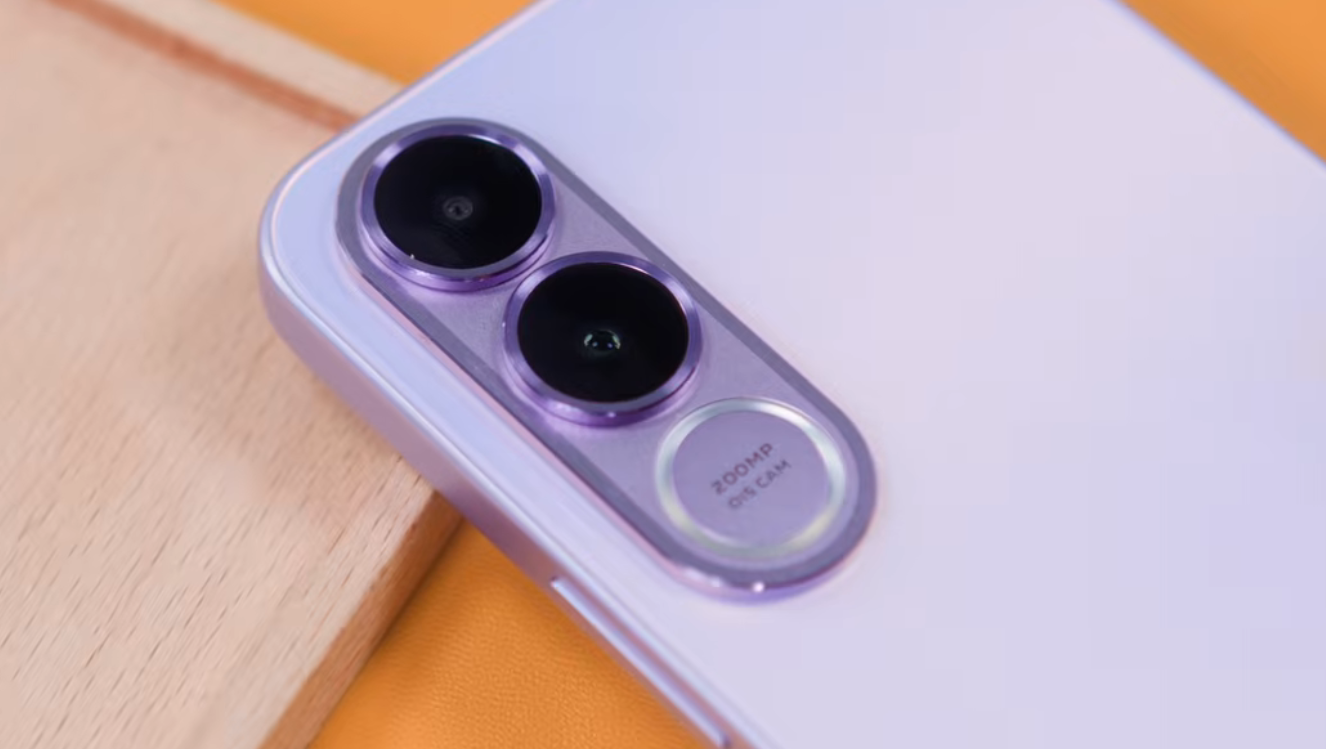
The V70 FE takes another route entirely. Vivo centers the device around a 200MP main sensor and removes the telephoto camera altogether.
In good lighting, the FE can produce detailed images with strong contrast and usable dynamic range. The limitations emerge once zoom enters the picture. Digital cropping cannot consistently replace optical magnification, particularly in motion or low light.
Front cameras also follow the same divide. The V70 includes autofocus on its 50MP selfie camera. The FE relies on a fixed-focus 32MP sensor.
The difference is less about megapixels than consistency.
The price gap changes how the compromises feel
Without pricing, the V70 FE risks looking like a reduced version of the V70. The Kenyan pricing changes that interpretation.
At KSh 57,999, the FE sits in a more defensible position. Plastic construction becomes easier to justify. The Dimensity 7360 Turbo feels appropriately placed. The absence of a telephoto camera becomes less surprising.
The V70, meanwhile, must justify an additional KSh 27,000.
That extra cost buys:
- stronger cameras
- more premium construction
- better sustained performance
- faster storage
- improved biometrics
The question becomes whether those upgrades materially affect daily use for the person buying the phone.
For some users, they absolutely will. For many others, the battery difference may remain more visible than the performance gap.
Display and audio tell a subtler story
Both phones use AMOLED panels with 120Hz refresh rates, but the experience diverges slightly in practice.
The V70 reaches higher peak brightness in testing and remains easier to use outdoors. The FE’s manual brightness ceiling is lower, which makes automatic brightness almost essential under direct sunlight.
The FE responds elsewhere with stronger speaker hardware. Its dual full-size stereo speakers produce louder and more balanced audio than the V70’s hybrid setup.
That makes the FE particularly strong for long-form video watching and casual media use.
Which Vivo V70 actually makes more sense?
The answer depends less on technical superiority than on which limitations become visible during daily use.
The V70 is the more capable phone. Its camera system is stronger, its performance ceiling is higher, and the hardware feels more refined from the moment it leaves the box.
The V70 FE is more narrowly focused, but also more strategically focused. It places battery life and sustained usability above nearly everything else.
For buyers who keep dozens of apps open, play demanding games, or care deeply about mobile photography, the V70 justifies its position.
For buyers who mainly want a phone that lasts, stays smooth, charges quickly, and handles everyday use without interruption, the V70 FE may end up feeling like the more practical purchase.
That distinction matters more than benchmark scores.
Go to TECHTRENDSKE.co.ke for more tech and business news from the African continent and across the world.
Follow us on WhatsApp, Telegram, Twitter, and Facebook, or subscribe to our weekly newsletter to ensure you don’t miss out on any future updates. Send tips to editorial@techtrendsmedia.co.ke


