Ferrari’s First Electric Car Is Already Dividing Its Own Audience
Ferrari’s new EV packaging expands interior space but challenges the proportions people expect from the brand


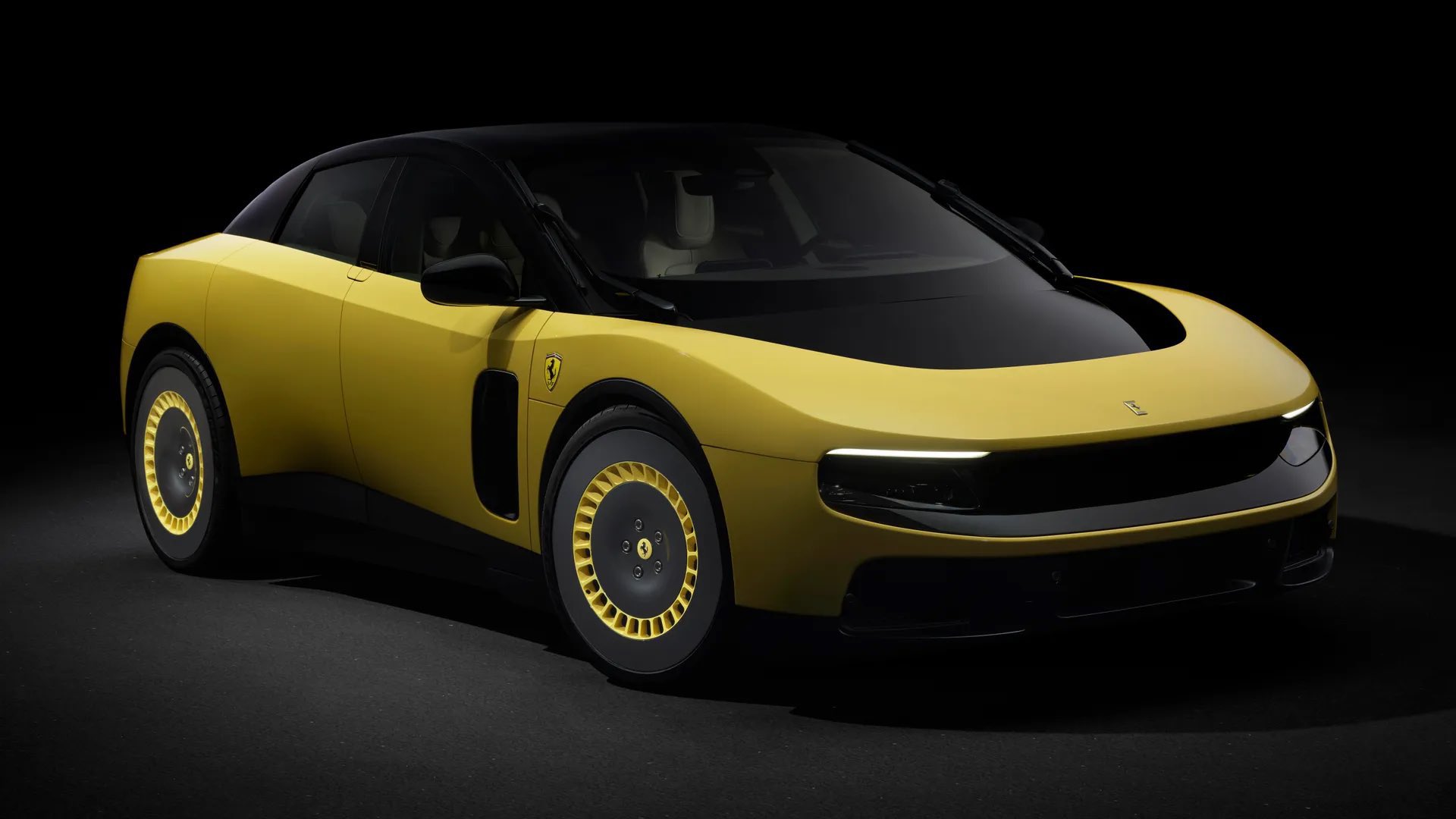
Ferrari spent years insisting electrification would arrive on its own terms. The Luce is what those terms now look like.
The €550,000 electric grand tourer marks the company’s first fully electric production car and one of the most consequential launches in Ferrari’s modern history. Developed with design input from LoveFrom, the studio founded by former Apple Chief Design Officer Jony Ive and industrial designer Marc Newson, the Luce arrives with four doors, five seats and proportions that sit well outside Ferrari’s traditional visual territory.
The response was immediate. Online criticism focused on the car’s softened surfacing, elevated stance and departure from the tightly sculpted aggression long associated with Ferrari’s combustion-era identity. But the intensity of the backlash revealed something larger than disagreement over styling. The Luce has become a referendum on whether Ferrari’s emotional identity can survive once the engine stops being the defining center of the experience.
Ferrari appears to believe it can.


For decades, the company built exclusivity around mechanical distinction. Engine sound, vibration, throttle response and tightly packaged proportions became inseparable from Ferrari’s image. Electrification changes all of those variables simultaneously. EV platforms alter weight distribution, cabin architecture, sound design and exterior packaging in ways that make continuity difficult even for the world’s most recognizable performance brands.
Ferrari Chief Design Officer Flavio Manzoni said the company deliberately avoided reproducing combustion theatrics through artificial nostalgia. Instead, the Luce shifts emphasis toward steering feel, braking response, tactile controls, material quality and aerodynamic balance.

That philosophy becomes most visible inside the cabin.
While much of the luxury EV market continues moving toward touchscreen-heavy minimalism, Ferrari retained physical switches, textured controls and mechanical interaction points across the dashboard and steering wheel. The company has also experimented with amplified vibrations from the electric powertrain to create a distinct Ferrari sound signature without relying entirely on synthetic engine simulation.
Ferrari’s challenge is preserving the qualities customers historically associate with the brand — how the cars look, sound and feel — through an entirely different propulsion system.
The Luce also carries traces of another automotive project that never reached production.
Several designers connected to LoveFrom previously worked inside Apple’s abandoned electric vehicle program before the technology company ended the effort in 2024 after years of development and multibillion-dollar investment. Elements of the Luce reflect industrial design principles closely associated with Apple hardware under Ive’s leadership: restrained graphics, simplified surfaces, brushed metal detailing and carefully controlled visual reduction.
That design language helps explain why the car feels unfamiliar to some Ferrari loyalists.
Ferrari traditionally designed around visible drama and mechanical expression. LoveFrom’s philosophy prioritizes clarity, restraint and long-term visual simplicity. The Luce sits directly between those worlds.
The divide in reaction also reflects a broader cultural split between traditional performance enthusiasts and a newer class of luxury EV buyers shaped more by technology products, minimalist industrial design and premium electric mobility than by motorsport heritage.
The Luce appears designed less around contemporary supercar theatrics and more around visual permanence. Its cleaner surfaces and simplified forms suggest a car intended to age gradually rather than dominate attention immediately. That restraint may ultimately help the design endure longer than many aggressively styled EVs now competing for short-term attention.
Ferrari is also expanding its idea of practicality. Without a large combustion engine occupying the front of the vehicle, designers increased interior space and altered cabin proportions. The Luce becomes Ferrari’s first five-seat production model and only its second modern four-door vehicle.
That broader usability may reflect a larger customer transition underway inside the luxury market.
Ferrari executives have reportedly described the ideal Luce buyer as someone who already owns an electric vehicle. The company appears to be targeting EV-native luxury consumers while preserving Ferrari’s ultra-exclusive positioning. More than 80% of Ferrari buyers already own another Ferrari, meaning the Luce may function less as a loyalty product and more as an attempt to establish long-term relevance with a future generation of wealthy buyers.
Chinese EV manufacturers also loom heavily over the strategic backdrop. Companies such as BYD are rapidly accelerating experimentation in high-performance electric vehicles, increasing pressure on legacy luxury brands to establish their own electric identity before newer competitors dominate the category technologically and culturally.
That pressure partly explains Ferrari’s willingness to move more aggressively than some rivals.
Lamborghini recently delayed plans for its first fully electric model after weaker-than-expected demand for luxury EVs raised concerns across the performance segment. Bentley extended its electrification timeline. Porsche has expanded investment in combustion and hybrid platforms after EV demand slowed in key markets.
Ferrari itself is moving cautiously beneath the boldness of the Luce reveal. The company has reduced long-term EV targets and now expects fully electric vehicles to account for roughly 20% of its lineup by 2030, down from earlier projections. Ferrari also reportedly delayed plans for a second EV as the luxury market continues showing uneven appetite for high-end electric performance cars.
That tension makes the Luce particularly significant.
Analysts increasingly view the vehicle less as a major-volume product and more as a strategic statement about how Ferrari intends to participate in the next phase of luxury performance. Ferrari has already invested heavily in electrification infrastructure, including a dedicated “e-building” facility in Maranello designed to support future EV and hybrid development.
The company also expects the Luce to be profitable from launch, reinforcing Ferrari’s broader strategy of protecting exclusivity and margins rather than pursuing EV scale at the expense of brand positioning.
The unresolved question is whether the Luce ultimately becomes a defining template for luxury EV design or a transitional experiment created during a period of uncertainty around electrification itself.
Performance has become easier to replicate in the EV era. Multiple manufacturers can now produce electric cars with extreme acceleration and four-figure horsepower outputs. Ferrari is attempting to preserve distinction somewhere else — through tactility, emotional atmosphere, interaction quality and design identity.
The Luce is therefore more than Ferrari’s first EV. It is an attempt to define what emotional luxury looks like after combustion stops being the defining feature of a Ferrari.
Go to TECHTRENDSKE.co.ke for more tech and business news from the African continent and across the world.
Follow us on WhatsApp, Telegram, Twitter, and Facebook, or subscribe to our weekly newsletter to ensure you don’t miss out on any future updates. Send tips to editorial@techtrendsmedia.co.ke