
Bharat Thakrar Built WPP Scangroup. Retaking It Is Another Matter
For Bharat Thakrar, the AGM result underscored a reality many founders eventually face: the company they built no longer belongs to them alone.

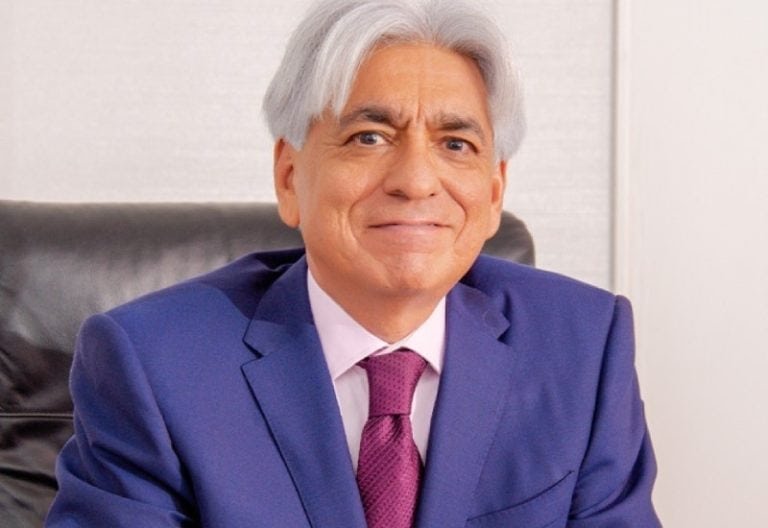
The vote itself was never really in doubt.
When shareholders of WPP Scangroup gathered for their annual general meeting, Bharat Thakrar’s attempt to overhaul the board faced a simple obstacle: mathematics. WPP Plc controls 56.26 percent of the company, giving the British advertising giant enough voting power to defeat every resolution advanced by the founder and his allies.
But reducing the episode to an unsuccessful comeback bid misses the larger story. The confrontation has exposed deeper questions about shareholder rights, board accountability and a growing financial relationship between the listed Kenyan firm and its majority owner.
At the annual meeting, Thakrar and a group of minority shareholders sought to remove the entire board and replace it with a slate of directors led by the company’s founder. Every proposal failed after WPP voted against the resolutions.

The proposal to remove the board secured support from 63.5 million shares, representing 20.7 percent of votes cast, while 243.1 million shares, or 79.3 percent, voted against it. Similar margins appeared on proposals to appoint replacement directors and restructure the board.
The outcome demonstrated two realities at once. A meaningful minority of shareholders were willing to support Thakrar’s challenge. But the concentration of voting power meant the result was never realistically in doubt.

The results also produced competing interpretations of what happened. On the surface, the resolutions attracted support from only about one-fifth of votes cast. Yet some minority investors argued that the figures understated dissatisfaction among non-controlling shareholders because WPP’s 56.26 percent stake effectively predetermined the outcome. The debate highlighted a recurring tension in public markets: ownership concentration can make it difficult to distinguish between the preferences of minority investors and the voting power of a dominant shareholder.
The result left Thakrar where he has been since 2021: a minority shareholder with a sizeable stake but limited ability to influence the direction of the company he built more than four decades ago.
Yet frustration at the AGM was not confined to the founder and his allies. Shareholders questioned the company’s deteriorating performance after years of losses, shrinking revenues and the loss of major clients. One investor challenged the board and management on why executive remuneration had not been reduced despite weak shareholder returns and another year of losses. Management responded that compensation was tied to performance targets and included both fixed and KPI-linked components. The exchange reflected a wider concern among investors about accountability and the alignment between executive rewards and company results.
Viewed narrowly, the outcome looks like a familiar story about a founder unable to regain control of a business that has moved beyond him.
Viewed more closely, it raises broader questions about ownership, governance and the balance of power inside listed companies.
For years, Thakrar was synonymous with Scangroup.
He founded Scanad Marketing in 1982 and helped transform it into one of East Africa’s most influential advertising agencies. At a time when many major agencies operating in the region were foreign-owned, Scanad established itself as a home-grown success story, winning major corporate accounts and expanding across multiple markets.
The company’s growth, however, required more than entrepreneurial ambition.
Like many founders seeking scale, Thakrar brought in outside investors and strategic partners. The most significant relationship emerged with WPP, one of the world’s largest communications and advertising groups.
The partnership delivered international expertise, multinational clients and access to capital. It also gradually altered the company’s ownership structure.
Scangroup eventually became WPP Scangroup and listed on the Nairobi Securities Exchange. While Thakrar remained chief executive and public face of the company for many years, ownership steadily shifted through acquisitions and corporate restructuring.
Today, WPP controls more than half the company. Thakrar owns 10.48 percent.
That distinction explains why last week’s vote was effectively decided before it began.
The AGM results themselves illustrated the point. The votes cast against removing the board closely mirrored WPP’s shareholding, demonstrating how a controlling stake can determine the outcome of even the most contentious governance disputes.
Corporate governance operates according to ownership rather than legacy. A founder’s history may carry influence, but voting power ultimately determines outcomes.
That reality sits at the centre of the current dispute.
Yet Thakrar’s legacy extends beyond the company itself. Over four decades, Scangroup became a training ground for many of the executives, strategists and creatives who would go on to shape East Africa’s advertising industry. Several former leaders have since launched competing agencies, won major accounts and built independent businesses of their own. Even some critics of the founder acknowledge that one of his most enduring contributions was the talent ecosystem that emerged around the company.
That legacy helps explain why the debate around Scangroup continues to generate strong emotions years after his departure. For supporters, the question is not simply whether the company has declined financially. It is whether the institution has moved away from some of the qualities that helped make it successful in the first place.
The failed boardroom challenge has also drawn attention to an issue that extends beyond personalities.
One of the concerns raised by minority shareholders involves a growing loan between WPP Scangroup and entities within the WPP group.
Company disclosures show that WPP Scangroup had approximately Sh1.49 billion in loans recoverable from WPP Group Services SNC at the end of 2025. The amount has increased significantly over the past three years, rising from roughly Sh156 million in 2023 to its current level.
Management has indicated that the loan is expected to remain outstanding for the foreseeable future despite contractual provisions allowing repayment within one year.
For minority shareholders, the issue is difficult to ignore.
The company has reported losses, revenues have declined and shareholders have gone years without dividends. In 2025 alone, WPP Scangroup posted a net loss of roughly Sh700 million while revenue fell 16 percent to Sh2.04 billion. During the same period, substantial funds were advanced to a related entity within the parent group’s structure.
Critics argue that shareholders deserve greater clarity on the rationale, terms and long-term implications of those arrangements.
The debate introduces a dimension that was largely absent from early coverage of Thakrar’s campaign.
Without the loan issue, the story can be framed primarily as a founder struggling to reclaim influence. With it, the discussion shifts toward governance, capital allocation and the responsibilities that come with majority ownership.
Those concerns exist independently of Thakrar’s personal history.
Whether shareholders agree with his position or not, the questions surrounding related-party transactions would remain relevant. The exchanges at the AGM suggested that dissatisfaction with the company’s trajectory extends beyond a single shareholder, even if minority investors lack the votes needed to force change.
Interestingly, the voting pattern extended beyond the board-removal resolutions. Roughly one-fifth of votes opposed management-backed proposals on issues such as director remuneration, while about four-fifths supported them. The consistency suggests the existence of a dissatisfied minority bloc, but one that remains far from large enough to overcome the influence of the controlling shareholder.
At the same time, it would be simplistic to attribute WPP Scangroup’s difficulties solely to boardroom decisions.
The advertising industry that helped build Scangroup has changed dramatically over the past decade.
Artificial intelligence, digital platforms, influencer marketing and data-driven advertising have reshaped how brands reach consumers. Traditional agency models face pressure from multiple directions as clients demand integrated services while spending patterns continue to evolve.
Competition has also intensified.
The loss of major accounts, including Airtel Africa’s advertising business, reflects a marketplace in which multinational agencies compete aggressively for regional clients. Publicis Groupe and other global players have expanded their African operations, creating additional pressure on established firms.
The company’s own disclosures suggest those challenges are amplified by customer concentration risk. In 2025, three clients accounted for approximately 52 percent of group revenue, contributing roughly 22 percent, 15 percent and 15 percent respectively. In some markets the dependence was even greater. In Uganda, three customers accounted for about 78 percent of segment revenue. Such concentration means the loss of a single major account can have an outsized impact on revenue, profitability and long-term stability.
These forces would confront any management team.
The company’s challenges therefore extend beyond a dispute between a founder and the current board.
That is what makes the story more significant than a routine corporate disagreement.
The failed AGM vote demonstrated the reality of ownership concentration. The loan controversy highlighted concerns about how that power is exercised. The company’s customer concentration risk illustrates the operational vulnerabilities that can emerge when a handful of large accounts drive a significant share of revenue. Together, these factors reveal the multiple pressures facing WPP Scangroup as it attempts to navigate a rapidly changing advertising industry.
Thakrar’s story remains instructive because it captures a paradox that many entrepreneurs eventually encounter.
The decisions that help build a successful company are often the same decisions that reduce a founder’s control over it.
External capital, strategic partnerships and public listings create opportunities for growth. They also redistribute influence.
His experience also helps explain why many technology founders sought different ownership structures. Companies such as Google and Facebook adopted dual-class share arrangements that allowed founders to retain voting control despite holding a smaller economic stake. Supporters argue that such structures protect long-term strategy from shareholder pressure, while critics contend they weaken accountability and concentrate power in too few hands.
WPP Scangroup followed a more conventional path.
As ownership shifted, so did control.
In WPP Scangroup’s case, that process produced one of East Africa’s largest advertising businesses. It also left its founder unable to determine its future.
The AGM result confirmed that reality.
The debate over governance, shareholder rights and the company’s financial relationship with its majority owner suggests the conversation is far from settled.
Go to TECHTRENDSKE.co.ke for more tech and business news from the African continent and across the world.
Follow us on WhatsApp, Telegram, Twitter, and Facebook, or subscribe to our weekly newsletter to ensure you don’t miss out on any future updates. Send tips to editorial@techtrendsmedia.co.ke


