
ASUS Bets on Offline AI and Long-Term Partnerships as it Deepens Kenya Push
The Taiwanese tech giant's commercial chief for the Middle East, Turkey and Africa says Kenya is a gateway market and that embedded NPU technology, local assembly plans, and a 100,000-device education drive reflect a commitment that goes beyond hardware sales.


ASUS is expanding its commercial footprint in Kenya with a strategy built around offline artificial intelligence, SME-targeted products, and partnerships with government institutions, moves that Tolga Ozdil, the company’s Regional Head for the Middle East, Turkey and Africa, says are designed to position ASUS as a long-term technology partner rather than a device vendor.
Ozdil, speaking to TechTrends at the sidelines of a product showcase at the GITEXT Kenya event in Nairobi, outlined a broad ambition: to help Kenyan businesses – from large enterprises to small traders – use AI-powered devices to work more efficiently, protect their data, and reduce total technology costs over time.
“We are not only selling devices,” Ozdil said. “We want to be creating long-term partnerships with the countries and the companies we work with. That is the whole idea.”
Offline AI as a Differentiator
Central to ASUS’s commercial pitch is what the company calls embedded AI – neural processing units (NPUs) built directly into the processor of commercial devices, delivering up to 100 TOPS (tera operations per second) of on-device AI performance. The capability allows users to run AI models locally, without sending data to external cloud servers.


Ozdil framed this as a solution to two distinct challenges in markets like Kenya: connectivity reliability and data privacy. Many enterprise and government clients, he noted, are cautious about routing sensitive operations through third-party AI platforms. Running AI at the edge removes that dependency entirely.
“While you are using offline AI, you need the power to get quick answers. And data privacy is a quite important part of our lives. That is why we are investing in this feature across our whole product line.”

He cited agriculture as a particularly relevant use case in the Kenyan context: a farmer or agronomist could photograph a diseased crop and receive an AI-generated diagnosis on the device itself, without any internet connection. “Instead of going through a book, you can get an answer. That kind of capability can make a real difference here,” he said.
Ozdil also pointed to rising AI adoption data in Kenya, noting figures approaching eight percent user penetration, as evidence that the market is ready for devices with deeper AI integration. “That is impressive for this stage,” he said. “And it can create some real differences in people’s lives and businesses.”
SME Focus and the Total Cost of Ownership Argument
ASUS’s primary commercial product line in the market is the ExpertBook series, which Ozdil described as purpose-built for small and medium-sized enterprises that lack dedicated IT departments. The devices ship with free device management software that allows business owners to control USB access, manage fleet security settings, and monitor basic device health, without requiring enterprise-grade IT infrastructure or licensing fees.
The company also bundles AI productivity tools, including a meeting transcription and summarisation assistant, directly into the SME-focused devices at no additional cost.
On pricing, Ozdil acknowledged that ASUS commercial devices sit at a premium compared to consumer alternatives, but argued the case on total cost of ownership grounds. “If AI helps you run with fewer people on a process, if it helps you grow your business, then the device is actually cheaper over time,” he said. “We call it TCO – total cost of ownership – and this is where our devices win.”
He also noted that surging AI server demand has pushed global memory prices upward, creating headwinds for the entire PC industry. “The demand for AI servers has increased and impacted all memory pricing. It is a challenging time for the IT industry,” he said.
Kenya as Gateway Market
Ozdil was direct about Kenya’s strategic importance within ASUS’s Africa operations. He described the country as a “torch” – a reference point and proving ground for the broader East Africa region and, by extension, the continent.
The company has already executed a significant deployment with Kenya’s Ministry of Education and is in active discussions around local device assembly, a move Ozdil said is being driven by a serious evaluation of capable local partners and the country’s longer-term digital infrastructure ambitions.
“We are researching seriously,” he said of local assembly. “Kenya has a clear digital vision. We want to be part of that journey.” He stopped short of committing to a timeline.
ASUS has also donated over 100,000 devices to educational institutions across Kenya as part of its broader corporate social investment programme, and runs training initiatives aimed at building practical AI literacy among students and educators.
“Africa and Kenya specifically is a very important market for us. We are not just selling into it. We are investing in it.”
The company is also working with Kenyan businesses to share cross-market use cases – showing, for example, how real estate firms in other markets use ASUS commercial devices and AI tools to streamline operations, and helping local counterparts replicate those models.
New Launch: ExpertBook Ultra
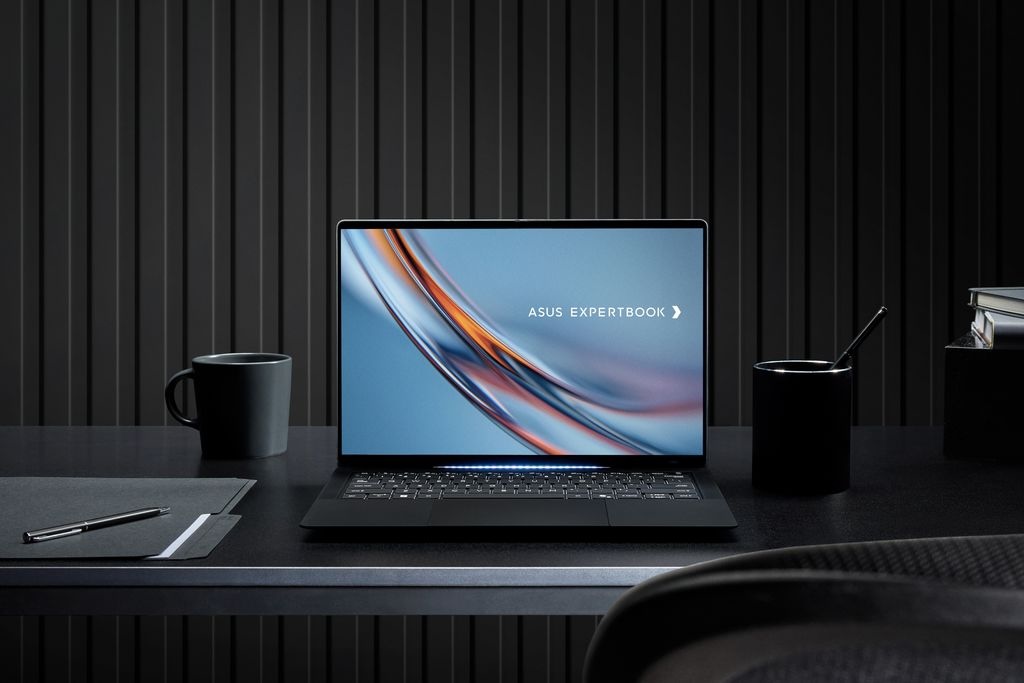
The headline product at the Nairobi showcase was the ExpertBook Ultra, a sub-one-kilogramme business laptop positioned at the top of the ExpertBook commercial range. The device features a high-performance NPU, full convertible functionality, and MIL-SPEC durability ratings.
ASUS ran a campaign around the launch in which the ExpertBook Ultra was carried to an altitude exceeding 8,000 metres on a Mount Everest expedition; the device remained operational at the summit. Ozdil used the stunt to underscore his broader argument about commercial-grade durability: a device built for extreme conditions will simply outlast one that is not.
Security, Battery Life and the Long Lifecycle Argument
Beyond AI, Ozdil pointed to two often-overlooked hardware features that he said define the commercial product experience: TPM-based security and user-replaceable batteries.
ASUS commercial devices include Trusted Platform Module (TPM) chips as standard across the range, not just on premium models, providing hardware-level encryption and tamper detection. “If someone opens the device, we know about it,” Ozdil said. “Nobody can steal your data.”
On batteries, he argued that most laptop buyers do not think about degradation until it becomes a problem, by which point they are either paying for a service replacement or purchasing a new device. ASUS commercial devices are designed with user-accessible, replaceable batteries, and the company backs them with a five-year battery warranty.
“On day one, maybe ten hours of battery life. Two years later, three or four hours – that is just the technology,” he said. “But with our devices, you can take out the battery yourself and replace it easily. And we back it with five years. That is not common in this industry.”
He described the typical ASUS commercial customer as a technically informed buyer who researches before purchasing, and said the company’s goal is to earn repeat business by delivering on long-term value, not just the initial sale.
“We do not want to just sell you a device and see you in three years when it breaks,” he said. “We want to still be your partner in five years, and we design our products with that in mind.”
Go to TECHTRENDSKE.co.ke for more tech and business news from the African continent and across the world.
Follow us on WhatsApp, Telegram, Twitter, and Facebook, or subscribe to our weekly newsletter to ensure you don’t miss out on any future updates. Send tips to editorial@techtrendsmedia.co.ke


