
The Operating System That Was Never Supposed to Die Is About to Be Left Unprotected
Microsoft is calling it progress, but millions see it as the moment the company finally broke with its own vision

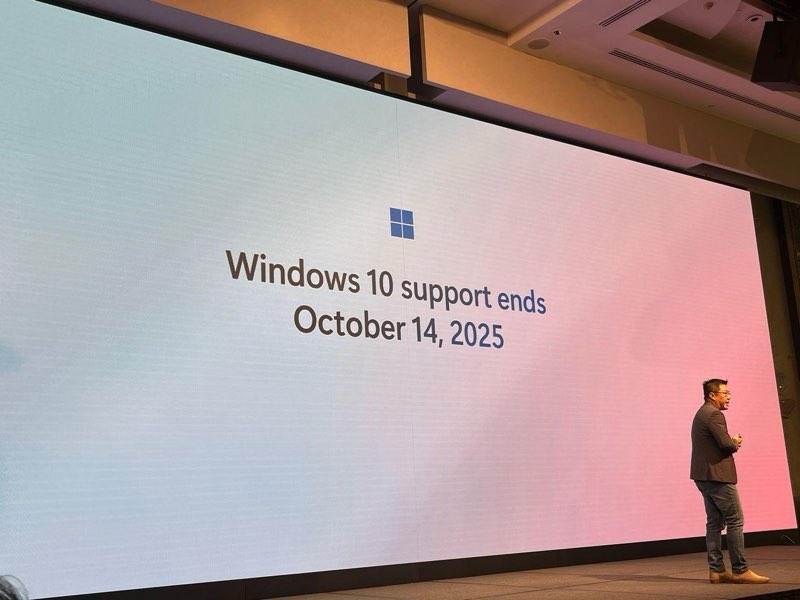
The clock is running out. On October 14, 2025, Microsoft will close the book on Windows 10, a system once described as the “final” version of Windows. For nearly a decade, it shaped how hundreds of millions of people worked, played, and created. Its familiar hum, its steady interface, and the quiet comfort of its taskbar became a daily backdrop to digital life. Now, in its final week of support, a strange mix of nostalgia and defiance hangs in the air.
There’s no countdown ticker, no farewell tour, no formal goodbye. Just a quiet deadline — one that feels less like progress and more like a shift in philosophy. The question isn’t just whether users will upgrade to Windows 11. It’s whether they still trust the company that once promised Windows 10 would never really end.
The “Evergreen” Dream
When Windows 10 launched in 2015, Microsoft called it a new kind of operating system: one that would evolve continuously instead of being replaced every few years. The promise was clear. No more numbered jumps, no abrupt transitions, no compatibility fractures. Just a single, stable core that would grow and adapt with time.
The design reflected that ambition. Gone was the divisive tile-heavy layout of Windows 8. In its place came a restrained, modern interface — flat icons, simple geometry, and a palette of clean blues and greys. It felt purposeful, grounded in a usability-first ethos that mirrored the minimalist turn in visual culture during the mid-2010s.


By 2018, Windows 10 powered roughly 70 percent of all desktop computers worldwide. It unified schools, offices, and studios under one system, fulfilling its “Windows-as-a-Service” model. The updates weren’t just patches; they were supposed to be signs of life. Users could expect new features without disruption, a software experience that matured like a living organism rather than resetting every few years.
Yet beneath that optimism lay a quiet tension — one between permanence and profit.

The Pivot to Hardware Control
The shift began with Windows 11’s unveiling in 2021. What seemed at first like an aesthetic refresh soon revealed deeper motives. The system demanded specific hardware features — TPM 2.0 chips, Secure Boot, and newer-generation CPUs — effectively locking out millions of older but still capable machines. Overnight, Microsoft’s once-inclusive philosophy turned selective.
The company’s official reasoning centered on security. Modern chips offered protections that older hardware couldn’t. But users quickly saw another pattern: a push toward monetization, data integration, and tighter ecosystem control. The operating system was no longer simply an interface between user and machine. It was a platform built to sustain recurring revenue through cloud services and AI integration.
The shift mirrored broader industry trends. Tech giants across the board were leaning into ecosystems that required constant connectivity and subscription layers. Google’s Android was inseparable from Google services. Apple’s macOS updates nudged users deeper into iCloud and proprietary hardware. Microsoft followed suit, binding its desktop system to Azure, Copilot, and Microsoft 365.
This wasn’t the “evergreen” model users had signed up for. It was a pruning and regrowth cycle designed to keep the tree under corporate care.
Nostalgia and the Minimalist Ideal
Windows 10’s design carries an emotional resonance that’s rare in operating systems. Its restrained aesthetic — the balance between simplicity and function — aged gracefully. The rounded corners and glassy overlays of Windows 11 may look sleek, but they feel detached from the utilitarian heart that defined Windows 10.
For many, that older design represents a high point in digital usability. It wasn’t showy or algorithmic. It simply worked. The Start Menu returned after the Windows 8 experiment, icons lined the taskbar predictably, and customization options let users shape the interface without fighting it.
That sense of autonomy matters. It’s what keeps some users holding onto Windows 7 machines, even in 2025. The affection for 10 isn’t just about habit. It’s about trust — a belief that the system served the user, not the other way around.
Now, with support ending, that balance feels broken. Microsoft’s new direction emphasizes automation and cloud-backed intelligence, while users who prefer local control are being left behind.
The Cost of Standing Still
After October 14, Windows 10 machines will keep running, but without security updates or bug fixes. For casual users, that might not matter immediately. For businesses, it’s a liability. Without patches, the system becomes a soft target for exploits, much like the unpatched Windows 7 systems hit by ransomware in the late 2010s.
The real risk is time. Vulnerabilities accumulate silently. Malware evolves faster than most users can adapt. The familiar desktop may still load, but the safety net beneath it disappears.
Enterprise clients may purchase extended security updates, but individuals have no such option. Some will take the risk, relying on firewalls and offline usage. Others will look for unofficial patches or community-built fixes. In corners of the internet, forums already share speculative timelines for “community security maintenance” — efforts by enthusiasts to prolong the life of the system through unofficial updates.
Such projects raise legal and ethical questions, but they speak to a deeper sentiment: people are tired of forced obsolescence.
Performance vs. Principle
Windows 11 offers clear improvements in security and performance — on the right hardware. On older machines, the experience can lag or stutter, even when technically compatible. Users report slower boot times and heavier background processes. The very efficiency that defined Windows 10 feels diluted.
The differences aren’t purely technical. They represent a change in philosophy. Windows 10 was a tool; Windows 11 feels like a service. Its integration of ads, AI assistants, and background connectivity creates an experience where control feels partial. For users who prefer to shape their environment — tweak registries, disable telemetry, choose privacy — this shift feels suffocating.
It’s not resistance to change; it’s resistance to losing agency.
The Fork in the Road
Five days before the cutoff, millions of users stand at a crossroads. Each path carries trade-offs:
- Staying on Windows 10 preserves familiarity but exposes security vulnerabilities. It’s viable for offline setups or low-risk devices, though hardly sustainable.
- Upgrading to Windows 11 means embracing Microsoft’s vision of cloud integration and AI assistance, with the comfort of ongoing support but the cost of system overhead and reduced privacy.
- Switching to Linux or alternative OSes offers control and transparency, though at the expense of compatibility with mainstream software.
For the first time in years, significant numbers are exploring that third option. Linux distributions like Ubuntu and Zorin OS are experiencing renewed attention, partly because they feel closer to what Windows once was: user-driven and unobtrusive.
Manufacturers are responding too. Some PC makers now offer Linux pre-installs, a small but notable shift that hints at market diversification.
Microsoft’s Gamble
From a strategic standpoint, Microsoft’s timing makes sense. The company is realigning around AI, cloud computing, and enterprise solutions. Its Copilot initiative promises productivity gains through machine learning integration, and Windows 11 serves as the gateway. In this vision, the desktop is not the end product but the conduit.
But it’s a risky calculation. User goodwill is a fragile currency. For a generation that grew up with Windows 10 as their default workspace, the system represents reliability, not innovation fatigue. Alienating that group could fracture loyalty in the same way the Windows 8 experiment once did.
Microsoft is betting that convenience and continuity will win — that users will ultimately upgrade rather than rebel. Yet, the tone across online forums, tech communities, and comment sections suggests a lingering discontent. It’s not loud enough to cause crisis, but persistent enough to mark a cultural divide: the pragmatic versus the principled.
Beyond the Desktop
The end of Windows 10’s support isn’t just a software milestone. It’s a cultural one. It marks the close of an era where personal computing still felt personal — when an operating system was a neutral canvas rather than a branded service.
The desktop computer itself is changing identity. Once the center of digital life, it now coexists with phones, tablets, and cloud-based tools. Microsoft’s strategy reflects that shift. Windows 11 isn’t designed for solitary work so much as it is for connection: to servers, accounts, and AI-driven assistance. The individual user is now a node in a network, not an isolated operator.
For many, that’s progress. For others, it’s the end of something familiar and grounded.
The Quiet Resistance
Despite the warnings and the looming deadline, some users are refusing to move on. They disable update reminders, install custom privacy tools, and keep their machines running exactly as they are. It’s not defiance for its own sake. It’s preservation.
These users value stability over novelty, ownership over automation. They remember when updates improved function rather than selling features. Their stance is unlikely to change Microsoft’s trajectory, but it preserves a living archive of what computing used to be — local, direct, and self-contained.
This quiet resistance won’t make headlines, yet it speaks volumes about what people expect from technology: reliability, respect, and control.
The Afterlife of Windows 10
Every operating system has a ghost phase — the years after official support ends but before obsolescence truly sets in. Windows 10 will likely linger there for a long while. Its market share, still hovering near 40 percent, suggests millions will keep using it past 2025.
Eventually, that ghost will fade. Software incompatibilities will grow, browsers will drop support, and cloud services will move on. But in the memories of those who worked and created within it, Windows 10 will remain a benchmark — not because it was perfect, but because it struck a balance few systems achieve.
It respected its users.
The Final Update
There will be no ceremony when the last security patch rolls out. Just another small download, another restart, another quiet reboot. After that, silence.
In its absence, a question will linger: what does it mean when a “final version” ends? Perhaps it was never about permanence, but about trust — a belief that technology could evolve without erasing its past.
For many users, that trust is what died first. The system itself will follow.
Go to TECHTRENDSKE.co.ke for more tech and business news from the African continent.
Mark your calendars! The GreenShift Sustainability Forum is back in Nairobi this November. Join innovators, policymakers & sustainability leaders for a breakfast forum as we explore sustainable solutions shaping the continent’s future. Limited slots – Register now – here. Email info@techtrendsmedia.co.ke for partnership requests.
Follow us on WhatsApp, Telegram, Twitter, and Facebook, or subscribe to our weekly newsletter to ensure you don’t miss out on any future updates. Send tips to editorial@techtrendsmedia.co.ke
TechTrends Media Podcasts


