

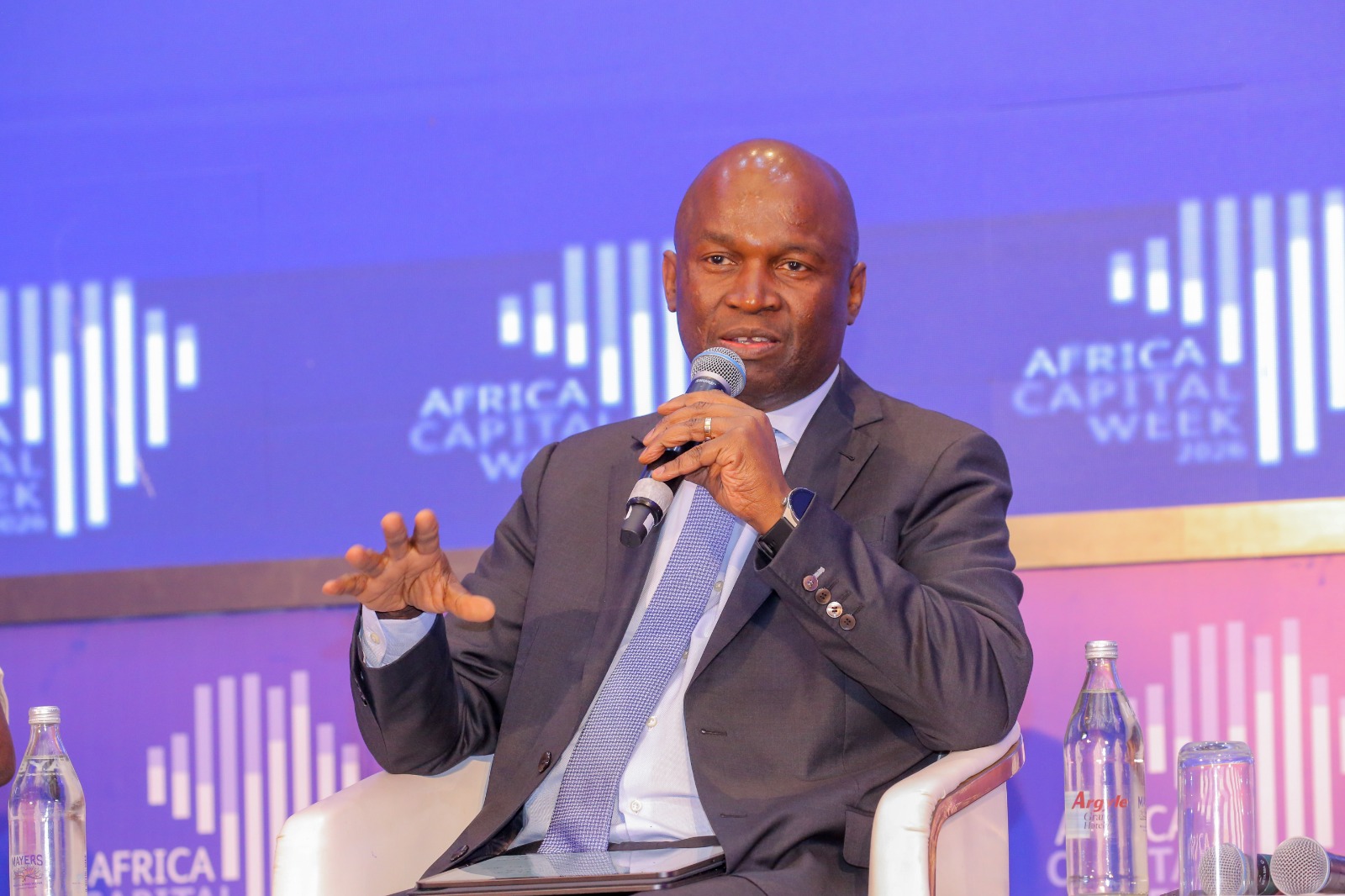
Sidian Bank CEO John Okulo has pointed to Kenya’s capital markets as a potential route to expanding MSME financing in Kenya, arguing that commercial banks need support to take on more exposure to micro, small and medium-sized businesses.
Speaking at Africa Capital Week 2026, Okulo said banks face competing demands: they are expected to lend more to MSMEs while also being held accountable when asset quality deteriorates. He said the banking sector currently lends about 25% of its loan portfolio to MSMEs, adding that the figure could be higher if capital markets help distribute the associated credit risk.
Commercial banks face competing demands on MSME lending
Okulo said bankers are often placed in a difficult position when they are urged to increase lending to MSMEs while being questioned about the performance of their loan books.
“When you look at their credit risk profile, there is surely a case for us to have a guarded approach towards it,” he said, describing the risk considerations that influence commercial banks’ lending decisions.


His argument places the MSME financing challenge within the broader question of how banks allocate capital. Smaller businesses may require funding to expand operations, purchase equipment or manage cash flow, but lenders must assess repayment capacity, collateral, business records and the risk of default. For banks, greater exposure to a segment with a more difficult credit-risk profile can also carry consequences for asset quality and capital management.
Okulo said the capital markets could help address this constraint by bringing in investors with different risk appetites, including pension funds and other institutions that have access to long-term savings.

Proposed bond could connect MSME debt to institutional capital
Okulo said FSD Africa was planning to float a debt bond specifically for MSMEs, which could allow investment banks to package debt from a broad portfolio of smaller businesses and offer portions of that exposure to institutional investors.
“The capital markets is where you have the savings, you have the pension funds, you have purpose-driven capital that is interested in portfolios that are of a specific risk profile,” he said.
Under the model he described, debt originating from commercial banks and other lenders could be aggregated into a larger portfolio. Investment banks could then structure the exposure into investment instruments suited to institutions with different mandates and tolerance for risk.
The proposal is relevant to Kenya’s financing landscape because pension funds and insurers manage substantial pools of long-term capital, while MSMEs often require financing with repayment periods that extend beyond conventional short-term lending arrangements. A structured debt vehicle could potentially connect those pools of capital to business lending, provided the underlying portfolio, investor protections and expected returns meet institutional requirements.
Okulo did not provide a name, issuance date or finalized terms for the proposed bond. His remarks establish that he understands an FSD Africa-linked initiative to be under development, but they do not confirm that the instrument has already been launched or that its final structure has been approved.
First-loss structures could make SME debt more investible
A central part of Okulo’s proposal is the use of risk-sharing arrangements to accommodate investors with different levels of tolerance for credit losses.
He suggested that initial lenders, such as commercial banks, could take the first-loss position, while pension funds and other investors participate in subsequent layers of the debt structure. In this arrangement, the first-loss capital would absorb initial losses, offering some protection to investors in more senior positions.
Such a structure is commonly associated with credit enhancement and subordinated risk. It can make a portfolio of loans more suitable for investors who may not want to take direct exposure to the full risk of individual MSME borrowers.
The concept has a relevant precedent in TechTrendsKE’s earlier reporting on a Kenya SME debt fund. A January 2026 report described a fund allocating between $64 million and $77 million to SME debt through a local-currency vehicle, alongside $6.8 million in first-loss capital intended to absorb early defaults before pension funds and insurers take losses. The reported structure also targeted exposure to more than 3,000 businesses.
That fund provides useful context for Okulo’s remarks, although it should not automatically be treated as the same instrument he referenced. The relationship between the proposed FSD Africa bond and the previously reported SME debt fund requires confirmation.
The distinction is important because a debt fund, a bond and a securitization can use related risk-sharing principles while differing in their legal structure, investors, repayment arrangements and regulatory treatment.
Kenya’s existing lending shows both progress and limits
The case for additional financing channels comes as Kenyan banks continue to lend substantial amounts to MSMEs. A TechTrendsKE report citing Kenya Bankers Association data said banks extended KSh326.5 billion in new MSME loans in 2025, exceeding the industry’s KSh150 billion annual target. The association also reaffirmed a commitment to provide KSh300 billion in new MSME loans annually between 2026 and 2028.
The figures suggest that the challenge is not an absence of bank lending. Rather, the question is whether commercial banks can expand the scale, reach and tenor of financing while managing the risks associated with smaller businesses.
The same report showed that lending was concentrated among a small number of institutions, with Equity Bank accounting for more than KSh90.7 billion in SME lending in the year to July 2025. A capital-markets vehicle that aggregates loans from multiple lenders could potentially broaden the sources of funding and reduce reliance on individual bank balance sheets.
Sidian’s own history also illustrates the role of risk-sharing in SME finance. In 2021, the African Guarantee Fund issued the bank a $5 million loan portfolio guarantee to support SME financing. In 2022, Sidian and FMO signed a KSh1.7 billion facility under the NASIRA programme, with part of the financing earmarked for young and female entrepreneurs.
Those arrangements are different from a bond or debt fund, but they demonstrate how guarantees and development-finance partnerships can help banks extend credit to borrowers who may otherwise face difficulty accessing finance.
For Okulo, the next step is to create a financing route that allows capital markets to participate more directly in the MSME lending chain. “Let’s find a route to float a bond that will provide patient capital for MSMEs so that this pipeline can continue,” he said.
Whether the proposed instrument can attract pension funds and other institutional investors will depend on its eventual structure, credit enhancement, risk allocation and returns. For now, Okulo’s remarks place the capital markets at the centre of the discussion about how Kenya can expand MSME financing without requiring commercial banks to carry the entire risk on their balance sheets.
Real ESG impact doesn’t happen in panels alone, it happens in the rooms where financiers, operators, and policymakers actually align. Our GreenShift Forum 2026 cuts the noise, bringing together the people rewiring Africa’s sustainability and energy frameworks for one focused day in Nairobi. Secure your seat.
Go to TECHTRENDSKE.co.ke for more tech and business news from the African continent and across the world.
Follow us on WhatsApp, Telegram, Twitter, and Facebook, or subscribe to our weekly newsletter to ensure you don’t miss out on any future updates. Send tips to editorial@techtrendsmedia.co.ke