Government wants EV makers to bring production, jobs and investment to Kenya

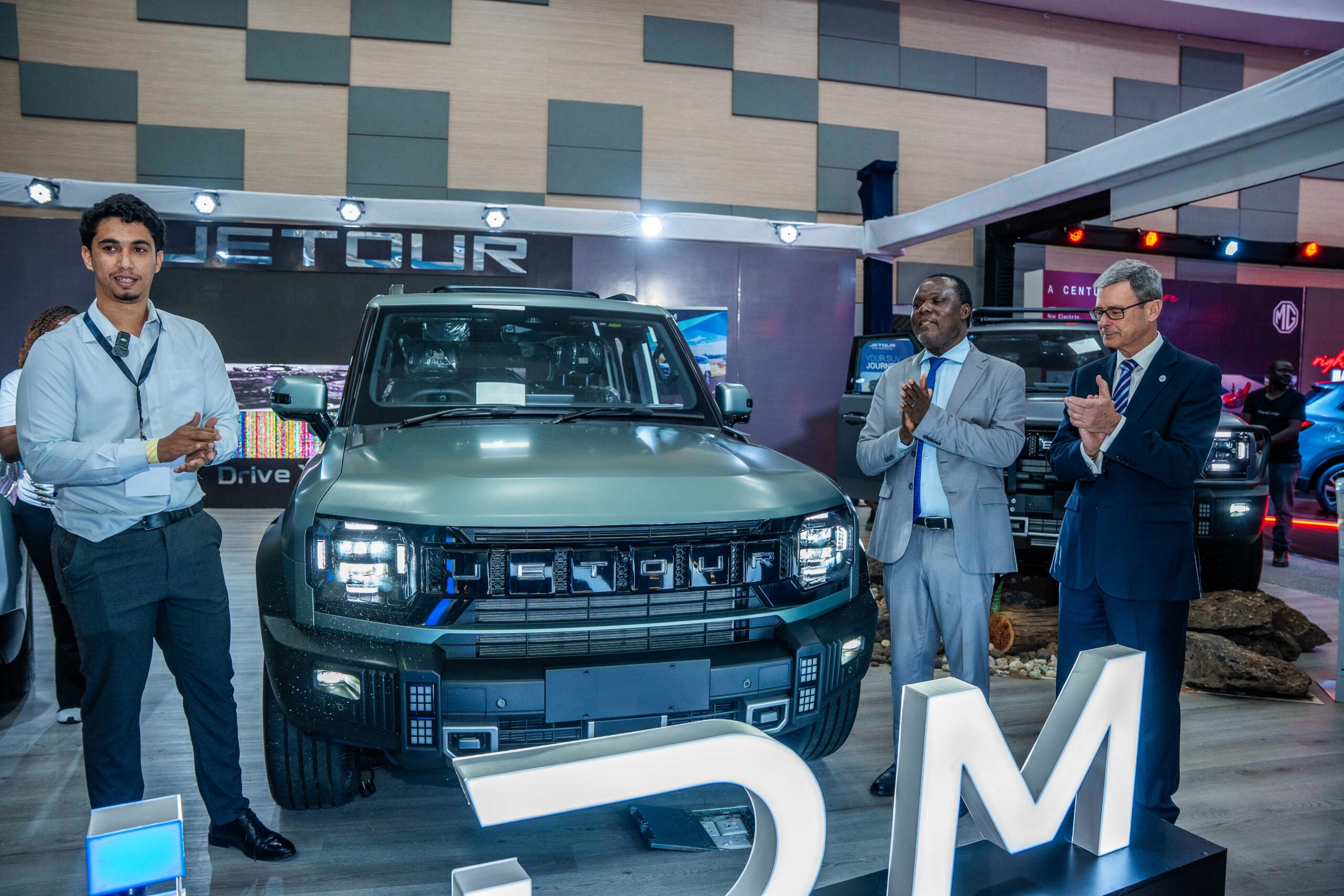
Kenya is urging electric vehicle manufacturers to establish local assembly operations, reduce vehicle prices and create jobs as the government seeks to turn growing interest in electric mobility into domestic production.

Principal Secretary for Industry Dr Juma Mukhwana made the appeal at the NCBA-KMI Motor Show 2026, calling on companies selling electric vehicles in Kenya to consider assembling them locally and work with the government on measures that could make production and ownership more affordable.
Mukhwana urged manufacturers to engage the Kenya Revenue Authority (KRA) on tax-related costs affecting the sector. He said local assembly would support employment, encourage investment in the automotive supply chain and help bring down vehicle prices.
The government has also earmarked KES13.1 billion for the automotive sector in the current financial year. The funding is intended to support vehicle assemblers, manufacturers of automotive components, vehicle buyers and recycling activities through more accessible financing.

Mukhwana said the government had adopted a policy requiring newly purchased vehicles for public institutions to be made in Kenya. The policy gives local assemblers access to a substantial potential customer base, including public agencies that purchase vehicles for transport, security and other operations.
Kenya presses EV manufacturers to assemble locally and lower prices
The appeal to electric vehicle manufacturers comes as Kenya seeks to expand its automotive industry beyond the assembly of conventional petrol and diesel vehicles.
Mukhwana said manufacturers should consider establishing local operations rather than relying entirely on imported finished vehicles. He linked the move to the government’s wider industrialisation objectives, including the creation of jobs and the development of local suppliers.
The National Automotive Policy, completed in 2022, provides a framework for increasing local participation in vehicle production. Its priorities include developing domestic capacity to supply components such as tyres, batteries, glass, wiring, seats, filters and lubricants.

For electric vehicles, this creates an opportunity to build local capabilities around battery systems, electrical components, vehicle maintenance and charging infrastructure. However, the extent to which these activities can be localised will depend on investment, technical capacity, production volumes and the cost of manufacturing in Kenya.
The government is also looking to regional manufacturing rules to support the sector. Mukhwana referred to East African Community regulations that provide for different levels of completely knocked-down vehicle assembly, with requirements for local content and manufacturing participation.
He said the framework could allow manufacturers to increase local content through partnerships with Kenyan suppliers. The regional market, alongside COMESA and the African Continental Free Trade Area, could offer a larger customer base for vehicles assembled in the country.
KES13.1bn and government procurement give local assembly policy backing
The KES13.1 billion allocation is intended to address some of the financing constraints facing automotive manufacturers and buyers.
Mukhwana said the government had floated a bond on the Tokyo Stock Exchange in partnership with the Government of Japan, with proceeds intended to support the automotive industry. The proposed financing would provide more accessible loans at lower interest rates for assemblers, local parts manufacturers and vehicle buyers, alongside support for vehicle recycling.
The government has not yet provided a detailed breakdown of how the KES13.1 billion will be distributed, which institutions will administer the financing or when eligible businesses and buyers can begin accessing it.
The public-sector procurement policy provides another potential source of demand for locally assembled vehicles. Government agencies, including the National Police Service and the Kenya Defence Forces, are among the institutions that purchase vehicles for official operations.
The policy could give assemblers greater visibility over demand and encourage investment in production capacity. Its effect will depend on how the requirement is implemented, the range of vehicles available locally and whether domestic manufacturers can meet institutional specifications at competitive prices.
Vehicle sales rise as KMI points to unused production capacity
Kenya’s vehicle market recorded stronger sales in the first ten months of 2026, although the industry says existing assembly facilities still have room to produce more.
Kenya Motor Industry Association chairman Arvinder Reel said official industry data showed approximately 14,000 vehicles were sold between January and October, representing a 26% increase from the corresponding period in 2025.
Locally assembled trucks and buses accounted for about 8,000 units, up 25% year on year. Passenger car sales also increased by approximately 25% to 6,000 units.
Reel said the industry continued to have excess production capacity despite the growth in sales. He identified increased production, component manufacturing, investment and technical skills development as priorities for the sector.
The figures point to an established market for locally assembled vehicles, but the transition towards electric models will require manufacturers to assess demand, pricing and the economics of adapting existing facilities.
Simba commits KES1bn to electric vehicle assembly at AVA
Simba Corporation is among the companies making investments in local electric vehicle production. The company has committed KES1 billion towards a dedicated electric vehicle assembly line at Associated Vehicle Assemblers (AVA) in Mombasa.
Simba plans to begin assembling MG electric and petrol vehicles at the facility in 2027, subject to sufficient market demand and sales volumes.
The company estimates that local assembly could reduce the prices of MG vehicles by up to 20%. The eventual savings will depend on production volumes, component sourcing, operating costs and the pricing decisions made once local production begins.
AVA has an annual assembly capacity of 30,000 vehicles and has produced more than 150,000 vehicles since it began operations, according to Simba Corporation.
The facility is also involved in electric mobility. Its assembly activities include electric vehicles for Rideence Africa and Ma3e electric vans for BasiGo, giving it experience with different vehicle categories as demand for electric transport develops.
Isuzu’s electric D-MAX brings commercial workloads into EV transition
Isuzu East Africa used the motor show to present its electric D-MAX, bringing the discussion around electric mobility into the commercial vehicle segment.
The locally assembled D-MAX EV is designed for customers who need the working capabilities associated with the conventional pickup, including businesses, agricultural operators and organisations that use vehicles in demanding environments.
The model features a dual-motor electric axle producing 140kW, full-time four-wheel drive and a battery protection system. It supports CCS2 DC fast charging, with Isuzu indicating a charging time of approximately 60 minutes from 20% to 80%.
The vehicle has a stated water-wading depth of 600mm, a towing capacity of up to 3.5 tonnes and a payload of one tonne. It also includes Isuzu’s Driver Assist System.
An Isuzu representative said local assembly could reduce the D-MAX EV’s sticker price by approximately 30%. The company has not confirmed the final retail price or sales forecast, as it is still conducting engineering validation to assess the vehicle’s suitability for Kenyan operating conditions.
The representative said the vehicle was developed in response to customer interest in an electric pickup from an established manufacturer that could retain the D-MAX’s commercial and off-road capabilities.
Charging infrastructure remains a consideration, particularly for operators travelling longer distances such as the Nairobi-Mombasa route. Isuzu said it was engaging Kenya Power and other stakeholders on charging infrastructure, with plans to equip its 87 dealer and service touchpoints with charging stations and establish at least 10 charging opportunities along the Nairobi-Mombasa corridor.
The company did not provide a rollout timetable for the proposed network.
Isuzu also highlighted its EcoDrive programme, which works with vehicle owners and drivers to improve fuel efficiency. The company said the programme had helped achieve fuel-use reductions of between 30% and 40% in participating operations.
Electric vehicle prices show the affordability challenge
Prices displayed at the motor show illustrated the range of electric vehicles entering Kenya’s market, as well as the affordability challenge facing manufacturers and buyers.
The MG4 EV Urban was displayed with a starting price of KES4.5 million. The model is offered with a 43kWh battery, with a larger 54kWh option, and advertised driving ranges of up to 316km and 405km respectively.
The MG S5 EV was listed from KES7.2 million, with a 62kWh battery and an advertised range of up to 450km.
Mobimotors also displayed the Foton EV Truckmate, an electric commercial vehicle with an advertised range of 230km and a 10-foot load body. Its displayed charging specification indicated a charging time of 90 minutes from 20% to 90%.
Local assembly could help reduce some costs associated with importing fully built vehicles. However, the final price of an electric vehicle also depends on battery costs, imported components, taxation, financing, distribution and after-sales support.
Tax and electricity costs will influence local production
The cost of producing vehicles and components in Kenya will influence whether local assembly can deliver lower prices.
Industry participants have raised concerns about the tax treatment of electric vehicles, batteries and manufacturing inputs, including the potential effect of VAT obligations and input tax recovery on local assemblers.
Fully built imported vehicles and locally assembled vehicles may face different tax treatment depending on the applicable statutory provisions and exemptions. The precise cost implications will depend on the vehicle classification, components used and the tax arrangements available to each manufacturer.
Electricity costs are another consideration for manufacturers operating assembly plants and component production facilities.
Kenya Power’s Time of Use tariff provides a 50% discount on qualifying electricity consumption during designated off-peak periods. The eligibility requirements were revised to remove an earlier condition requiring participating businesses to increase electricity consumption by 6% over six months.
A total of 2,614 firms used the tariff in the year to June 2026, compared with 2,339 in the previous year. Their combined electricity consumption increased to 267.6 million kilowatt-hours from 180.3 million kilowatt-hours.
World Bank estimates put industrial electricity tariffs in Kenya at between $0.18 and $0.23 per kilowatt-hour, compared with approximately $0.03 to $0.05 in Egypt, Ethiopia and Morocco. The difference highlights the cost pressure facing manufacturers competing with producers in other markets.
Lower electricity costs for qualifying industrial users could support local production, although the tariff does not directly reduce the retail price of an electric vehicle.
NCBA links automotive financing to Kenya’s mobility economy
The NCBA-KMI partnership provides a platform for vehicle dealers, manufacturers and customers to connect, while giving the bank an opportunity to showcase its role in automotive financing.
NCBA Group Director for Asset Finance and Business Solutions Lennox Mugambi said the motor show had returned after its previous edition in 2023. He described the partnership as a way to bring together industry participants and create opportunities around developments in mobility.
Mugambi also pointed to the NCBA Johari Awards, which recognise more than 150 top-performing automotive partners annually. The awards have run for 20 years, reflecting the role of dealer and industry relationships in supporting vehicle distribution and ownership.
The financing market is significant to that network. Mugambi said NCBA could finance up to 100% of a vehicle’s purchase price, subject to an applicant’s repayment ability, although approximately 20% of applicants qualified for full financing.
NCBA Bank Kenya Managing Director James Gossip placed the bank’s vehicle financing activities within the wider economic contribution of transport. He said the transport and storage sector accounted for 11.8% of Kenya’s GDP in 2025 and that NCBA held approximately 30% of the country’s asset finance market.
Gossip said access to vehicles allowed businesses to reach new markets, expand distribution and improve operating efficiency. He also identified charging infrastructure, accessible financing and industry partnerships as requirements for the transition to electric mobility.
NCBA has committed KES2 billion towards electric vehicle financing and had financed more than KES800 million in EV assets, according to the bank’s announcement at the motor show.
Its programme with BasiGo targets financing 1,000 electric vehicles for Kenya’s public transport market. Eligible public service vehicle operators can access financing of up to 90%, subject to the programme’s terms and conditions.
The EV financing commitment is separate from NCBA’s general vehicle financing offer. Together, the initiatives show how lenders are seeking to support both conventional vehicle ownership and the adoption of electric vehicles.
Local assembly will depend on a wider electric mobility ecosystem
Vehicle assembly is only one part of the investment required to support electric mobility. Charging networks, battery services, technical training and financing will also influence how quickly the market develops.
Moja EV Africa has brought 116 Neta V electric vehicles into the country, with its first vehicle imported in June 2024. The company also sells models from Skyworth and offers services including warranties, vehicle monitoring and buyback arrangements.
Knights Energy is developing electric taxi operations and charging infrastructure along the Mombasa-Kampala corridor. The company is also involved in battery refurbishment and says it has trained approximately 600 electricians and mechatronics technicians.
Kabisa Electric has 27 charging units and is preparing installations in Mombasa and along the Kampala corridor.
Battery manufacturing could provide another route for local participation. Kanto Systems has proposed a 250MWh battery assembly plant that would initially import battery cells while localising components such as casings, wiring and battery management systems. The company estimates that its proposed operations could achieve approximately 40% local content.
These investments are at different stages of development and do not yet represent a fully established domestic electric vehicle supply chain. Their progress will depend on capital, technical expertise, demand and the ability to compete with imported equipment and components.
Vehicle financing and technical skills remain key constraints
The cost of electric vehicles remains a barrier for many buyers, making financing an important part of the market’s expansion.
Beyond access to credit, Kenya will need more technicians and engineers with the skills required to assemble, maintain and repair electric vehicles. This includes expertise in battery systems, diagnostics, vehicle software and high-voltage electrical systems.
Closer coordination between manufacturers, universities and technical and vocational education institutions could help develop the workforce required by the industry.
Mukhwana’s appeal to electric vehicle manufacturers places local assembly at the centre of the government’s industrialisation agenda. The proposed financing, public-sector procurement policy and investments by companies such as Simba and Isuzu provide commercial and policy backing for that ambition.
The scale of the opportunity will depend on whether manufacturers can establish viable local operations, develop domestic suppliers and produce vehicles at prices that Kenyan businesses and consumers can afford.