
Safaricom lays the groundwork for wider AI deployment across its operations

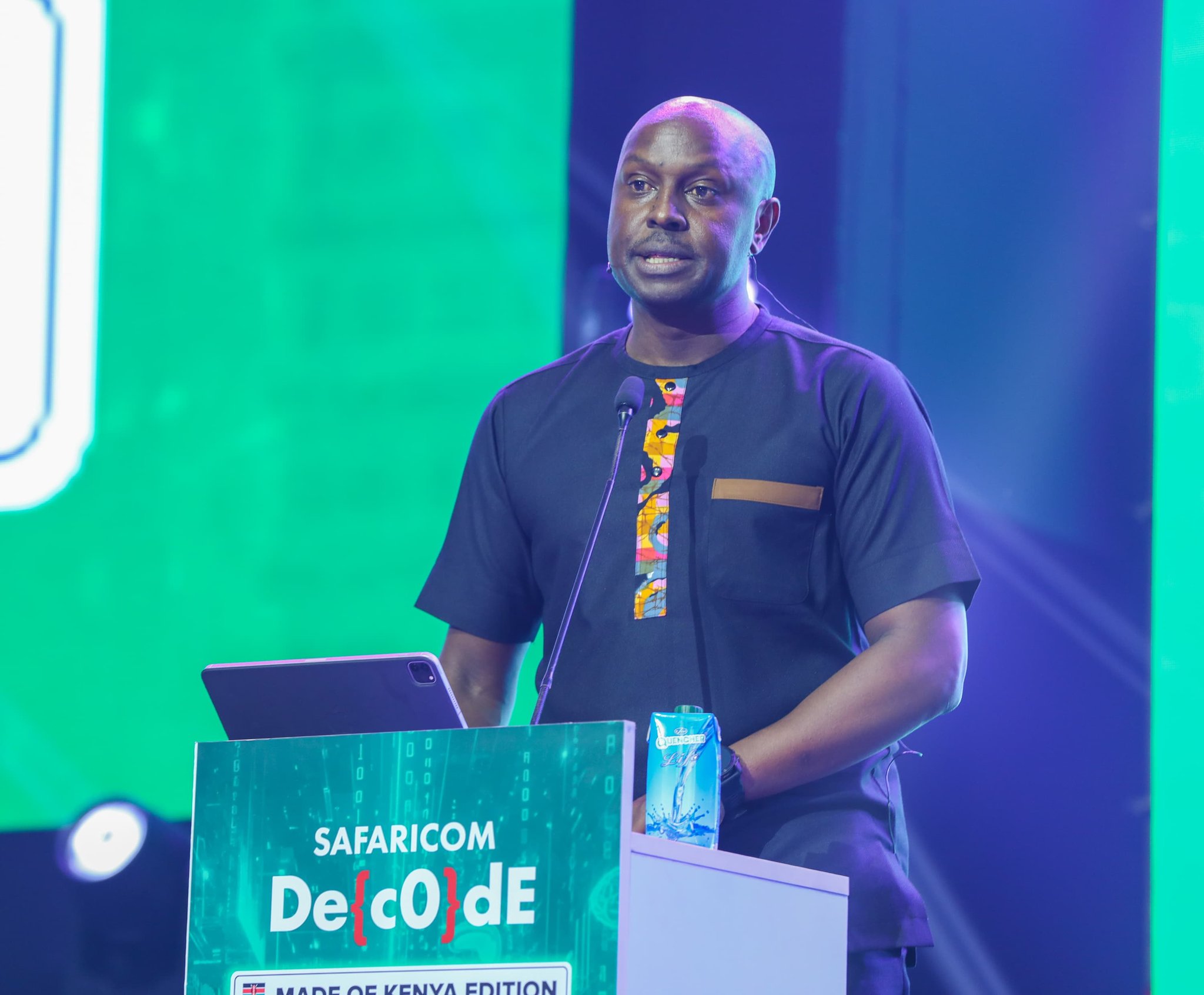
Safaricom is laying the technical and organisational groundwork for a wider use of artificial intelligence across its business, with applications already supporting technology operations, customer targeting and digital customer service.
The telecommunications company spent much of the first half of its 2027 financial year building the capabilities it expects to rely on as it works towards becoming a technology company by 2030. A new unified data platform, investment in technical skills and a dedicated AI innovation team form part of that preparation, according to James Maitai, Safaricom Kenya’s Chief Technology Officer.
Speaking to TechTrends on the sidelines of Safaricom’s half-year results announcement, Maitai said the company was still at an early stage of its AI deployment.
“We spent a large part of H1 building the foundation of capability,” he said.



That work is intended to support applications across the company’s technology division and customer-facing services. Safaricom is already using AI in areas such as network and technology operations, customer value management and its Zuri virtual assistant, while developing further applications for customer care.
Safaricom builds a unified data platform for AI
A central part of the company’s preparations is a unified data platform (UDP) that brings Safaricom’s data together in one place. The platform runs in one of the company’s modern data centres and is intended to provide the data foundation for its AI initiatives.
“As you well know, AI runs on data,” Maitai said. “The capability through the unified data platform has brought all our data in one place. So that’s the first step.”
The platform is part of a wider effort to prepare the company’s information systems and internal processes for AI deployment. Maitai identified skilled people, strong data governance and clear use cases as three requirements for successful implementation.
Safaricom has trained engineers, data scientists and data engineers while building what Maitai described as a strong data governance framework. The company has also hired additional data scientists and is retraining existing employees to develop the expertise needed for its AI work.
The emphasis on data reflects the demands of operating a business with large transaction volumes and extensive network infrastructure. M-PESA alone processed 27.4 billion transactions in the six months to September 2026, an increase of 25.2% year on year.
For Safaricom, consolidating data provides a foundation for identifying operational patterns, developing applications and improving how different parts of the business use information. The company has not disclosed the platform’s full technical architecture or the specific data sources integrated into it.
AI is supporting Safaricom’s network and technology operations
Safaricom is already applying AI within its technology division through intelligent operations, commonly known as AIOps. Maitai said the technology supports the management of the company’s network and wider technology estate as traffic and transaction volumes increase.
“We run one of the biggest operations in this side of the world, in terms of the number of transactions per second. In terms of our network, it’s in every corner of the country, and traffic is growing,” he said.
The application is relevant to a business managing mobile connectivity, digital services and financial transactions across a large customer base. AI can support technology teams as they manage operational demands, although Maitai did not detail the specific tasks being automated or the extent to which the systems make decisions independently.
Safaricom is also applying AI to capital expenditure planning, an area Maitai described as “smart capex”. The objective is to direct investment towards areas where it is most needed.
“You put every shilling where it’s supposed to go,” he said.
The approach connects AI with decisions about how the company allocates resources across its infrastructure and operations. More precise planning can help technology teams assess where additional investment is required, although Safaricom has not disclosed quantified savings or financial returns from these applications.
Zuri is the first customer-facing AI deployment
Outside the technology division, Safaricom is using AI for customer value management, including more precise targeting of offers and services. The company is also introducing AI into customer care, with Zuri providing its first visible customer-facing application.
Zuri is Safaricom’s generative AI virtual assistant, available through the My Safaricom app. It gives customers a digital channel for interacting with the company and obtaining assistance.
Maitai said Safaricom is also developing AI applications for its call-centre operations. The work is intended to increase the number of calls customer-care teams can handle while improving the quality of service and the experience of agents.
“We actually started building to use AI to improve the number of calls we can handle, the quality of experience our customers get when they call us, and also the agent experience,” he said.
The call-centre applications remain under development, rather than representing a fully deployed replacement for existing customer-care operations. Their intended role is to support service delivery and help agents handle customer interactions more effectively.
Safaricom is also looking at ways to reduce friction in customer journeys. Maitai said the company wants to identify where customers encounter difficulties and reduce the number of steps needed to complete tasks.
This work is being supported by a dedicated innovation team within the AI unit. The team explores emerging technologies, develops prototypes and tests models, with the aim of shortening the time required to bring new products to market.
Safaricom is taking a hybrid approach to AI models
Safaricom does not intend to rely exclusively on internally developed AI models or external technology providers. Maitai said the company is pursuing a hybrid approach, adapting some models for internal and customer-facing applications while working with global technology companies in other areas.
“It will be a mix of both. So there are some models we take and adapt for internal use and for serving our customers,” he said.
He added that Safaricom would continue working with major global providers where their capabilities are better suited to particular applications.
The approach gives the company flexibility in selecting technologies for different use cases. It also places partnerships alongside internal technical expertise as Safaricom develops its AI capabilities.
Maitai did not identify the specific models or providers involved, or explain which applications are being developed internally and which depend on external partners.
The company’s data governance framework will also be relevant as it expands these arrangements. Safaricom has described the framework as part of its AI foundations, although further details on model oversight, customer consent and specific AI risk controls have not been disclosed in the interview.
Skills development supports Safaricom’s AI ambitions
The company’s AI preparations also depend on developing the workforce needed to implement and manage the technology.
Maitai said Safaricom has trained engineers, data scientists and data engineers, while recruiting additional specialists and retraining existing staff. The unified data platform also gives technical teams an environment in which to learn through practical experimentation.
“You could go to a classroom, but a lot of learning you do by doing. So it’s a hybrid of both,” he said.
He argued that investment in people and data governance must accompany spending on technical infrastructure.
“Without investing in your people, without investing in data governance processes, it doesn’t make sense to invest in just the technical capability in terms of the equipment. So people are key,” he said.
This internal work sits alongside Safaricom’s wider technology development programmes. PACE focuses on employee digital and AI skills, while Decode supports developer skills and access to technology platforms. Spark provides support to technology startups.
The programmes serve different audiences, but collectively extend the company’s technology ambitions beyond its own engineering teams. They also connect its internal transformation with the developers and startups building products and services across the wider technology ecosystem.
Safaricom’s AI plans therefore involve more than introducing individual customer-facing tools. The company is building data infrastructure, training technical teams and applying AI to operational and commercial functions as it prepares for a broader technology role by 2030.
For now, Maitai describes the deployment as being at an early stage. The company’s next challenge will be translating the foundations established during the first half of the financial year into applications that deliver measurable improvements across its network operations, customer service and business processes.
Visit TECHTRENDSKE.co.ke for more tech and business news from across Africa and the world.
Follow us on WhatsApp, Telegram, Twitter, and Facebook, or subscribe to our weekly newsletter so you don’t miss future updates. Send tips to info@techtrendsmedia.co.ke

