Family Bank joins NSE banking index as exchange prepares for WSA ETF listing

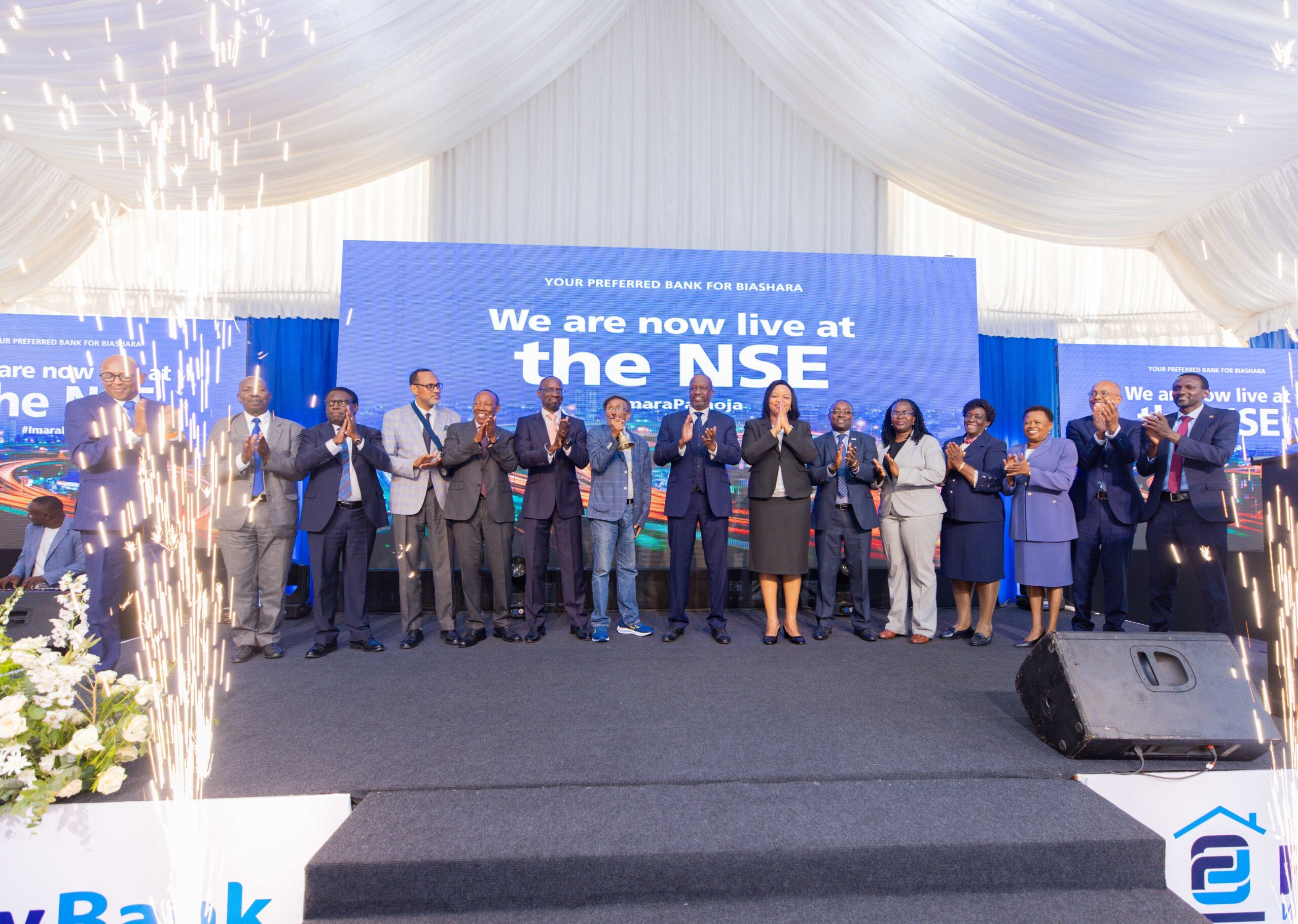
The Nairobi Securities Exchange (NSE) has added Family Bank to its Banking Sector Index, expanding the benchmark to 12 listed banking institutions as the exchange prepares for the planned listing of the WSA Banking ETF.
In an announcement effective November 2, 2026, the NSE said Family Bank qualified for inclusion after completing the mandatory six-month post-listing period following its debut on the exchange. The addition expands an index originally launched with 11 banks in October 2025 to provide investors with a benchmark for tracking the performance of listed banking stocks.
The reconstitution comes as the WSA Banking ETF advances through its regulatory approval process, having received approval from the Capital Markets Authority (CMA) in July 2026 and conditional approval from the NSE in September.
NSE expands Banking Sector Index to 12 banks
The NSE launched its Banking Sector Index on October 1, 2025, with 11 listed banking institutions. The exchange designed the benchmark to provide a transparent measure of banking-sector performance, support investment research and create a foundation for financial products such as exchange-traded funds.


The index uses a market-capitalisation-weighted and free-float-adjusted methodology, meaning the representation of each bank reflects its eligible market value and the proportion of shares available for public trading. Larger institutions with greater eligible market capitalisation can therefore have a stronger influence on the index’s overall performance.
Its original constituents included Absa Bank Kenya, BK Group, Diamond Trust Bank Kenya, Equity Group Holdings, HF Group, I&M Group, KCB Group, NCBA Group, Standard Chartered Bank Kenya, Stanbic Holdings and Co-operative Bank of Kenya.
Family Bank’s inclusion brings another listed lender into the benchmark, broadening the range of banking stocks represented. The index provides investors and market participants with a common reference for comparing the performance of these institutions, while its weighting methodology determines how individual share-price movements contribute to the overall benchmark.
WSA Banking ETF moves closer to planned listing
The inclusion of Family Bank comes as the NSE prepares for the planned introduction of the WSA Banking ETF, an investment product designed to track the performance of the Banking Sector Index.
The Capital Markets Authority approved the fund in July 2026, followed by conditional approval from the NSE in September. The proposed listing forms part of efforts to expand the range of investment products available through Kenya’s capital markets.
According to details reported during the ETF’s regulatory approval process, WSA Asset Managers intends to provide investors with exposure to a portfolio of listed banking stocks through a single exchange-traded security. The fund is denominated in Kenyan shillings and is structured as an open-ended investment vehicle.
WSA outlined a target capital base of between KSh5 billion and KSh7 billion, with market-making arrangements intended to support trading activity and liquidity. The proposed launch was targeted for the fourth quarter of 2026.
The ETF’s underlying benchmark is particularly important because its composition and weighting methodology determine the banking-sector exposure the fund is designed to replicate. With Family Bank now joining the index, the benchmark has expanded beyond the 11 institutions covered when the ETF first received regulatory attention.
For investors, an ETF tracking the banking index offers a way to obtain exposure to several listed lenders through one security rather than purchasing shares in each institution separately. This provides a different route into the banking sector for investors who want diversified exposure without independently managing a portfolio of individual bank shares.
The performance of such an investment would still depend on the underlying banks’ share prices and their respective weights within the index, alongside the fund’s operating costs and trading conditions.
What the expanded index means for investors
The index expansion comes against a backdrop of stronger activity at the Nairobi Securities Exchange. TechTrendsKE reported that equity turnover reached KSh395 billion in the nine months to September 2026, while the exchange’s market capitalisation stood at KSh4.12 trillion at the end of the same period.
The exchange also recorded 2.36 million investors by September 2026, according to earlier market reporting, with 333,043 additions during the first nine months of the year. The growth in the investor base and the development of additional investment products provide context for the NSE’s efforts to broaden the instruments available to market participants.
Digital investment platforms are also expanding access to listed securities. Safaricom’s Ziidi Trader, introduced in February 2026, provides an additional channel through which M-PESA customers can participate in the stock market, while the proposed WSA Banking ETF would give investors another investment vehicle focused on the banking sector.
Family Bank’s inclusion consequently expands the underlying universe represented by the NSE Banking Sector Index at a time when the exchange is working to bring more structured investment products to the market.
The development builds on the NSE’s original objective when it introduced the benchmark in October 2025: providing a measurable reference for banking-sector performance while supporting investment research and the development of products that allow investors to access listed companies through the exchange.
Go to TECHTRENDSKE.co.ke for more tech and business news from the African continent and across the world.
Follow us on WhatsApp, Telegram, Twitter, and Facebook, or subscribe to our weekly newsletter to ensure you don’t miss out on any future updates. Send tips to info@techtrendsmedia.co.ke


