KRA looks to Safaricom’s millions of M-Pesa merchants to strengthen electronic invoicing

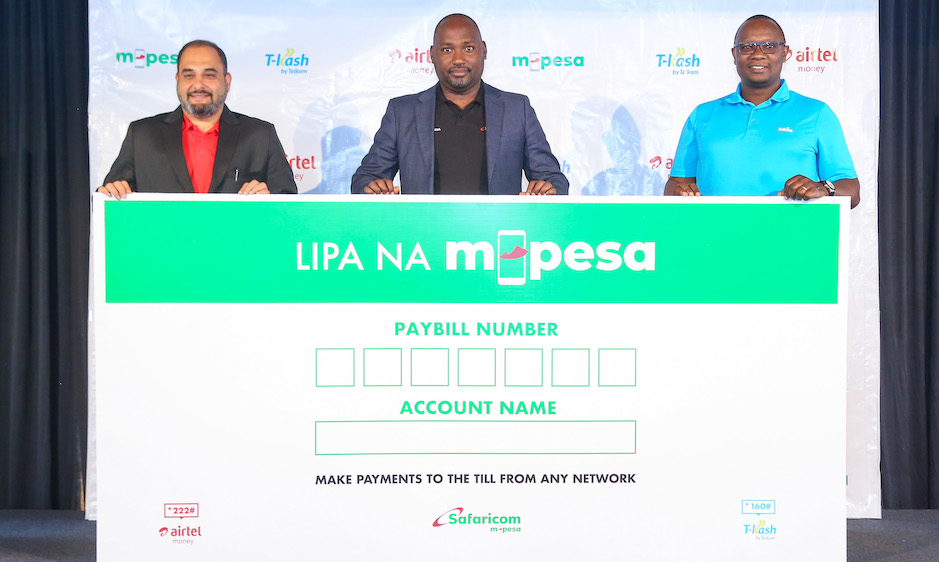
The Kenya Revenue Authority (KRA) is in discussions with Safaricom over M-Pesa tax invoicing for businesses, with the proposed arrangement allowing the telecommunications operator to generate electronic tax invoices on behalf of merchants receiving payments through its mobile money platform.
A KRA official told the National Assembly’s Finance and National Planning Committee that Safaricom had proposed carrying out reverse invoicing for merchants, a process in which invoices are generated on behalf of suppliers. The official said the discussions had begun and that the proposed system could transmit invoices to KRA at the end of the day, an approach the authority already uses with supermarkets.
The discussions bring M-Pesa’s extensive merchant network into focus as KRA pursues electronic invoicing and greater visibility into business transactions. The authority has also told lawmakers that it intends to use financial information associated with merchant till numbers and Pochi la Biashara accounts to identify income that businesses may not be declaring in their tax returns.
KRA and Safaricom discuss electronic invoices for merchants
Under the proposed arrangement, Safaricom would generate eTIMS invoices for merchants receiving payments through M-Pesa tills and paybills, then transmit the records to KRA. The authority’s explanation to lawmakers described end-of-day transmission as one possible approach, drawing on a process already used with supermarkets.


Reverse invoicing is intended to address a practical problem for small suppliers that struggle to produce electronic tax invoices. Larger businesses need compliant invoices to support expense claims, while smaller businesses without the required records can face difficulties supplying them. Having invoices generated on their behalf could help bridge that gap while giving KRA a more structured record of commercial activity.
KRA has pursued similar arrangements in other sectors. The authority has worked with the East African Tea Trade Association on invoicing small-scale farmers supplying tea to auction, while it has also been implementing reverse invoicing with sugar factories and planning comparable arrangements for tea and coffee supply chains.
The Safaricom discussions extend that approach into mobile money payments, where merchants already use tills and paybills to collect money from customers. The proposed arrangement would connect those payment channels with the electronic invoicing system used to record business sales and expenses.
How M-Pesa payment data fits into KRA’s compliance strategy
The talks form part of a broader KRA effort to use third-party financial information to improve tax compliance among micro and small businesses. In its presentation to the National Assembly committee, the authority said it planned to use data linked to merchant till numbers and Pochi la Biashara accounts to identify undeclared income and address the VAT collection gap among smaller taxpayers.
KRA also reported that domestic VAT collections reached KSh98.2 billion between July and September 2026, falling KSh2.6 billion short of the period’s target. The figures provide a fiscal backdrop to the authority’s efforts to strengthen compliance, including the use of payment information to identify businesses whose reported sales may not reflect their commercial activity.
The authority has also pursued traders suspected of splitting sales across multiple till numbers or paybills to evade tax. TechTrendsKE previously reported on KRA’s scrutiny of multiple merchant accounts and its broader plan to link digital payment channels with electronic invoicing and tax systems.
In May 2026, KRA outlined a wider M-Pesa-linked eTIMS initiative involving payment channels, invoice generation and connections with tax systems. The current discussions with Safaricom add a specific merchant-invoicing arrangement to that broader policy direction, while the authority’s latest committee presentation places merchant financial data among the tools it intends to use to identify undeclared income.
Small businesses face pressure to formalise sales records
For small businesses, electronic invoicing is tied to both tax compliance and access to larger customers. Suppliers that cannot provide compliant invoices may find it harder to do business with companies that need documented purchases for their own tax records. Reverse invoicing offers a way to generate those records on the supplier’s behalf, while giving KRA a clearer trail of commercial transactions.
The issue is significant in an economy where small businesses account for a large share of employment. The source material cited by KRA-linked reporting says the informal sector created 717,000 jobs in the previous year, compared with 102,000 in the formal sector. Making electronic invoicing workable for smaller traders is therefore relevant to the authority’s effort to bring more business activity into its tax records.
Tax treatment also depends on the nature of a transaction and the applicable tax rules. A payment received through a merchant till may represent a business sale, while a transfer between individuals can serve a different purpose. The use of payment information for tax compliance consequently sits alongside the need to identify commercial transactions and record them appropriately.
KRA’s wider electronic invoicing programme has also extended to government procurement. Its eTIMS integration with the Integrated Financial Management Information System (IFMIS) connects supplier invoicing with government payment processes, reinforcing the role of compliant electronic records in business transactions with large institutional buyers.
The scale of Safaricom’s merchant network
Safaricom’s merchant ecosystem gives the discussions a substantial potential reach. The company reported that its merchant base grew to approximately 3.1 million by the financial year ended March 2026, comprising about 2.1 million Pochi la Biashara users and one million Lipa na M-Pesa tills and paybills.
The growth reflects the role of M-Pesa in everyday business payments, from small retailers to larger merchants. Safaricom’s wider FY2026 results also put the scale of the platform into perspective: the company reported that its M-Pesa ecosystem processed KSh41.68 trillion in transactions during the year. That figure covers the broader M-Pesa ecosystem and represents transaction value, rather than merchant sales alone.
For KRA, merchant payment channels offer a potential route to better records of business activity, while electronic invoicing could help small traders meet documentation requirements when supplying larger firms. The discussions place Safaricom’s merchant infrastructure at the intersection of mobile payments, business record-keeping and the authority’s drive to improve tax compliance.
Go to TECHTRENDSKE.co.ke for more tech and business news from the African continent and across the world.
Follow us on WhatsApp, Telegram, Twitter, and Facebook, or subscribe to our weekly newsletter to ensure you don’t miss out on any future updates. Send tips to info@techtrendsmedia.co.ke