How Dangote negotiated his KPC stake as pension funds defended their returns

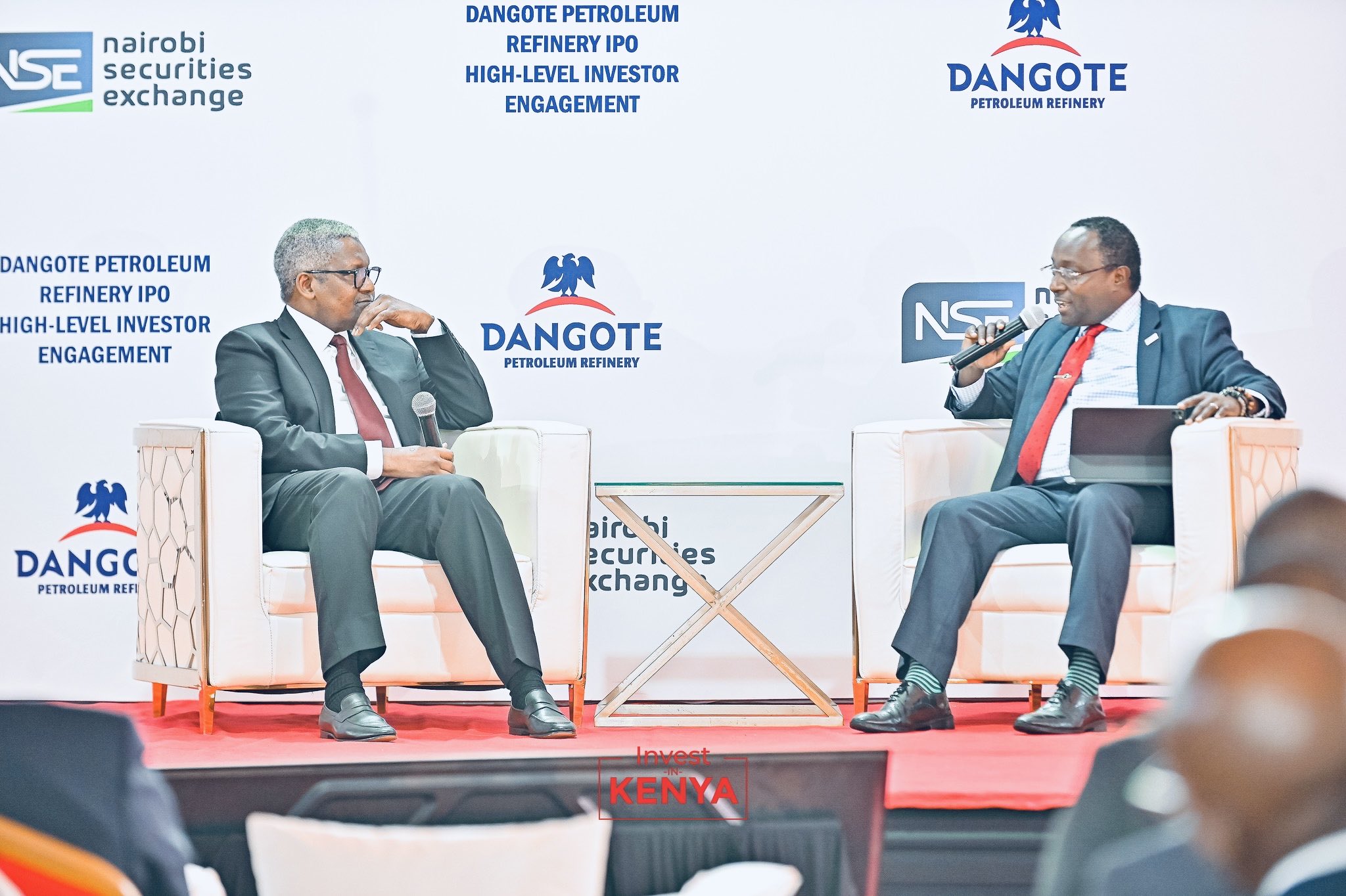
Aliko Dangote secured a 24.7% stake in Kenya Pipeline Company (KPC) for KSh42.5 billion after rejecting a Sh9.50-per-share offer from state-backed pension schemes, with the negotiations eventually settling on a lower cash price and a dividend arrangement that raised the effective value to Sh9.36 per share.
The Dangote KPC deal gave Africa’s richest man a significant position in one of East Africa’s most important petroleum infrastructure operators, while reducing the combined shareholding of local pension schemes to below 15%. The transaction has also drawn attention to the returns earned by the funds, which invested billions of shillings in KPC during its March 2026 initial public offering (IPO).
How the KPC share price negotiations unfolded
The pension schemes initially sought Sh10 per share before reducing their asking price to Sh9.50, according to Kenne Belgrad, managing director of Rock Investment Bank, which acted as the selling broker. Dangote rejected the revised offer despite four rounds of negotiations, with the difference between the asking price and the market price threatening to derail the transaction.
KPC shares were trading at Sh9.02 when the deal was executed, putting the pension schemes’ Sh9.50 demand about 5.3% above the prevailing market price. The parties eventually settled on Sh9.04 per share, a modest premium over the market price, while the reported dividend arrangement brought the effective economic value to Sh9.36 per share.

The dividend was worth Sh0.32 per share and was due to be paid to investors on KPC’s register by November 30. Dangote agreed to forgo the dividend benefit associated with the transaction, with the arrangement reported to have delivered approximately Sh1.4 billion to the eight schemes that sold their holdings.
The difference between the cash price and the effective value matters when assessing the deal. At Sh9.36, the consideration was about 3.8% above the Sh9.02 market price, although it remained below the pension schemes’ original Sh9.50 demand.

What the pension schemes earned from the sale
Belgrad has defended the transaction, arguing that the pension schemes generated a reasonable return on their investment and that the claim they lost money is misleading. He put the annualised return at approximately 8% before transaction costs, saying that even after costs of up to 1%, the return remained close to prevailing Treasury bill rates.
The argument is based on the schemes’ holding period, which began with the March IPO, and the value they received when they sold their shares. The original IPO price was Sh9 per share, meaning the reported effective consideration of Sh9.36 represented a nominal gain of 36 cents per share before accounting for the full investment costs and the timing of cash flows.
KPC’s financial performance provides additional context for that assessment. The company reported revenue of KSh42.98 billion and net profit of KSh11.58 billion for the financial year ended June 2026, while operating cash flow rose to KSh17.39 billion. Its proposed dividend of Sh0.32 per share also formed part of the economics of the transaction.
Those results show that the pension schemes sold shares in a profitable business with substantial cash generation. However, a positive nominal return does not by itself establish whether they obtained the best price available, particularly when the buyer was acquiring a large stake in an infrastructure company with regional importance and expansion plans.
KPC shares subsequently rose to Sh10.55 at the close of trading on Friday, October 23, above both the reported cash price and the effective value of the deal. The rally followed the transaction and reflected stronger market demand for the stock, although the later price alone does not establish that the pension schemes sold below fair value.
Why Dangote wanted a stake in KPC
Dangote’s acquisition fits into a wider plan to build an integrated refining, storage and distribution business across Africa. KPC operates a roughly 1,300-kilometre pipeline network that moves petrol, diesel and jet fuel from Mombasa into Kenya and neighbouring markets, including Uganda, South Sudan, Rwanda and the Democratic Republic of Congo.
The Nigerian industrialist has outlined plans to invest $1.5 billion, approximately KSh195 billion, in expanding KPC’s pipeline network. The proposal sits alongside his planned 700,000-barrel-a-day refinery in Lamu, an investment estimated at about KSh2.1 trillion, where initial work has reportedly started.
An expanded pipeline network could provide additional capacity for transporting petroleum products from coastal facilities into inland markets, including fuel produced at a future Lamu refinery. The existing network also gives KPC an established position in regional distribution, making it a potentially valuable partner for a company seeking to expand refining output and reach new markets.
KPC’s own investment plans reinforce the commercial importance of its infrastructure. Management has discussed major pipeline expansion options and a potential petroleum trading hub that could provide storage, bunkering and transshipment services, adding opportunities beyond its core transportation business.
The proposed Dangote investment and the Lamu refinery remain separate projects, but their commercial interests could overlap through the need for storage, transportation and regional distribution. A substantial stake in KPC gives Dangote a position from which to participate in the company’s governance as those opportunities develop.
How the deal changes KPC’s ownership
Dangote is now KPC’s second-largest shareholder behind the Kenyan government, which retained a 35% stake following the IPO. Uganda holds another 20.15% through the Uganda National Oil Corporation (UNOC), while Dangote’s stake stands at approximately 24.76%.
The transaction involved the sale of shares by the National Social Security Fund (NSSF), the Public Service Superannuation Fund (PSSF), the County Pension Fund (CPF) and smaller institutional schemes. NSSF’s stake fell from 22% to 6%, while PSSF’s holding also declined to 6%.
Several smaller pension schemes, including Lapfund, Laptrust, the Kenya Power Pension Scheme and the Kenya Ports Authority Pension Scheme, exited their investments completely. The Unclaimed Financial Assets Authority and Kenya Re Insurance Corporation did not participate in the sale.
The reduced pension-fund ownership changes the balance among KPC’s shareholders. The Kenyan and Ugandan governments retain substantial holdings and veto powers over specified reserved matters, including the appointment of KPC’s managing director, tariff-setting and material changes to the company’s business plan.
Dangote is also expected to nominate a director to KPC’s board under the company’s shareholder-governance provisions. The position would give him a formal route to participate in discussions on the company’s strategic direction, although his shareholding does not confer majority control.
What the transaction means for Kenya’s fuel infrastructure
The deal brings a major private-sector investor into an infrastructure company that serves Kenya’s domestic fuel market and several neighbouring countries. Dangote’s interest in expanding pipeline capacity could support additional investment in the network, while the company’s established position offers a platform for regional petroleum distribution.
For the pension schemes, the sale converts part of their KPC holdings into cash that can be redeployed across their investment portfolios. The central financial question is whether the proceeds, after transaction costs and the dividend arrangement, delivered an appropriate return for pension beneficiaries relative to the risks and potential returns of continuing to hold the shares.
The transaction also illustrates how the ownership of strategic infrastructure can evolve following a public listing. State-linked institutions that helped establish KPC’s public-market shareholder base have sold a substantial portion of their holdings to an investor with commercial interests that extend beyond Kenya.
KPC’s future investment programme, Dangote’s regional refining ambitions and the company’s role in supplying landlocked markets will shape the commercial significance of the deal. The price negotiations may have ended at Sh9.04 in cash consideration per share, but the value of the stake will ultimately depend on KPC’s financial performance, its ability to expand infrastructure and the returns generated for shareholders over time.
Go to TECHTRENDSKE.co.ke for more tech and business news from the African continent and across the world.
Follow us on WhatsApp, Telegram, Twitter, and Facebook, or subscribe to our weekly newsletter to ensure you don’t miss out on any future updates. Send tips to editorial@techtrendsmedia.co.ke


