
Commercial solar could cut power costs, but businesses need to compare the full cost of financing

For a Kenyan business considering commercial solar, the central question is not only whether solar electricity costs less than grid power. It is also how to finance the system, who owns and maintains the equipment, and which party carries the risks if the project underperforms.
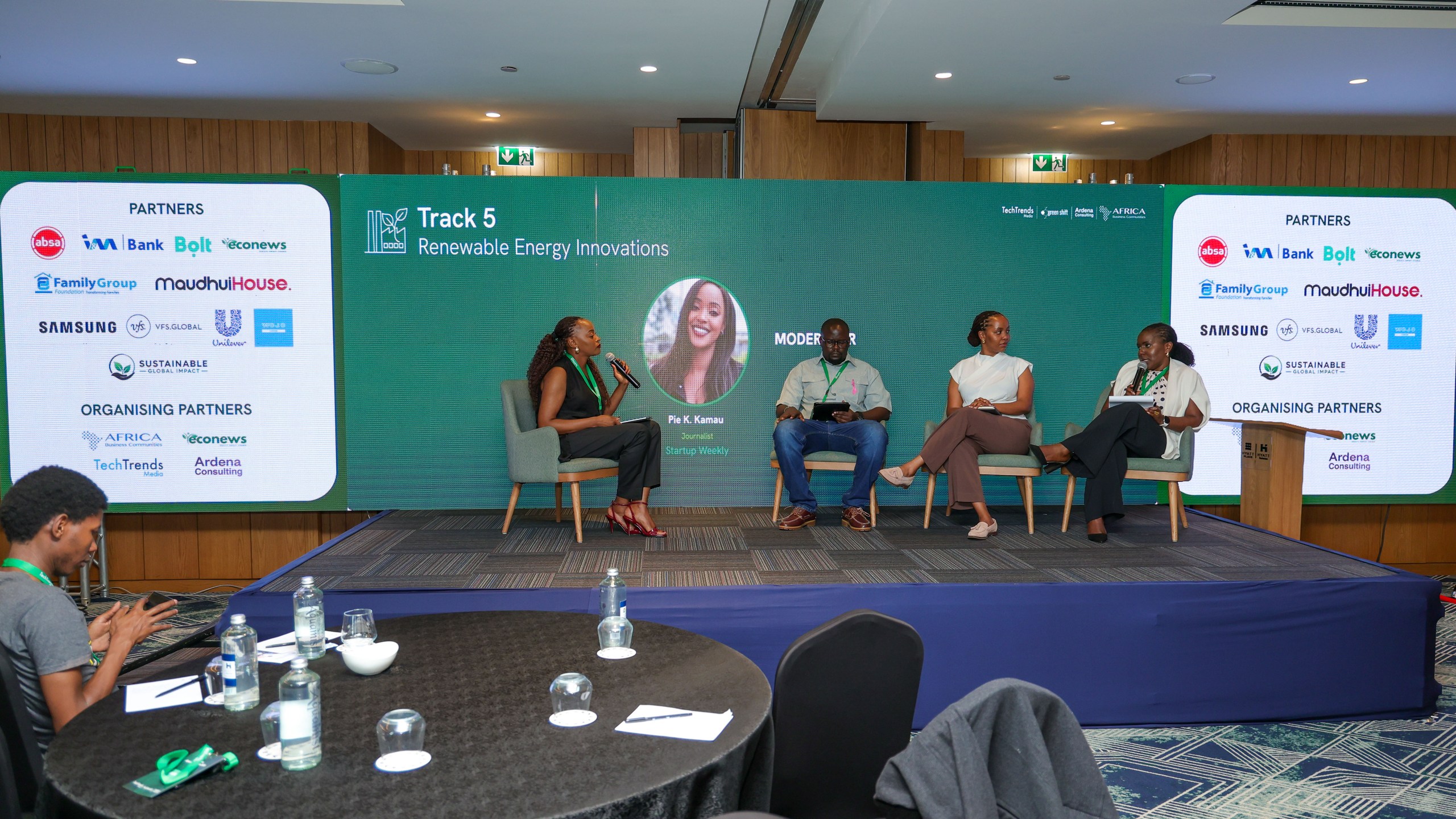
These choices featured in the Renewable Energy Innovations discussion at GreenShift Forum 2026. The session featured a presentation by Eng. Henry Nyakundi, Engineering Lead, WTS Energy, followed by a panel discussion involving himself, Sandra Banda of GIZ and Elizabeth Wokabi of Linden Hof Limited. Pie K. Kamau moderated the discussion.
Figures shared during the session put grid electricity costs at approximately KSh18–28 per kilowatt-hour and solar costs at KSh8–14 per kilowatt-hour under certain arrangements. The discussion also cited a four-to-seven-year payback range.
Buying a system gives control but requires capital
A business that buys a solar installation outright pays the capital cost upfront and takes responsibility for operating and maintaining the system, subject to the applicable contracts and warranties. Its financial case depends on installation costs, electricity generation, how much power the business uses directly and how long the system remains productive.


This model may suit companies able to commit capital and willing to manage the asset. But it also ties money up in infrastructure that could otherwise be used for stock, equipment, staffing or expansion.
Payback depends on the assumptions behind the calculation. The four-to-seven-year range cited during the forum should be assessed against the installation price, the business’s electricity demand, system performance, maintenance costs and the value of the grid electricity displaced. A project with different operating conditions may produce a different result.
Leasing and PPAs change the allocation of costs
Leasing can allow a business to use a solar installation without paying the entire equipment cost upfront. The contract determines the payment structure, ownership arrangements and responsibility for maintenance.
A power purchase agreement takes a different approach: the customer buys electricity generated by a system under agreed terms, often with a developer owning or operating the equipment. Depending on the arrangement, this can reduce the customer’s initial capital requirement while introducing contract-duration, pricing and supplier-performance considerations.
The distinction matters for businesses that need to preserve working capital. The relevant comparison is not simply the deposit required under each model, but the total cost over the contract period and the obligations the customer accepts.
Rooftop access and energy use affect the deal
The discussion also considered arrangements in which a property owner leases rooftop space to a solar provider that supplies electricity to a tenant. Such a structure can bring together a building owner, a tenant and an energy provider, each with different incentives and contractual responsibilities.
The commercial case depends on the available roof area, the tenant’s demand, the agreement governing access and payments, and the allocation of responsibility for maintenance and performance. A business occupying rented premises may also need to consider lease duration and whether the solar arrangement remains workable if it moves.
Storage and backup supply add another layer. A system designed to reduce daytime electricity purchases does not necessarily provide backup during a grid outage. Businesses with critical loads need to account for the additional equipment and costs required to maintain supply.
Compare the full cost, not just the unit price
Businesses evaluating solar should compare grid charges, solar payments, financing costs, maintenance, taxes, backup power and any contractual price adjustments. They should also examine how much of the electricity generated will be consumed on site and what happens when demand exceeds solar output.
The GreenShift discussion placed solar financing within the wider question of reliable commercial power. Ownership, leasing and power purchase agreements can each work under different conditions, but none is automatically the cheapest option for every company.
For manufacturers and other large electricity users, the financial comparison starts with actual consumption data and clear contract terms. That gives management a basis for deciding whether to own the system, lease it or buy electricity from a third-party provider.
Real ESG impact doesn’t happen in panels alone, it happens in the rooms where financiers, operators, and policymakers actually align. Our GreenShift Forum 2026 cuts the noise, bringing together the people rewiring Africa’s sustainability and energy frameworks for one focused day in Nairobi. Secure your seat.
Go to TECHTRENDSKE.co.ke for more tech and business news from the African continent and across the world.
Follow us on WhatsApp, Telegram, Twitter, and Facebook, or subscribe to our weekly newsletter to ensure you don’t miss out on any future updates. Send tips to editorial@techtrendsmedia.co.ke


