
Kenya's cloud and space ambitions join a 13-project infrastructure investment pitch

Kenya is pitching a portfolio of infrastructure opportunities to global investors in South Korea, including cloud infrastructure, a planned digital media hub and a proposed commercial spaceport.
The projects form part of 13 priority opportunities presented at the Global Infrastructure Cooperation Conference (GICC) 2026 in Seoul, according to Kefa Seda, Director General of the Public-Private Partnerships Directorate at Kenya’s National Treasury.
Seda said the projects had been identified for active market engagement during the 2026/27 financial year. The wider portfolio covers transport, energy, water, irrigation, ICT and other strategic sectors, with the government seeking long-term financing and private-sector participation. The announcement, however, describes an investment pipeline rather than confirmed funding agreements or completed project financing.
For TechTrendsKE, the technology components are particularly relevant because they connect infrastructure development with Kenya’s plans for cloud services, digital production and commercial space activity. The strongest example is the proposed expansion of the Konza National Data Centre, which already has a documented feasibility study and a proposed private-sector delivery model.

Konza cloud expansion has a defined PPP framework
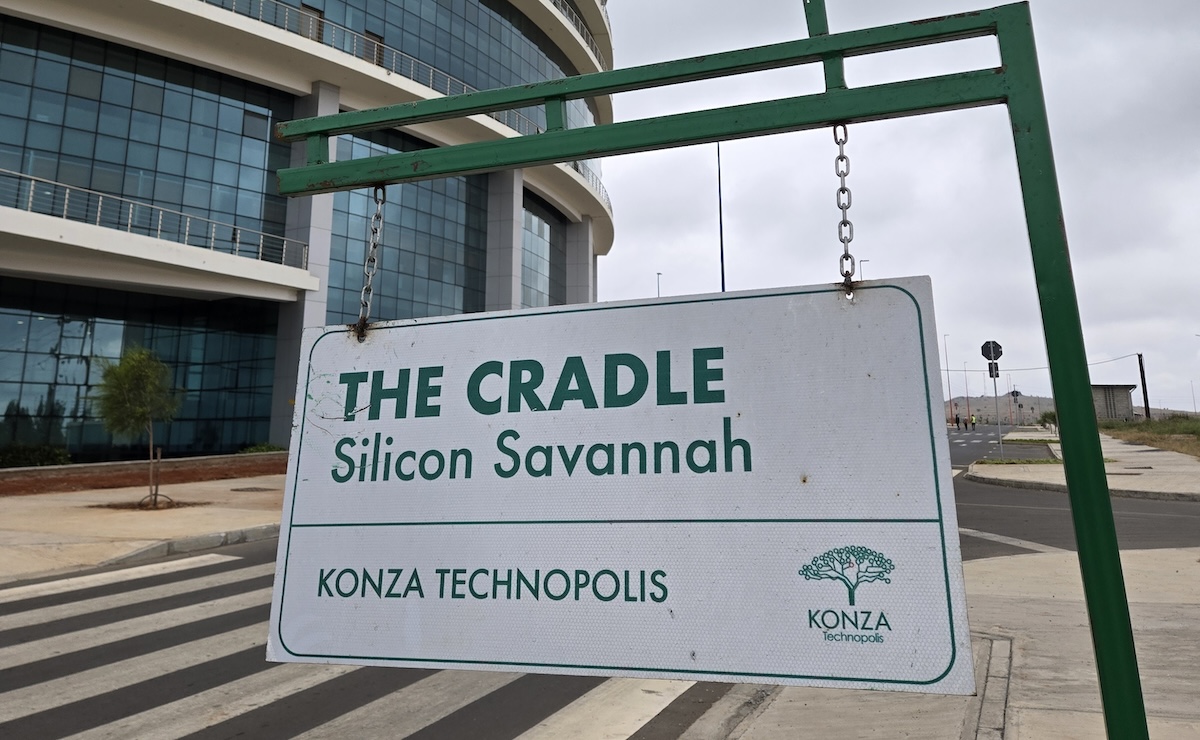
The Konza cloud expansion is supported by a feasibility study prepared for the Konza Technopolis Development Authority (KoTDA). An executive summary published in KoTDA’s 2026 transaction-advisory procurement documents identifies the project as the Konza National Data Centre Cloud Expansion Project, providing a clearer picture of its status than the Seoul announcement alone.
The study describes the existing Konza National Data Centre as operating close to its resource limits and outlines an expansion intended to provide computing, storage, databases, analytics and networking services to government institutions, counties, public agencies and private enterprises. The existing facility is described as a multi-zone, Tier III cloud environment, with an OpenStack-based KVM virtualisation platform supporting infrastructure-as-a-service capabilities.
The proposed delivery model is a Design-Build-Finance-Operate-Transfer (DBFOT) arrangement. Under that structure, a private partner would be expected to design, finance, install and operate the expanded facility during an agreed concession period before transferring it to the government. The feasibility study proposes a 36-month implementation period, including design, approvals, private-partner procurement, financial close and commissioning.
That timeline is important because it places the project at a stage where financing and partner selection remain central to implementation. The existence of a feasibility study does not mean the expansion has already secured an investor, reached financial close or entered construction. The accessible executive summary also does not establish a definitive expanded megawatt capacity, rack count or capital-cost figure, so those details should not be presented as settled facts.
The project also fits into a wider Konza technology ecosystem. Previous developments have included the National Data Centre, digital public infrastructure and partnerships focused on cloud skills and innovation. An August 2026 report on collaboration between KoTDA and Amazon Web Services, for example, linked Konza’s ambitions to hybrid cloud infrastructure, startup support and workforce development. Whether that partnership is directly connected to the cloud expansion being marketed in Seoul, however, requires confirmation.
Digital Media City links technology with South Korean cooperation
Kenya’s investment pipeline also includes a planned 160-acre Digital Media City, described as a creative and technology hub being developed with support from South Korea. The project adds a different dimension to the infrastructure pitch, connecting digital technology with content production, creative industries and potential investment in media-related facilities.
The supplied announcement does not specify the project’s current construction or financing status, nor does it detail the precise scope of South Korean support. It is therefore more accurate to describe Digital Media City as a planned project than as an operational technology hub or a facility with confirmed private-sector tenants.
The South Korean connection is relevant to the Seoul presentation, but it should not be interpreted as evidence that South Korean investors have committed to financing the entire 13-project portfolio. The announcement confirms that the project is being presented in an international investment setting; it does not disclose a signed financing agreement, selected developer or confirmed implementation schedule.
Kipini spaceport remains an early-stage commercial proposition
The proposed Kenya Commercial Spaceport is another technology-related project in the portfolio. The facility is linked to earlier government plans for a satellite-launch site at Kipini, between Malindi and Lamu, under a PPP arrangement.
The project had progressed beyond a purely conceptual announcement by March 2026, when the Kenya Space Agency extended the deadline for bids for transaction-advisory services. The advisory work was expected to cover the PPP structure, technical and economic feasibility, financial and environmental assessments, preliminary designs, a phased implementation plan, and value-for-money and affordability analysis.
That procurement process provides useful context for the Seoul announcement. It indicates that Kenya has been working on the commercial and technical structure required to assess the spaceport, but the available information does not establish that the project has secured a private operator, reached financial close or begun construction. There is also no verified launch schedule attached to the investment presentation.
For the spaceport to become a functioning commercial facility, Kenya would need more than a site and an investment proposition. The project would require a viable launch-services market, regulatory approvals, technical infrastructure, suitable operators and a financing model capable of supporting operations over time. Those questions make the spaceport an interesting emerging-technology project, while also explaining why its inclusion in an investor pipeline should be treated as an early-stage development.
Investment presentation is not the same as project financing
The remaining projects in Kenya’s Seoul portfolio cover more traditional infrastructure, including the Nairobi-Mombasa Highway, the Mau Summit-Eldoret-Malaba Road, the Kibuka Falls Hydropower and Irrigation Dam, the proposed 1,200MW Dongo Kundu Power Plant, electricity transmission infrastructure, irrigation dams and Kenya Ports Authority assets.
The government says it is seeking long-term financing and broader investor participation as the projects move toward market engagement. It has also pointed to the National Infrastructure Fund as a potential complement to the PPP framework, with domestic capital from pension funds, insurers and collective investment schemes expected to provide another route for infrastructure financing.
The full list of 13 projects has not been publicly established in the material available for this report. The announcement identifies several projects and broader categories, but it would be premature to present an inferred list as the official portfolio. Similarly, no project-specific expressions of interest, memoranda of understanding or financing commitments have been confirmed in the information reviewed.
For Kenya’s technology ambitions, the significance of the Seoul presentation lies in the attempt to connect digital infrastructure with private capital. Konza’s cloud expansion has the clearest documented structure, while Digital Media City and the Kipini spaceport remain projects whose development details need further disclosure. The next substantive milestones will be the release of project information, investor selection, financing agreements and evidence that the proposed infrastructure is moving from market engagement toward implementation.
Real ESG impact doesn’t happen in panels alone, it happens in the rooms where financiers, operators, and policymakers actually align. Our GreenShift Forum 2026 cuts the noise, bringing together the people rewiring Africa’s sustainability and energy frameworks for one focused day in Nairobi. Secure your seat.
Go to TECHTRENDSKE.co.ke for more tech and business news from the African continent and across the world.
Follow us on WhatsApp, Telegram, Twitter, and Facebook, or subscribe to our weekly newsletter to ensure you don’t miss out on any future updates. Send tips to info@techtrendsmedia.co.ke