Apple’s camera-equipped AirPods leak reveals how Visual Intelligence could change Siri


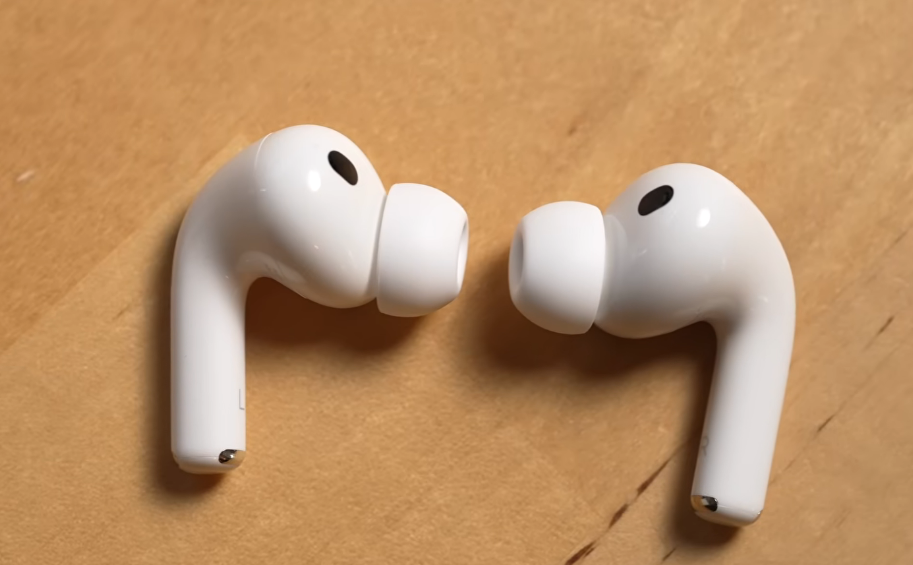
Apple’s camera-equipped AirPods appear to have slipped into public view through Apple’s own software, offering one of the clearest looks yet at a product that has been rumored for months.
A demo video discovered inside the macOS Tahoe 26.7 Release Candidate shows a person holding up a book while Siri, powered by Visual Intelligence, recognizes it and offers to save it for later. The leak suggests Apple is preparing a hands-free version of Visual Intelligence that works through AirPods rather than requiring users to reach for an iPhone.
The discovery found both the demo video and supporting setup strings inside Apple’s software, painting a picture of hardware that appears much closer to launch than previous supply-chain rumors suggested.
The leak came from Apple’s own software
Software leaks happen regularly, but they rarely include what looks like finished promotional material.

The leaked clip, which runs for roughly 13 seconds, demonstrates Siri saying, “With Visual Intelligence, your world becomes savable. See something you like? Just ask me to save it for later.” The wearer simply holds up a book without taking out a phone, and the interaction happens through the AirPods themselves.
MacRumors also found references to a setup experience that warns users when hair blocks the sensors, with a “Hair Detected” prompt advising that uncovered AirPods provide more accurate information about the surrounding environment.
That detail makes the leak particularly compelling because it points to real product onboarding rather than placeholder code. At the same time, Apple has not officially announced the product, so features and launch timing remain subject to change.
Why these AirPods matter beyond another hardware rumor
The demo’s most important detail is easy to miss: there is no phone in the interaction.
Visual Intelligence already exists on the iPhone, where users point the camera at objects to ask questions or identify what they are looking at. The leaked AirPods demonstration removes that extra step, suggesting Apple wants visual AI to become available the moment someone asks Siri.
That changes the role of AirPods. Instead of acting purely as wireless earbuds, they become a way for Siri to understand parts of the physical world through what appear to be outward-facing computer vision sensors.
Bloomberg has previously reported that the sensors are designed to capture low-resolution visual information for AI features rather than function as traditional photography cameras. If that reporting proves accurate, the emphasis shifts from taking pictures to helping Siri interpret nearby objects, signs, books, and other everyday items.
Apple is turning AirPods into an AI wearable
The leaked design looks remarkably familiar. From the available angle, the earbuds resemble slightly thicker AirPods Pro with longer stems that could accommodate the new sensors, a choice that echoes Apple’s broader hardware approach of introducing new technology through familiar designs.
That decision matters because Apple enters this category with an enormous installed base. Industry estimates place cumulative AirPods sales well above 400 million units, while Meta’s Ray-Ban smart glasses remain a much smaller product category despite growing momentum.
Instead of asking consumers to adopt an entirely new wearable, Apple appears positioned to sell upgraded earbuds that fit naturally into habits people already have.
The comparison with Google Glass is equally revealing. Google’s early smart glasses became synonymous with the “Glasshole” label because the technology announced itself before social norms had caught up. Ray-Ban Meta softened that reaction by hiding cameras inside recognizable eyewear. AirPods push that subtlety even further, which could make adoption easier while raising new questions about consent and visibility.
Why privacy will define the conversation
The strongest reactions to the leak have centered on people around the wearer rather than the wearer alone.
MacRumors readers questioned whether gyms, locker rooms, and other private spaces would begin restricting camera-equipped earbuds. Others pointed out that if the hardware can read text from a book, many people will naturally wonder whether it can also record video, regardless of Apple’s intended use case.
Apple appears to be anticipating those concerns. Previous reporting has suggested the company may use visible indicators when cloud processing is involved, while Computerworld argues the broader direction points toward a privacy-first model that relies heavily on on-device processing and explicit user actions before information is retained.
Those safeguards, if they arrive, address part of the technical question. They do not automatically solve the social one: people nearby cannot easily tell when environmental sensing is active.
The bigger picture behind Apple’s AI hardware strategy
The AirPods leak makes more sense when viewed alongside Apple’s broader 2026 product roadmap.
The company is expected to center its September event around the iPhone 18 Pro lineup, Apple’s first foldable iPhone, and a rebuilt Siri experience tied closely to Apple Intelligence. The appearance of Visual Intelligence assets inside release-candidate software suggests Apple is preparing those experiences across multiple devices rather than treating them as isolated features.
That creates a more connected picture of Apple’s AI strategy. The iPhone provides the primary computing platform, AirPods extend visual awareness into hands-free interactions, the Apple Watch continues supplying health and contextual information, and future wearables may build on those same foundations.
Whether the leaked earbuds arrive in September or later, the story has already moved beyond another hardware rumor. Apple appears to be testing a version of computing where users do not need to raise a phone every time they want AI to understand the world around them, and that could prove to be the more important development than the cameras themselves.
Download the FREE Kaspersky Next Enterprise Security Guide here to explore the complete framework for simplifying security operations and building cyber resilience.
Go to TECHTRENDSKE.co.ke for more tech and business news from the African continent and across the world.
Follow us on WhatsApp, Telegram, Twitter, and Facebook, or subscribe to our weekly newsletter to ensure you don’t miss out on any future updates. Send tips to editorial@techtrendsmedia.co.ke