

Safaricom Takes Affordable Housing Fibre to Mukuru, Eyes National Rollout

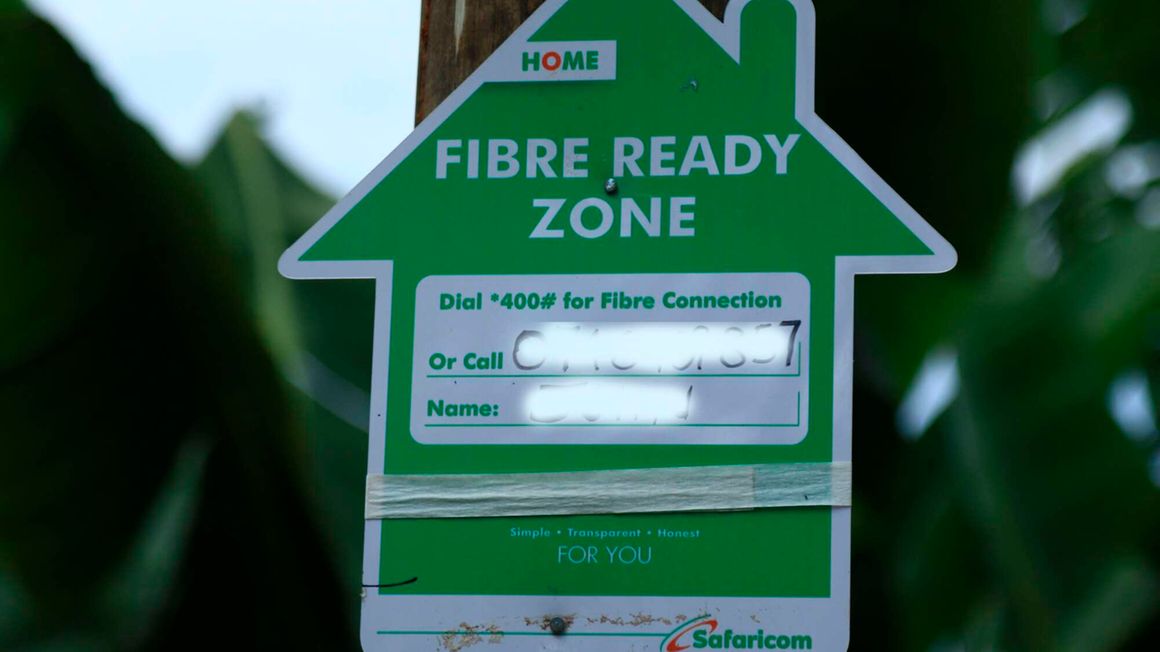
Safaricom has secured a deal to provide fibre internet connectivity to Kenya’s Affordable Housing Programme, positioning the telco at the centre of one of the country’s largest residential broadband expansion projects.
The rollout begins with the Mukuru Affordable Housing Project in Nairobi, where all 14,000 housing units will be connected with pre-installed internet infrastructure before residents move in. Safaricom says the model will be replicated across other government-backed affordable housing developments under construction nationwide.
The contract was disclosed by Safaricom’s parent company, Vodacom Group, in its latest investor disclosures.
“In Kenya, we are extending fibre to low-cost government housing developments,” Vodacom said.


Safaricom later confirmed that the deployment extends beyond Mukuru.
“We will roll out similar services to the other housing projects across the country under the Affordable Housing programme,” a company spokesperson said.
The development hands Safaricom early access to thousands of new households at a time when competition for Kenya’s home broadband market is gathering pace. Rather than waiting for residents to seek internet providers after moving in, the company will have connectivity built into the estates from the outset.
The housing rollout will use Wi-Fi Bamba, Safaricom’s tokenised fibre broadband service aimed at households looking for a lower-cost alternative to conventional home fibre.
The package costs KSh800 and offers speeds of up to 15Mbps, supporting up to three connected devices simultaneously. Unlike standard fibre installations that require cable splicing during deployment, Wi-Fi Bamba uses a plug-and-play connection that reduces installation time and lowers deployment costs.
That approach fits the Affordable Housing Programme, where deployment speed, lower installation costs and flexible payment options are likely to be key considerations.
Safaricom has also indicated that it plans to introduce tokenised Wi-Fi access with hourly, daily and weekly payment options, mirroring Kenya’s pay-as-you-go mobile data model.
Chief Executive Peter Ndegwa has previously said the company wants to expand broadband beyond traditional higher-income customers by combining tiered pricing with lower-cost deployment models.
“By tiering pricing, we can deliver propositions that expand participation and that will also reduce cost to serve, to allow us to reach the extra three million customers not served by the broadband market,” Ndegwa said in a company video.
The contract comes as Kenya’s fixed internet market continues to expand.
According to the Communications Authority’s latest Sector Statistics Report, fixed internet subscriptions reached 2.66 million during the third quarter of the 2025/26 financial year after adding nearly 196,000 new connections in three months. The growth points to rising demand for always-on home connectivity as more households adopt streaming services, remote work, online learning and connected devices.
Safaricom remains the country’s largest fixed broadband provider, accounting for 941,501 subscriptions, or 35.4 percent of the market as of March.
The company believes Kenya has the potential to support around four million fixed broadband connections, leaving substantial room for expansion.
Safaricom’s housing deal also arrives as competition in the residential broadband market intensifies.
Earlier this year, Airtel Kenya entered the fibre market with home and business internet packages, joining established providers such as Zuku and Faiba in targeting residential customers.
At the same time, Safaricom has been broadening its own connectivity strategy. Beyond expanding its fibre footprint, the company has invested in fixed wireless access powered by 4G and 5G, refreshed its Home Fibre portfolio with higher-speed packages, and widened retail distribution for home internet products.
Connecting affordable housing developments adds another route for customer growth, allowing Safaricom to reach new homeowners as estates are completed rather than competing for them after occupancy.
The affordable housing rollout adds to Safaricom’s portfolio of public sector technology projects.
The company has also participated in the digitisation of the Social Health Authority (SHA) and the National Surveillance, Communication and Control System, reinforcing its role in delivering digital infrastructure for government services.
The Affordable Housing Programme aims to deliver 500,000 affordable, social, institutional and student housing units by June 2029 across all 47 counties.
If that target is achieved, the programme could also become one of Kenya’s largest opportunities for expanding household fibre connectivity, giving Safaricom a platform to grow broadband adoption alongside the country’s housing development agenda.
Download the free Kaspersky SMB Cybersecurity Guide here to learn how businesses can move beyond traditional antivirus and build a more resilient approach to cybersecurity.


