Digital Priorities Survive as Kenya Cuts ICT Spending
Treasury has reduced ICT sector funding for the new financial year, but broadband expansion, digital hubs and government digitisation remain on the spending agenda.

Kenya’s ICT sector is entering the new financial year with a smaller budget but no shortage of ambition.
Treasury has allocated Sh8.6 billion to the digital economy and creative industry in the 2026/27 budget, down from Sh12.7 billion a year earlier. The decline comes as the government continues to pursue the Digital Superhighway programme, expand fibre infrastructure and digitise public services across the country.
The numbers suggest a government trying to keep key digital programmes moving while operating under tighter fiscal conditions.
One figure stands out.


The Kenya Digital Economy Acceleration Project (KDEAP) will receive Sh4.3 billion, up from Sh3.7 billion in the current financial year. The World Bank-backed programme is designed to expand broadband access, strengthen digital skills and support the digitisation of government services.
Its allocation now accounts for roughly half of the sector’s total funding.

That concentration offers a glimpse into how spending priorities are evolving. While overall allocations have fallen, projects tied directly to connectivity and service delivery continue to attract support.
Treasury has set aside Sh1.3 billion for maintenance and rehabilitation of the national fibre optic backbone infrastructure and Sh528 million for last-mile county connectivity. Digital hubs will receive Sh400 million, while cybersecurity programmes under the Digital Superhighway have been allocated Sh382 million.
Government shared services will receive Sh309 million and ICT infrastructure management Sh455 million.
The spending mix places considerable emphasis on public digital infrastructure and government systems rather than headline technology projects.
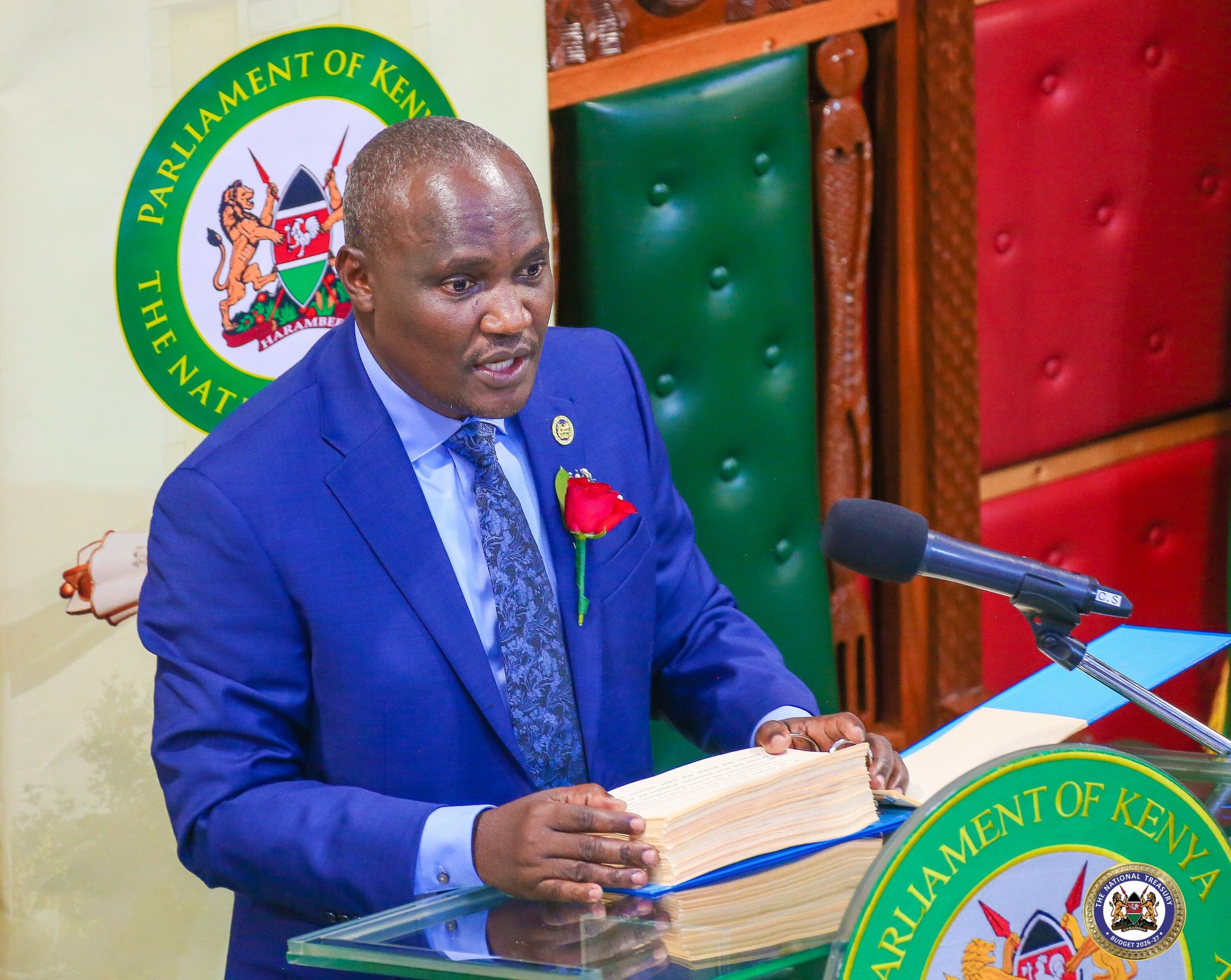
In his budget speech, Treasury Cabinet Secretary John Mbadi said digital connectivity and literacy remain essential for access to education, healthcare, financial services, markets and public services. He also described the creative economy as an important avenue for youth participation in the digital economy.
The allocations come as the government continues work on a plan to deploy 100,000 kilometres of fibre optic cable and establish community digital hubs intended to expand affordable internet access and support online employment opportunities.
Some of the largest technology projects that featured prominently in previous budgets are less visible this year.
In the current financial year, the government allocated Sh3.1 billion for data centre and smart city facilities at Konza Technopolis and Sh2.3 billion for the Kenya Advanced Institute of Science and Technology (KAIST). Comparable allocations were not disclosed during this year’s budget presentation.
Whether those projects have been scaled back, completed, reclassified or moved elsewhere in the budget estimates remains unclear. Their absence, however, helps explain why overall ICT spending has declined despite increased funding for selected digital programmes.
The budget also arrives days after Kenya secured fresh digital infrastructure commitments during engagements with European institutions in Brussels.
The agreements included Sh15.3 billion under the EU-Kenya Digital Partnership and Sh5.5 billion in support for the African extension of the Blue Raman submarine cable, a project expected to strengthen international connectivity across East Africa.
Those commitments sit outside the domestic ICT budget but add another dimension to Kenya’s digital financing model.
Taken together with the World Bank-backed KDEAP programme, they point to a growing role for external financing in supporting the country’s digital agenda. As pressure on public finances persists, development partners are increasingly helping fund projects linked to broadband expansion, connectivity infrastructure and digital services.
For technology businesses, network operators and investors, the budget presents a more nuanced picture than the headline reduction suggests.
Government spending on the sector has narrowed, but the core components of Kenya’s digital strategy remain intact. Broadband infrastructure, public-sector digitisation and connectivity programmes continue to receive funding, even as fiscal constraints limit the scale of overall ICT expenditure.
The challenge now is whether those ambitions can be sustained through a combination of domestic resources and external capital while delivering the infrastructure needed to support Kenya’s long-term digital economy goals.
Go to TECHTRENDSKE.co.ke for more tech and business news from the African continent and across the world.
Follow us on WhatsApp, Telegram, Twitter, and Facebook, or subscribe to our weekly newsletter to ensure you don’t miss out on any future updates. Send tips to editorial@techtrendsmedia.co.ke