
Treasury's 2026 Budget Deepens Kenya's Digital Fiscal Infrastructure
A growing budget deficit helps explain why digital oversight is moving to the centre of government

Kenya’s latest budget is not only a spending plan. It is a blueprint for how the government intends to track money, collect revenue and manage public finances in a period of tighter fiscal conditions.
Treasury expects to raise Sh3.64 trillion in revenue and grants during the 2026/27 financial year against planned expenditure of Sh4.8 trillion, leaving a projected deficit of Sh1.15 trillion. The bulk of that gap is expected to be financed through domestic borrowing, with Treasury projecting net local borrowing of Sh1.03 trillion.
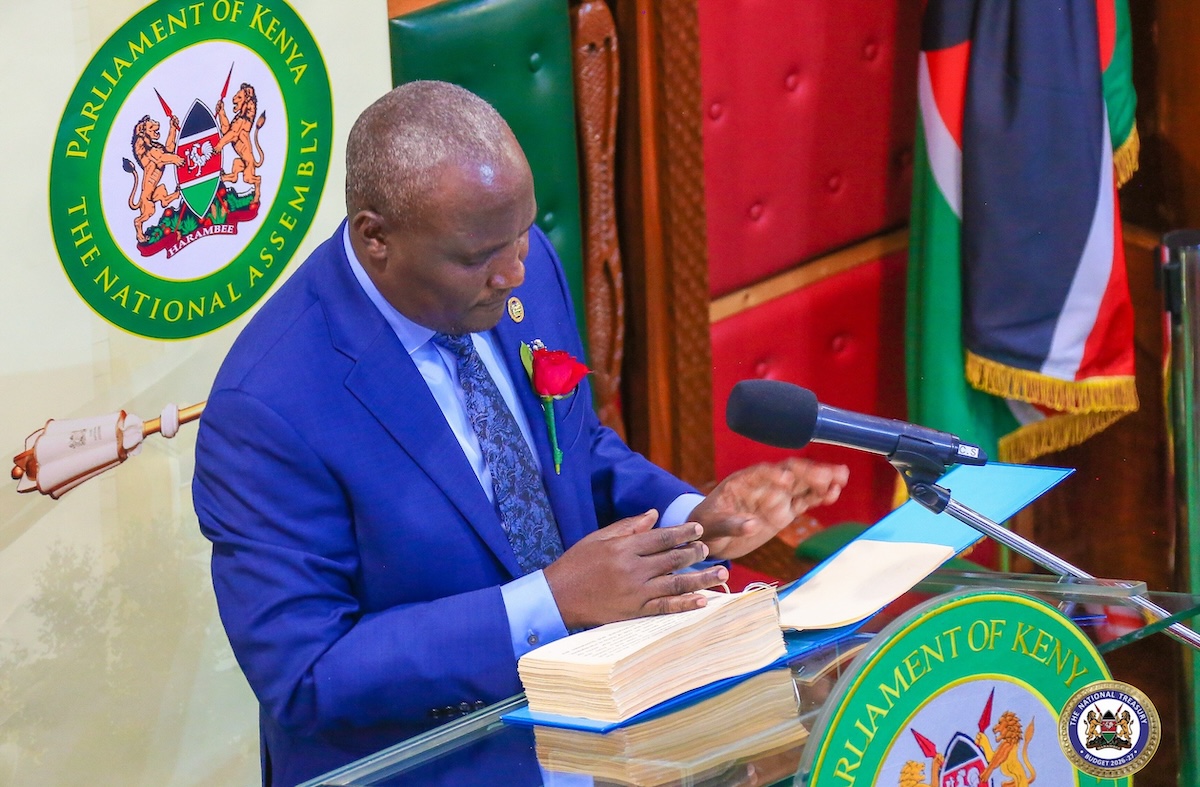
Those numbers help explain why digital systems feature so prominently throughout the budget presented by Treasury Cabinet Secretary John Mbadi.
Across procurement, tax administration, customs, payments and compliance, the government is expanding the digital infrastructure used to monitor financial activity and manage public resources.


Beginning July 1, all public procurement is expected to move through the Electronic Government Procurement platform after Treasury announced the end of procurement exemptions. Counties are also scheduled to join the Treasury Single Account framework, bringing local government payment and requisition processes into a common financial architecture.
Treasury is proposing additional legal changes that would allow electronic signatures, electronic seals and electronic time-stamping services across government operations.

The reforms extend beyond administrative convenience. They create a system in which procurement approvals, contracts, payments and audits can increasingly be managed through interconnected digital platforms.
Revenue collection is receiving a similar overhaul.
Mbadi announced that the Kenya Revenue Authority will intensify the use of digital tax administration and revenue monitoring systems beginning July 1. The programme includes expanded electronic invoicing, deeper integration of Point of Sale systems, enhanced revenue monitoring tools, upgrades to the Domestic Tax Administration System and the rollout of an e-Customs mobile application.
The objective is greater visibility into economic activity and faster identification of compliance gaps.
Treasury says progress has already been made through the expansion of the Electronic Tax Invoice Management System (eTIMS), which now has more than 655,000 taxpayers onboarded. The government argues that wider adoption of digital invoicing has improved transaction visibility and strengthened VAT compliance.
KRA has also integrated elements of its iTax and customs systems while increasingly using artificial intelligence and cargo-scanning technologies in compliance and enforcement operations. Treasury says the active taxpayer base expanded by 82,000 to more than 6.6 million taxpayers by March 2026.
The emphasis on tax administration comes as Treasury faces growing pressure to raise revenue without introducing major new taxes.
Despite earlier discussions around reducing Pay As You Earn deductions for salaried workers, the budget did not include the widely anticipated payroll tax relief measures. Mbadi instead argued that only about 3.1 million working Kenyans currently contribute PAYE while millions of income earners remain outside the formal tax net.
That position offers insight into the government’s current strategy. Rather than relying primarily on higher tax rates, Treasury is increasingly focused on expanding visibility across economic activity, broadening compliance and bringing more transactions into digitally traceable systems.
Taken together, the procurement reforms and tax administration measures point toward a broader effort to digitise both sides of the state’s financial ledger: how government spends money and how it collects it.
The focus on tighter controls comes as recurrent expenditure continues to dominate public spending. Treasury projects recurrent expenditure at Sh3.5 trillion, consuming the largest share of the budget and limiting room for additional spending without expanding borrowing.
The budget also contains revisions to tax proposals that had generated concern among businesses and financial service providers. Treasury adjusted planned VAT changes affecting digital payments, preserving exemptions for core financial service providers. It also revised its approach to auto-populated tax returns, allowing taxpayers to review and amend pre-filled returns before assessments are issued.
For Kenya’s digital economy, the changes remove uncertainty around parts of the payments ecosystem that support mobile money transactions, merchant services and online commerce.
Another major priority is workforce development.
Education received Sh784.5 billion, making it the largest allocation across government. Universities, basic education and Technical and Vocational Education and Training institutions all secured substantial funding. Treasury separately allocated Sh2 billion to the NextGen.Ke programme, which aims to place recent graduates in paid private-sector internships.
The emphasis on skills development arrives as policymakers seek to improve labour market outcomes and support long-term productivity growth.
Infrastructure remains a significant spending area, though Treasury is increasingly searching for alternative financing models.
Mbadi pointed to the Rironi-Nakuru Mau Summit Expressway as an example of infrastructure financed through a combination of institutional investors and pension fund participation. The government is attempting to reduce reliance on traditional debt-funded infrastructure projects as borrowing pressures intensify.
The composition of transport spending offers further insight into Treasury’s approach. Of the Sh220.4 billion allocated to roads, a larger share is directed toward maintenance and rehabilitation than toward new construction, indicating greater focus on preserving existing assets.
The wider economic environment remains challenging.
Treasury lowered its growth forecast for 2026 to 5.0 percent and expects the current account deficit to widen to 3.0 percent of GDP. Higher oil prices, slower remittance growth, weaker export performance and softer services receipts are expected to weigh on the economy.
Inflation rose to 6.7 percent in May, although Treasury expects it to remain within the Central Bank’s target range if geopolitical pressures ease and food supplies remain stable.
National security remains one of the largest areas of government spending, receiving a combined allocation of Sh567.4 billion. Treasury argues that security expenditure remains necessary to support economic activity, trade and investment.
The banking sector also received additional time to meet higher capital requirements after Treasury proposed extending the deadline for banks to achieve the Sh10 billion minimum core capital threshold to December 2032.
For suppliers doing business with government, attention will turn to Treasury’s commitment to settle Sh155.3 billion in verified pending bills through direct budget allocations and securitisation over the next two years.
Despite the emphasis on digital administration, overall ICT-sector funding moved in the opposite direction. Treasury allocated Sh8.6 billion to the digital economy and creative industry for the 2026/27 financial year, down from Sh12.7 billion a year earlier. The largest share, Sh4.3 billion, was directed to the Kenya Digital Economy Acceleration Project, alongside funding for fibre infrastructure, cybersecurity, county connectivity and digital hubs. The contrast illustrates a key feature of the budget: while government is accelerating investment in digital systems used to manage revenue, procurement and public finance, broader ICT-sector spending is operating within tighter fiscal limits.
The budget contains several other notable measures, including the creation of agricultural insurance as a standalone insurance class and the allocation of Sh3.9 billion for village elders’ stipends.
The larger story sits elsewhere.
Kenya is constructing a digital financial architecture that reaches across procurement systems, tax administration, customs operations, payment flows and compliance processes. Treasury is betting that stronger visibility, automated controls and broader digital integration can help narrow leakages, improve revenue mobilisation and manage public finances more effectively at a time when fiscal space is becoming harder to find.
Go to TECHTRENDSKE.co.ke for more tech and business news from the African continent and across the world.
Follow us on WhatsApp, Telegram, Twitter, and Facebook, or subscribe to our weekly newsletter to ensure you don’t miss out on any future updates. Send tips to editorial@techtrendsmedia.co.ke


