
Traders Using Multiple Tills Draw Fresh KRA Scrutiny
The tax authority is tracing mobile money activity as traders rotate tills and paybills to keep income out of reach

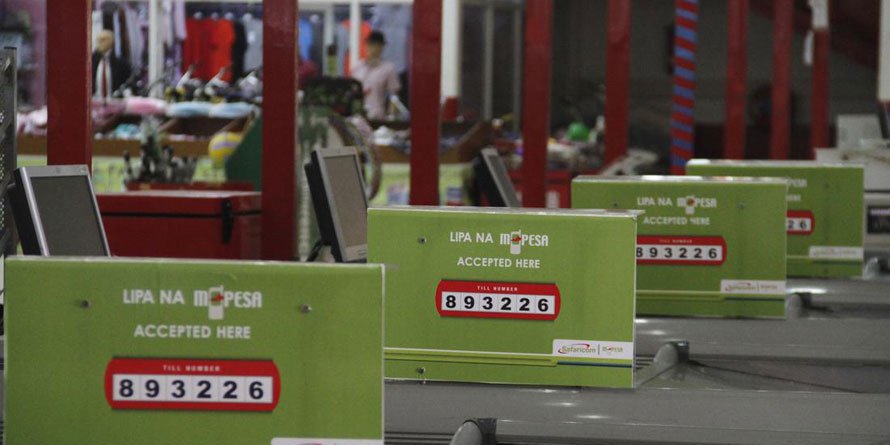
The Kenya Revenue Authority has begun pursuing small businesses that rotate mobile money paybills and tills to avoid declaring income, tightening enforcement on a segment long seen as difficult to tax. Acting Commissioner-General Lilian Nyawanda said the authority is now identifying traders whose transaction activity does not align with their tax filings.
The practice involves fragmenting sales across multiple payment channels, often registered under different identities, to obscure total turnover. According to the tax agency, this no longer prevents detection. Its systems reconcile payment data across both sides of a transaction, allowing inconsistencies to surface even when one party fails to declare income.
Nyawanda said compliance teams have encountered the behaviour across the country. She added that transaction trails remain visible because every payment creates a corresponding record between buyer and seller. Where a trader purchases stock from a supplier who files returns, that purchase can be matched against the trader’s declared sales. A mismatch, such as filing nil returns despite ongoing activity, triggers review.
At the centre of this approach is the electronic tax invoice management system, or eTIMS. Businesses using the platform submit invoice data that captures supplier relationships and payment details. The system enables the authority to link purchase records with declared revenue, exposing gaps in reporting.


The push comes as the government looks to raise revenue from the informal economy, where a large share of trade takes place outside consistent tax reporting. Mobile money has expanded rapidly as a payment method, creating digital records that can be analysed at scale.
Traders operating above Sh5 million in annual turnover are required to register for value added tax at 16 percent. Those earning between Sh1 million and Sh25 million fall under a 1.5 percent turnover tax on gross sales. The authority argues that the turnover tax simplifies compliance by removing the need to calculate profit.

Compliance, however, has been uneven. In supply chains where some participants are below the eTIMS threshold, buyers must generate their own invoices through the eCitizen platform to claim expenses. This adds administrative work, particularly in informal markets where documentation is limited.
Recent outreach in Nairobi’s Eastleigh business district highlighted these gaps. The authority said many traders struggle to obtain proper invoices, especially where transactions are settled in cash. Nyawanda pointed to limited awareness as a key constraint and said education campaigns are ongoing.
Enforcement is now paired with direct communication. The authority has started notifying individuals and businesses whose transaction data indicates undeclared activity, urging them to regularise their tax status before further action.
Officials maintain that data collection is limited to what is required for tax assessment and is governed by existing legal frameworks. The broader approach relies less on traditional audits and more on data reconciliation, marking a move toward system-led compliance as digital payments become more entrenched in everyday trade.
Looking ahead, the effectiveness of the crackdown will depend on how widely traders adopt invoicing systems and whether smaller suppliers are brought into the reporting chain.
Go to TECHTRENDSKE.co.ke for more tech and business news from the African continent and across the world.
Follow us on WhatsApp, Telegram, Twitter, and Facebook, or subscribe to our weekly newsletter to ensure you don’t miss out on any future updates. Send tips to editorial@techtrendsmedia.co.ke


