

Why KRA Chose Adan Mohamed at a Time of Revenue Strain
Adan Mohamed takes over at KRA with revenue targets under pressure and court challenges already gathering around his appointment

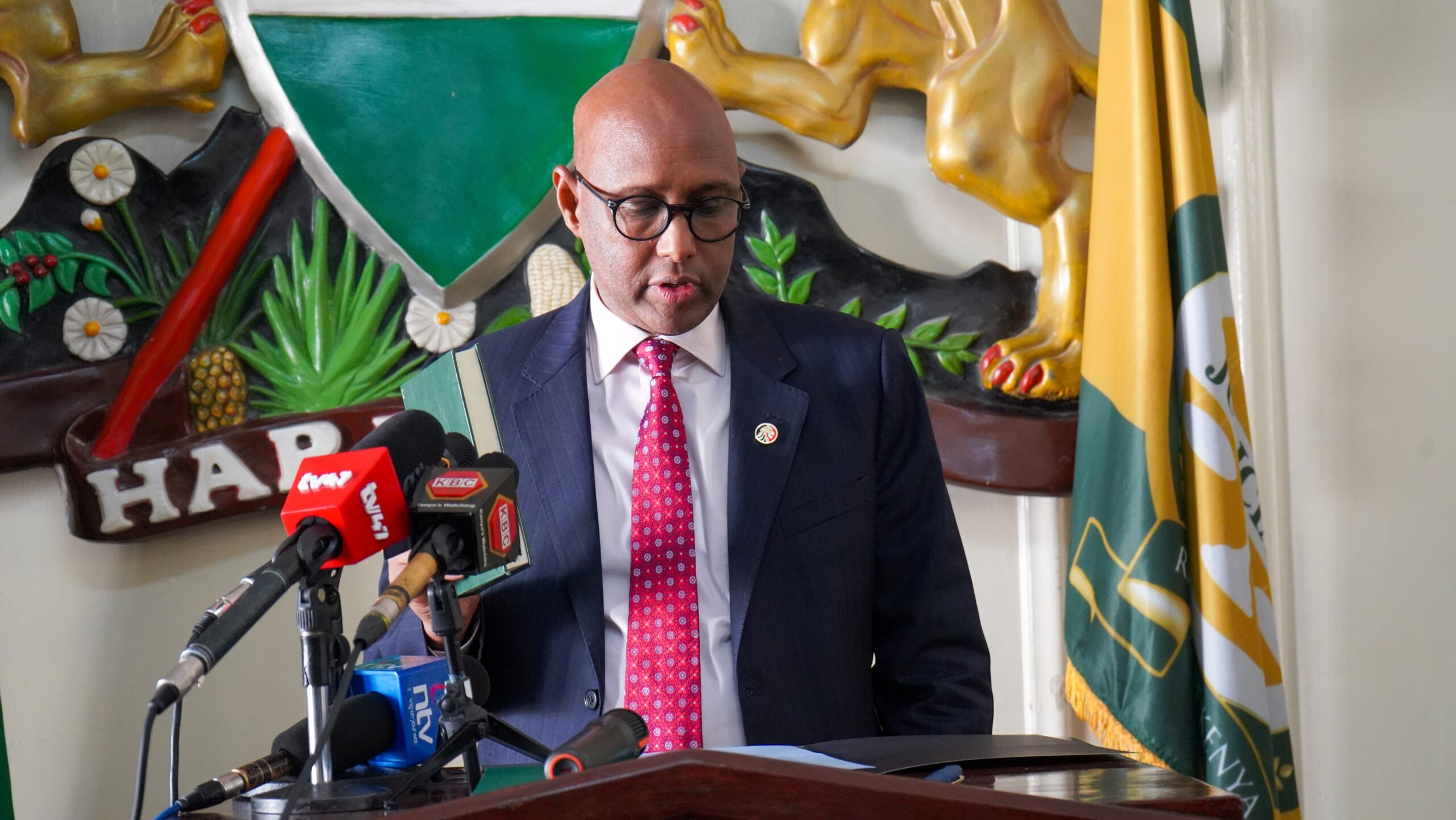
Adan Mohamed has been selected to lead the Kenya Revenue Authority (KRA), placing a veteran corporate executive and former Cabinet minister at the center of the government’s effort to strengthen tax collection during a period of fiscal strain.
The appointment, announced through a Gazette Notice by Treasury Cabinet Secretary John Mbadi, follows a recruitment process that attracted 36 applicants and culminated in interviews for seven finalists. Mohamed now moves from the Executive Office of the President to the country’s main revenue agency, where he will oversee tax administration at a time when collections are falling short of government targets.
His arrival comes as KRA faces a widening gap between projected and actual revenue. Treasury data shows ordinary revenue collections reached Sh1.81 trillion by the end of March 2026 against a target of Sh1.98 trillion, leaving a deficit of Sh161.9 billion. The shortfall increased from Sh110.6 billion recorded three months earlier.
Those figures have intensified pressure on the tax authority as the government seeks additional revenue without introducing measures that could trigger public resistance ahead of the 2027 General Election.
Mohamed enters the role from a position of significant influence within President William Ruto’s administration. Before his appointment, he served as Chief of Strategy Execution in the Executive Office of the President and had earlier been assigned as Special Envoy on Manufacturing and the Blue Economy.
His selection also marks a departure from the pool of internal candidates who were considered for the post. Several senior KRA officials were shortlisted, including Commissioner for Customs and Border Control Lilian Nyawanda, Domestic Taxes Commissioner Rispah Simiyu, Kenya School of Revenue Administration Commissioner Fred Mugambi, Commissioner for Shared Services Nancy Ng’etich, and Caxton Masudi Ngeywo. Lydia Ndirangu, Group Company Secretary and Head of Tax at Equity Group Holdings, was another candidate.
The choice of Mohamed places an executive with broad experience in banking, government and corporate management at the helm of an institution traditionally led by figures with extensive backgrounds in tax administration.
Court petitions challenging aspects of the recruitment process have already been filed, creating uncertainty around the transition even as he begins work. The legal proceedings could shape the timeline of his tenure and attract further scrutiny to the appointment.
KRA’s immediate priorities include expanding compliance, increasing the number of active taxpayers and improving collection from sectors that have historically been difficult to monitor. The authority is also expected to deepen its use of digital systems as tax administration increasingly extends into online commerce and cross-border business activity.
The assignment coincides with debate over another Finance Bill and growing calls for relief measures aimed at lower-income workers. Policymakers are balancing demands for revenue growth against concerns over the cost of living, a challenge that directly affects KRA’s collection strategy.
Mohamed brings decades of experience from both the private and public sectors. Raised in Mandera County, he studied commerce at the University of Nairobi, graduating with First Class honours in 1989. He later trained as a chartered accountant in London, worked with Shell in Nigeria, earned an MBA from Harvard Business School in 1998 and held senior leadership positions at Barclays Bank Kenya, eventually serving as managing director for East and West Africa.
He also served as Cabinet Secretary for Industrialisation and Enterprise Development before later heading the Ministry of East African Community and Regional Development.
KRA board chairman Ndiritu Muriithi has defended the decision, arguing that Mohamed emerged as the strongest candidate after a competitive recruitment process.
The new Commissioner-General now faces the task of converting that experience into results at an agency that sits at the centre of Kenya’s fiscal ambitions. His performance will be closely watched as the government pursues higher revenue collection while navigating economic pressures, political sensitivities and ongoing legal disputes surrounding his appointment.
Go to TECHTRENDSKE.co.ke for more tech and business news from the African continent and across the world.
Follow us on WhatsApp, Telegram, Twitter, and Facebook, or subscribe to our weekly newsletter to ensure you don’t miss out on any future updates. Send tips to editorial@techtrendsmedia.co.ke


