
Kenya’s EV industry is gaining ground through commercial fleets and new financing models, even as infrastructure and tax uncertainty persist


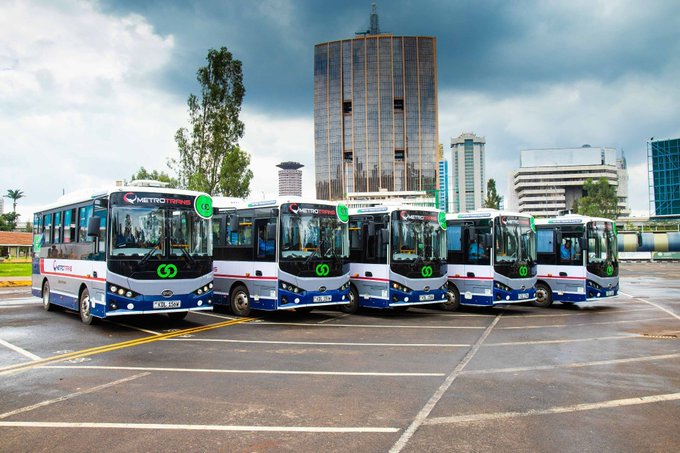
Kenya’s electric vehicle market is taking shape around the parts of transport where operating costs can be measured most clearly. Electric buses are joining established commuter routes, battery-swapping networks are targeting commercial motorcycle riders, companies are assembling vehicles locally, and banks are creating financing products for operators who cannot afford the full purchase price upfront.
This development is taking place while Kenya continues to depend heavily on imported petroleum. The Kenya National Bureau of Statistics’ 2026 Economic Survey put the value of petroleum imports in 2025 at approximately KSh511 billion. That was higher than the combined export earnings from tea, cut flowers, fruits and vegetables, and unroasted coffee, which totalled about KSh442 billion.
The comparison highlights the potential economic value of replacing some imported transport fuel with electricity generated within Kenya. However, the transition will depend on whether electric mobility can become commercially viable at scale, particularly for operators facing high financing costs, uneven infrastructure and uncertain tax conditions.
Commercial transport is providing the market’s foundation
Private electric cars remain a relatively small part of Kenya’s vehicle market, where buyers often prioritise affordability, resale value, spare-parts availability and access to established repair networks. Most imported used vehicles come through familiar Japanese supply chains, and many buyers can acquire a second-hand petrol, diesel or hybrid vehicle for considerably less than a new electric car.

Commercial vehicles face a different calculation. Buses, taxis, delivery motorcycles and other fleet vehicles accumulate substantial mileage, allowing operators to compare energy and maintenance costs against daily revenue. Their routes can also be planned around charging or battery-swapping infrastructure, making the transition easier to manage.
BasiGo’s electric bus operations illustrate this model. The company began deploying electric buses in Kenya in 2022 through partnerships with public transport operators, combining vehicle supply with charging, maintenance and payment arrangements. Its approach has been designed to address the fact that an electric bus may have a higher upfront price than a diesel alternative, even where its operating costs can be lower over time.

BasiGo has since expanded its presence across Nairobi’s commuter network. The company has announced services on routes serving areas such as Juja, Kikuyu, Ngong, Kitengela, Utawala and Kangundo Road, while also pursuing operations in other towns and longer-distance corridors.
A recent express service between Kiambu Stage and Upperhill, operated in partnership with Metrotrans SACCO, offers a practical example of how electric buses are being incorporated into existing public transport networks. The service includes a morning departure from Kiambu Stage at 6:30 a.m. and an evening return from Library Stage in Upperhill at 5:20 p.m.
The significance of such routes is less about one service than the operating model they represent. Defined departure times, established termini and predictable commuter demand allow operators to plan vehicle utilisation, charging schedules and maintenance more systematically.
The economics matter more than the technology alone
Jit Bhattacharya, BasiGo’s co-founder and chief executive, has described the company’s original question as whether electric buses could compete with diesel buses on lifetime operating economics without depending on permanent government subsidies.
He points out the company’s interest was driven by the financial pressures facing African transport operators. Fuel is imported, generally paid for in foreign currency and exposed to international price movements. An electric bus, by contrast, can use locally generated electricity and avoid some of the costs associated with diesel consumption and conventional engine maintenance.
That does not mean every electric bus is automatically cheaper to operate. The calculation depends on electricity tariffs, route length, passenger revenue, battery performance, maintenance arrangements, financing costs and vehicle utilisation. An electric bus can produce savings over several years while still being difficult for an operator to purchase at the beginning of its life.
This is the central financial problem facing the sector. Operators must secure capital today to benefit from lower operating costs over time. In markets where interest rates are high and transport businesses have limited cash reserves, the cost of financing can weaken an otherwise attractive business case.
BasiGo’s response has been to develop an electric vehicle service model that brings together leasing, charging, maintenance and other services. Its Pay-As-You-Drive and per-kilometre payment structures are designed to reduce the need for operators to absorb the entire cost of the vehicle at the point of purchase.
The company has said its operators can achieve stronger margins with electric buses than with diesel alternatives. That remains a company-reported assessment rather than independently verified evidence covering the entire market, but it explains why commercial operators are willing to consider the technology despite the higher initial cost.
Electric motorcycles are following a separate path
Electric motorcycles are developing through a different model, one shaped by the daily economics of boda boda transport. For a commercial rider, time away from the road directly affects income. Waiting several hours for a battery to charge can therefore be more disruptive than it would be for a private vehicle owner.
Battery swapping addresses that problem by allowing riders to exchange depleted batteries for charged units. It can also separate the cost of the motorcycle from the cost of the battery, potentially reducing the initial purchase price and making energy expenses more predictable.
Kenya’s market has attracted companies working on electric motorcycles, battery-swapping stations and locally assembled vehicles. Autopax, for example, introduced its Cheche electric motorcycle alongside a battery-swapping system. Other businesses are developing commercial two-wheelers for ride-hailing, delivery and other high-mileage applications.
Ride-hailing platforms are also helping create demand. Bolt has expanded its electric motorcycle activity and reported a growing number of electric vehicles operating on its platform. Such figures need to be interpreted carefully because estimates can differ depending on whether they refer to registered vehicles, active vehicles or the wider national fleet. They nevertheless show how commercial platforms can help accelerate adoption by connecting vehicles with established demand and payment systems.
The motorcycle model also demonstrates why Kenya’s electric mobility market should not be judged solely by passenger-car sales. Two-wheelers require less energy per trip, can be deployed in large numbers and may be better suited to swapping networks than conventional public charging. Their adoption could help develop local expertise in batteries, power electronics, maintenance and energy management.
Local assembly is creating industrial opportunities
Kenya’s electric mobility industry is developing a local assembly base while the consumer market is still relatively small. This creates an opportunity to build technical capacity and supply chains, but it also raises questions about whether production is advancing in line with actual demand.
In February 2026, Rideence Africa and Associated Vehicle Assemblers announced a KSh320 million electric vehicle assembly line in Mombasa. The project was expected to assemble electric taxis and high-roof matatus from completely knocked-down kits, with plans to develop local technical capacity and expand the company’s charging network.
BasiGo has also partnered with AVA to assemble electric buses locally. Its Ma3e electric vans are being assembled at the Mombasa facility using CKD kits, with the vehicles intended for public transport, school, corporate and other commercial applications.
Dongfeng’s entry into Kenya through ePureMotion adds another element to the market. The company has introduced electric passenger vehicles while considering local assembly as volumes develop. This approach reflects the current structure of the Kenyan market, where commercial vehicles offer a clearer path to utilisation than private electric cars.
Local assembly can create employment, maintenance expertise and demand for components, but it should not automatically be equated with full vehicle manufacturing. The industrial value captured in Kenya will depend on how much of the vehicle is assembled locally, whether components are produced domestically, how much engineering capability is developed and whether local suppliers can become competitive.
The progression from importing finished vehicles to assembling CKD kits and eventually producing more components locally requires sustained demand. Without sufficient vehicle volumes, manufacturers may struggle to justify investment in tooling, supplier development, training and research.
Charging infrastructure must follow real demand
Charging is often presented as the main obstacle to electric vehicle adoption, but the infrastructure challenge differs across vehicle categories. Buses can use depot charging and route-based fast charging, while private cars require a more dispersed network. Electric motorcycles may depend more heavily on battery-swapping stations located close to commercial activity.
BasiGo initially developed charging infrastructure to support its own bus operations. Its network has expanded through partnerships and new sites in Nairobi and other towns, including a public fast-charging arrangement with Rubis Energy Kenya. The company has reported charging locations along selected corridors serving areas such as Athi River, Meru, Nanyuki and Nyeri.
This model reflects the economics of early infrastructure development. A charger placed near a high-use fleet can achieve more predictable utilisation than a public charger installed in an area with few electric vehicles. Once demand grows, the same infrastructure can potentially serve additional operators and vehicle types.
Kenya Power is also establishing a larger role in the charging market. The utility has introduced dedicated e-mobility tariff arrangements and reported cumulative charging revenue of KSh382 million by 2026. Nairobi accounted for the largest share of that revenue, although other regions were beginning to contribute.
The revenue figure does not establish the profitability of charging or prove that Kenya has a mature nationwide network. It does show that electricity used for transport is becoming a distinct commercial category for the utility.
The next challenge is ensuring that charging infrastructure is reliable, appropriately located and compatible with the vehicles using it. Operators need suitable land, grid capacity, transformers, permits, payment systems and maintenance support. Different charging standards can also create fragmented networks that limit access and increase infrastructure costs.
Financing is becoming part of the infrastructure
The growth of Kenya’s EV market will depend as much on financial products as on vehicle technology. A bus operator may understand the potential fuel and maintenance savings of an electric vehicle but still be unable to purchase one without long-term credit or a lease structure.
In August 2026, NCBA and BasiGo announced a financing partnership targeting 1,000 electric vehicles. The arrangement reportedly offered financing of up to 90% for established SACCOs and companies over 60 months, with separate terms for individual SACCO members. NCBA also said it had invested more than KSh800 million from a KSh2 billion e-mobility facility.
The partnership connects several parts of the market. BasiGo brings vehicle supply, charging infrastructure and operating arrangements, while the bank provides capital that can allow SACCOs and fleet owners to acquire vehicles without funding the entire purchase from their own reserves.
Leasing models used by other companies follow the same principle. Instead of requiring a driver or operator to purchase an electric vehicle outright, the cost is spread across daily or monthly payments. The structure can make the technology more accessible, but its success depends on whether the vehicle generates enough revenue to cover the payments and other operating expenses.
This is why the number of announced financing facilities is less important than the quality of the loans and leases that follow. The market will need repayment data, evidence of vehicle utilisation and clear information on maintenance and battery performance before lenders can price the risk confidently.
For BasiGo, the capital requirement is substantial. Bhattacharya has argued that replacing large numbers of buses across African cities would require significant investment in vehicles and infrastructure, even where the operating model is commercially attractive. This suggests that access to long-term capital may become a greater constraint on growth than the availability of the technology itself.
Policy consistency will influence local production
Kenya’s policy environment has helped attract electric mobility investment, but tax uncertainty could weaken the industrial case. Proposed changes to the VAT treatment of electric motorcycles, buses, bicycles, solar equipment and lithium-ion batteries have raised concerns among manufacturers and industry participants.
The distinction between zero-rating and exemption is important. Under zero-rating, businesses can generally reclaim VAT paid on eligible inputs while charging zero VAT on the final product. Under exemption, input VAT may not be recoverable, increasing the cost of production.
For local assemblers, that difference can affect the price of the finished vehicle and the viability of domestic supply chains. Industry estimates cited by TechTrendsKE suggested that the price of a locally assembled electric minibus could rise from approximately KSh5.6 million to KSh6.7 million under the proposed framework. These are industry estimates, but they illustrate how tax design can influence adoption and investment.
A policy that makes locally assembled vehicles more expensive could also encourage importation of finished vehicles or components, limiting the development of domestic manufacturing. The question is therefore not only whether electric vehicles receive tax incentives, but whether the overall framework supports local value addition, supplier development and long-term investment.
Kenya’s National E-Mobility Policy provides a broader framework for the sector, including measures relating to charging infrastructure, vehicle registration, local industry and investment. Its impact will depend on how consistently the policy is implemented across taxation, energy, transport, manufacturing and financial regulation.
Kenya’s market must now move from projects to scale
The government’s reported plan to procure 3,000 locally assembled electric vehicles could provide additional demand for manufacturers if implemented. Public procurement can help companies reach production volumes, demonstrate vehicle performance and create a secondary market for maintenance and technical services.
However, procurement should be evaluated through the full lifecycle cost of the vehicles. Purchase prices alone do not show whether an electric fleet is economical. Authorities would need to consider charging infrastructure, battery replacement, maintenance, route suitability, electricity costs, vehicle uptime and the availability of trained technicians.
Kenya’s electric vehicle market is already more diverse than a simple comparison between petrol and electric cars suggests. Buses are entering scheduled public transport, motorcycles are adopting battery swapping, taxis are being offered through leasing arrangements, assemblers are establishing local operations and banks are developing dedicated financing facilities.
These developments are connected, but they are not yet a single integrated system. The market still needs reliable charging networks, interoperable standards, affordable credit, stable tax rules and stronger data on vehicle performance and operating costs.
The economic opportunity is significant because transport is one of the main channels through which imported petroleum affects households and businesses. Replacing some fuel consumption with locally generated electricity could retain more spending within the economy while supporting new activity in assembly, charging, maintenance, software, batteries and fleet management.
That outcome will not come from vehicle sales alone. Kenya’s electric mobility market will become durable only if the commercial model works for operators, the financial model works for lenders, the infrastructure model works for utilities and the industrial model creates enough local value to justify sustained investment.
Real ESG impact doesn’t happen in panels alone, it happens in the rooms where financiers, operators, and policymakers actually align. Our GreenShift Forum 2026 cuts the noise, bringing together the people rewiring Africa’s sustainability and energy frameworks for one focused day in Nairobi. Secure your seat.
Go to TECHTRENDSKE.co.ke for more tech and business news from the African continent and across the world.
Follow us on WhatsApp, Telegram, Twitter, and Facebook, or subscribe to our weekly newsletter to ensure you don’t miss out on any future updates. Send tips to editorial@techtrendsmedia.co.ke