CBK’s proposed D-SIB rules put bank capital, lending growth and dividends under scrutiny

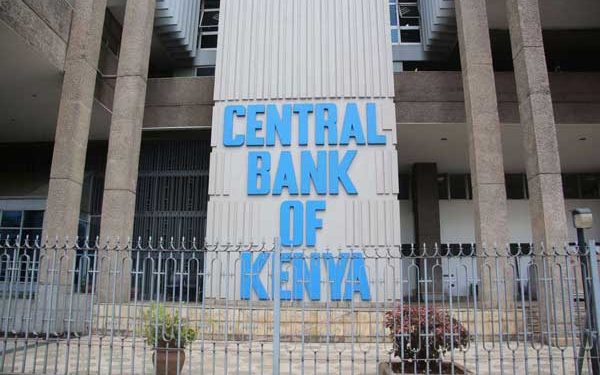
Kenya’s largest banks could face tighter decisions over dividend distributions if the Central Bank of Kenya adopts proposed capital buffers for domestic systemically important banks, with designated lenders required to retain sufficient earnings or raise additional capital to meet the new requirements.
The proposed framework would introduce additional Common Equity Tier 1 (CET1) capital requirements of between 0.5 percent and 2.5 percent of risk-weighted assets, depending on the systemic importance of each institution.
The requirements would apply to banks designated as domestic systemically important banks, or D-SIBs, following an annual assessment by CBK. The regulator has not yet published a final list of designated institutions, meaning the proposal does not automatically confirm that particular banks will be subject to a specific additional buffer.
However, the framework is likely to be most relevant to Kenya’s largest and most interconnected lenders, including banks such as Equity Group, KCB Group and Co-operative Bank.

Higher capital requirements could affect dividend flexibility
CET1 is the highest-quality form of bank capital and is primarily made up of ordinary shareholders’ equity and retained earnings. It provides a cushion against unexpected losses and helps banks absorb financial stress without threatening their solvency.
When regulators require banks to hold more CET1 capital, institutions have several options. They can retain a larger share of their profits, raise fresh equity, reduce the pace of balance-sheet growth or use existing capital surpluses to meet the requirement.

For profitable banks with substantial capital headroom, the additional buffer may have little immediate effect on dividend policy. However, lenders operating closer to their regulatory limits may have less flexibility to distribute earnings to shareholders.
This means the proposed rules could influence dividend decisions without directly requiring banks to cut payouts. The impact would depend on each institution’s capital position, profitability, risk-weighted assets, lending growth and ability to generate capital internally.
A bank that continues to grow its loan book rapidly may need to hold more capital because risk-weighted assets increase. Even where profits are rising, a larger proportion of those profits may need to remain on the balance sheet to support growth and meet regulatory ratios.
Three proposed capital tiers
CBK’s draft framework proposes three D-SIB categories, each with a different additional CET1 requirement.
| D-SIB bucket | Total systemic importance score | Additional CET1 requirement |
|---|---|---|
| Bucket 1 | Above 0.05 to 0.15 | 0.5% of risk-weighted assets |
| Bucket 2 | Above 0.15 to 0.25 | 1.5% of risk-weighted assets |
| Bucket 3 | Above 0.25 | 2.5% of risk-weighted assets |
The buffer would be applied at standalone and consolidated levels and implemented as an extension of the capital conservation buffer.
The framework would assess systemic importance using five indicators: size, interconnectedness, substitutability, complexity and importance to the domestic economy. Size would carry the highest weighting at 40 percent, while interconnectedness would account for 30 percent.
The assessment would consider a bank’s leverage ratio exposure, links with other banking institutions, its role in lending and payments, financial complexity, customer deposits and the size of its assets relative to Kenya’s economy.
The approach means a bank’s systemic importance would depend on more than its total assets. Its role in payments, connections to other lenders and importance to households and businesses would also affect its score.
Bank dividends have become important to NSE investors
The potential effect on dividends is significant because listed banks are among the most consistent dividend-paying companies on the Nairobi Securities Exchange.
Kenya’s listed lenders have increased distributions in recent years as earnings have improved and shareholders have placed greater emphasis on cash returns. Reported industry figures indicate that 12 listed banks paid a combined Sh117.2 billion in dividends for the year ended December 2025. That represented nearly half of the Sh245.9 billion paid by all companies listed on the NSE in their latest financial years.
Individual banks also announced substantial increases in dividend per share during the period.
Co-operative Bank raised its dividend per share for the year ended December 2025 to Sh2.50 from Sh1.50, representing an increase of 66.6 percent. Equity Group increased its dividend per share to Sh5.75 from Sh4.25, a rise of 35.2 percent.
Interim distributions also grew in the first half of 2026. KCB Group increased its interim dividend by 50 percent to Sh3.00 per share, while NCBA Group raised its interim dividend by 50 percent to Sh3.75 per share.
These increases reflect the strength of bank earnings and the importance of dividends to investors. They also show why any change in the balance between capital retention and shareholder distributions could attract attention from the market.
The proposed D-SIB requirements would not necessarily reverse the sector’s dividend trend. Banks with strong earnings and surplus capital may continue to increase payouts. However, the additional buffers could make dividend decisions more closely tied to capital planning, particularly for institutions pursuing aggressive lending or acquisitions.
Major banks would need to assess their capital headroom
The practical effect of the proposal will vary across institutions.
A bank with a high capital adequacy ratio and strong retained earnings may be able to absorb an additional CET1 requirement without materially changing its dividend policy. Another bank with faster asset growth, higher risk-weighted exposures or limited surplus capital may need to retain more profits to maintain its regulatory position.
The size of the additional requirement also matters. A 0.5 percent buffer may have a different effect from a 2.5 percent buffer, particularly for a bank with a large balance sheet. Because the requirement is calculated against risk-weighted assets, the absolute capital amount required would increase as the bank’s risk-weighted asset base expands.
Banks could respond through a combination of measures. These may include retaining earnings, improving the composition of their loan books, managing risk-weighted asset growth, issuing additional shares or adjusting the pace of expansion.
The final impact on dividends will therefore depend on how banks weigh shareholder returns against the need to maintain resilience and fund future growth.
D-SIB rules are separate from the Sh10 billion capital threshold
The proposed framework comes as Kenya’s banking sector prepares for a separate minimum core capital requirement of Sh10 billion by December 31, 2032.
The Business Laws (Amendment) Act 2024 introduced annual milestones towards the higher threshold. The Finance Act 2026 subsequently repealed those annual milestones while retaining the December 2032 deadline.
The Sh10 billion requirement is a general statutory minimum for banks. The proposed D-SIB buffer would be an additional requirement for institutions identified as systemically important.
This distinction is important because the two measures serve different regulatory purposes. The general capital requirement seeks to ensure that banks have a stronger minimum capital base, while the D-SIB framework adds extra loss-absorbency requirements for institutions whose failure could cause wider financial or economic disruption.
Smaller banks are therefore focused on meeting the sector-wide capital threshold, while the largest and most interconnected lenders may face additional requirements if they are designated as D-SIBs.
Stronger buffers are intended to reduce public-sector support
CBK’s proposed framework is designed to reduce the probability of failure among systemically important institutions, provide additional capacity to absorb losses during periods of stress and limit the need for public-sector support.
The proposal also includes enhanced supervision, quarterly stress testing and annual reviews of banks’ internal capital and liquidity assessments. Designated institutions would be expected to update recovery and resolution plans annually, giving CBK greater visibility into how they would respond to severe financial distress.
The trade-off is that stronger capital buffers can affect how banks allocate profits. Retaining more earnings may reduce the amount immediately available for dividends, but it can also strengthen the institution’s capacity to absorb losses and finance future growth without relying as heavily on external capital.
For investors, the question will be whether additional capital requirements materially reduce payouts or simply encourage banks to maintain more conservative distribution policies as their balance sheets expand.
Final rules will determine the impact
CBK’s D-SIB framework remains a draft and is open for public comment until November 7, 2026. The final rules, the designation list and the capital buckets assigned to individual institutions will determine the actual impact on Kenya’s banking sector.
For now, the proposal introduces a new consideration into banks’ capital-allocation decisions. Major lenders may need to balance dividend expectations with the requirement to maintain larger loss-absorbency buffers, particularly as they continue to grow their assets and expand their role in the economy.
The result may be closer scrutiny of bank payout ratios, capital adequacy levels and retained earnings as investors assess the sustainability of future dividends.
Real ESG impact doesn’t happen in panels alone, it happens in the rooms where financiers, operators, and policymakers actually align. Our GreenShift Forum 2026 cuts the noise, bringing together the people rewiring Africa’s sustainability and energy frameworks for one focused day in Nairobi. Secure your seat.
Go to TECHTRENDSKE.co.ke for more tech and business news from the African continent and across the world.
Follow us on WhatsApp, Telegram, Twitter, and Facebook, or subscribe to our weekly newsletter to ensure you don’t miss out on any future updates. Send tips to editorial@techtrendsmedia.co.ke