
KRA's growing tax enforcement reach puts business records, revenue incentives and staff bonuses under scrutiny


Kenyan businesses are facing greater pressure to defend their tax positions as the Kenya Revenue Authority (KRA) expands its use of electronic transaction records. At the same time, new legislation has introduced funding and staff incentive provisions tied to revenue estimates, bringing the authority’s internal reward system under parliamentary scrutiny.
A study by Tarra Agility Africa, covering 5,250 tax disputes decided by the Tax Appeals Tribunal and courts between 2011 and 2026, found that KRA won 52% of the cases examined. Taxpayers prevailed in 36%, while 12% resulted in split or partial decisions.
The findings come as KRA pursues outstanding principal tax through an amnesty programme that has benefited 984,489 taxpayers. By November 16, the authority had collected KSh29.1 billion in principal tax and waived KSh64.39 billion in penalties, interest and fines.
The authority’s enforcement record and revenue collection targets now sit alongside changes to its governing law. The Kenya Revenue Authority (Amendment) Act 2026 provides for additional funding and a staff incentive linked to collections above quarterly estimates. Members of Parliament are seeking details of the bonus framework KRA uses to reward employees.
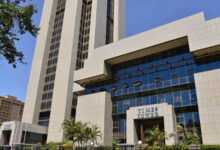


Digital tax records are changing how KRA examines businesses
Tarra Agility’s report, titled The Silent Liability, found that KRA’s annual success rate in tax disputes rose from roughly one-third in 2020 to close to 60% in 2026. It identified missing or inadequate documentation in nearly half of the authority’s victories, failure by taxpayers to discharge the burden of proof in 35%, and objections or appeals filed outside statutory deadlines in 23%. The categories overlap.
The findings come as KRA gains more ways to compare company declarations with electronic invoices, payment information and other records. Through iTax and the electronic Tax Invoice Management System (eTIMS), the authority can examine declared income, expenses and tax liabilities against information captured through electronic invoicing and other transaction records.
Tax Director at RSM Eastern Africa Jilna Shah has identified discrepancies between VAT turnover and audited financial statements, persistent losses, refund claims, profitability changes and related-party transactions as issues that can attract scrutiny during audits.
Comprehensive audits can require businesses to submit audited accounts, detailed ledgers, trial balances, filed returns and tax computations. KRA may also examine bank credits, intercompany transfers, third-party loans, interest income and the reconciliation of raw materials with finished products in manufacturing businesses.
The authority is extending electronic invoice verification into government procurement. In August 2026, KRA and the National Treasury announced the integration of eTIMS with the Integrated Financial Management Information System (IFMIS). Suppliers to government must have valid eTIMS invoices before submitting supplies for payment, with invoice details corresponding to electronic tax records.
KRA has also discussed reverse invoicing with Safaricom, under which the telecommunications company could generate eTIMS invoices on behalf of merchants using M-Pesa tills and PayBill services. The proposal formed part of discussions about using information associated with merchant payment accounts to identify undeclared income. It should not be confused with a nationwide implementation of reverse invoicing.
For businesses, the demands extend beyond retaining invoices. Companies need to reconcile information across accounting systems, bank statements, electronic invoices and supporting contracts, including evidence that services for which deductions are claimed were actually delivered.
Shah said some taxpayers submit unreconciled or inconsistent information during disputes. She estimated that information supplied by taxpayers is not properly reviewed in 80% of the cases her firm encounters, based on her professional experience.
Some documentation difficulties also involve transactions where businesses have incurred genuine expenses but cannot obtain electronic invoices from the receiving institution. KRA’s eTIMS leadership previously acknowledged challenges involving payments such as government permits and licences, saying the authority was working on a mechanism to allow taxpayers to enter such expenses for validation against government data.
Documentation failures leave companies exposed to billions in assessments
Under Section 56(1) of the Tax Procedures Act, taxpayers challenging tax assessments bear the burden of proving that the assessments are excessive or incorrect. The requirement makes supporting records central to disputes involving claimed expenses, deductions and tax treatments challenged by KRA.
The cases examined by Tarra Agility show the sums involved. Paleah Stores lost a Sh9.25 billion dispute involving VAT and corporation tax after failing to produce the required records. Hashi Energy lost a Sh7.18 billion case after the court found that the company was managed and controlled from Kenya.
Wildlife Works successfully challenged a Sh6.89 billion transfer-pricing adjustment by presenting documentation supporting the arm’s-length nature of its transactions.
Transfer-pricing disputes can require evidence supporting transactions between related entities and the commercial basis for the prices applied. The Wildlife Works case demonstrates the role that supporting documentation can play when a taxpayer challenges an adjustment.
Procedural requirements also feature in the Tarra Agility findings. Taxpayers generally have 30 days to lodge an objection against an assessment, while the Commissioner has 60 days to make a decision. Formal objections are submitted through iTax.
A November 2025 High Court ruling involving taxpayer Hanqing Zhao reinforced the importance of following the prescribed electronic filing process. The dispute concerned a Sh1.136 billion assessment covering the 2018 to 2023 tax periods. The taxpayer had initially objected by letter, but KRA treated the objection as invalid because it had not been filed through iTax. The court considered the formal electronic filing date when determining the relevant timeline.
Interest and penalties can add to the amount owed while disputes remain unresolved. Tarra partner Beatrice Njeri said many companies conduct annual tax health checks but fail to translate the findings into practical changes within their finance departments. She said changes in tax legislation and KRA notices can alter a company’s exposure, requiring businesses to address weaknesses in their records and internal processes.
The World Bank’s 2025 Enterprise Survey found that 64% of Kenyan firms considered tax rates a major or very severe business constraint, while 38.6% identified tax administration as a major or very severe constraint.
Tax amnesty benefits nearly one million taxpayers
KRA has waived KSh64.39 billion in penalties, interest and fines for 984,489 taxpayers under the ongoing tax amnesty programme, as the authority seeks to recover outstanding principal tax before the December 31, 2026 deadline.
In a media brief issued on November 23, KRA said the programme had generated KSh29.1 billion in principal tax payments by November 16. The authority had waived KSh31.9 billion in interest, KSh32.5 billion in penalties and KSh11.5 million in fines.
The figures show the scale of accumulated charges being removed as taxpayers settle eligible liabilities. The KSh29.1 billion in principal tax recovered remains separate from the KSh64.39 billion in waived charges.
The Finance Act 2026 extended the programme under Section 37E of the Tax Procedures Act to December 31, 2026. It covers taxes administered under the Act for tax periods up to December 31, 2025, with taxpayers required to settle the qualifying principal tax to receive relief on associated penalties, interest and fines.
The provisions also cover qualifying liabilities for taxpayers whose financial year ended in December 2025, as well as eligible monthly tax obligations for that month. Taxpayers with liabilities under objection, alternative dispute resolution, the Tax Appeals Tribunal or court proceedings can also qualify, provided the dispute is concluded within the amnesty period and the agreed principal tax is fully paid by the deadline.
KRA says the process is automated through iTax, meaning taxpayers do not need to submit a separate application. The system determines eligibility and grants the waiver once the qualifying conditions are met. Penalties, interest and fines already paid before the programme’s reintroduction are excluded.
The current programme follows earlier tax relief initiatives intended to encourage voluntary disclosure and settlement of outstanding liabilities. Wangui Karuga, a tax partner at MAK & Partners Advocates, previously estimated that the two preceding amnesty programmes collected approximately KSh80 billion and benefited more than 3.5 million taxpayers.
Karuga estimated that the first of those programmes collected between KSh40 billion and KSh45 billion, with the remainder coming through the subsequent programme. The current amnesty follows the Voluntary Tax Disclosure Programme, introduced under the Finance Act 2020, which covered liabilities from June 2015 to December 2020. Karuga estimated that the programme collected approximately KSh50 billion.
Karuga said businesses can be willing to settle principal tax but struggle with penalties and interest accumulated over several years. She has argued for a transparent mechanism to address exceptional cases, while cautioning that repeated amnesties could encourage some taxpayers to delay compliance in anticipation of future relief.
She also identified legacy tax balances associated with the transition to iTax between 2014 and 2016 as an unresolved problem for some taxpayers. Certain old PAYE balances may not clear automatically through the current amnesty process, requiring affected taxpayers to engage KRA.
New law introduces funding and revenue-linked staff incentives
The Kenya Revenue Authority (Amendment) Act 2026 introduces two financial provisions that directly connect the authority’s resources and staff incentives to revenue estimates and collections.
The Bill, sponsored by National Assembly Majority Leader Kimani Ichung’wah, was published on May 19, 2026, and passed by the National Assembly on October 7 with amendments. President William Ruto signed it into law on October 16.
Under the amended law, KRA’s funds must include an amount of not less than 2% of the revenue estimated in the financial estimates for each financial year to be collected by the authority.
It also provides for a staff incentive measure of 3% of revenue actually collected in any quarter above the amount estimated to be collected during that period. The legislation further makes the Managing Director of the Kenya Ports Authority a member of the KRA Board. The parliamentary brief described the appointment as an efficiency measure, citing the interdependent operations of the two authorities.
The incentive provision became a subject of scrutiny during an engagement between KRA and the National Assembly’s Finance and Planning Committee. Members asked whether the authority had a bonus payment policy, how payments were determined, how much had been paid and how many employees had benefited.
A KRA representative initially said they did not have the details of bonus payments and requested time to submit a comprehensive report. When pressed on whether a policy existed, the representative confirmed that the authority had a framework used to pay bonuses and undertook to provide it to the committee within a week.
The chairman questioned why KRA needed additional time to produce a framework already being used. He also asked the authority to provide information on the number of employees paid and the amounts involved.
The committee’s scrutiny extended to how additional revenue collections are attributed. Citing a reported 70% improvement in VAT collections, the chairman asked whether the increase should be credited to KRA’s Commissioner General, its board, deputy commissioners, Treasury officials responsible for revenue mobilisation measures or VAT withholding agents responsible for remitting the tax.
He argued that the incentive framework needed clear criteria to recognise contributions across the collection process and prevent bonuses from rewarding employees for work undertaken elsewhere in government. He cautioned against a system in which Treasury officials and others responsible for developing revenue measures could be overlooked while KRA employees handling collections at the final stage received the financial rewards.
The debate also touches on how revenue authorities should measure staff performance. Tax-policy commentary accompanying the legislation has argued for balanced scorecards and non-collection measures, rather than relying solely on raw revenue surpluses.
The committee’s request for the bonus framework and payment details puts the administration of the new incentive provision under parliamentary scrutiny. KRA’s confirmation that a framework exists has not answered the committee’s questions about who has received payments, how much has been disbursed or how eligibility is determined.
Parliament has also scrutinised KRA’s enforcement powers
The amendment to KRA’s governing law followed a separate debate over proposals to expand the authority’s access to taxpayer information and enforcement powers under the Finance Bill 2026.
The Finance Bill proposed broader access to information from digital systems, employer filings, invoicing platforms, audits and third-party reports. It also included proposals to use information held by government agencies when assessing taxpayers.
Parliament rejected several proposed changes, including a provision that would have removed protection against KRA attaching bank accounts while an appeal was pending. Lawmakers also rejected proposals affecting the calculation of statutory objection and appeal periods, citing the potential disruption to businesses and the time available to challenge assessments.
The legislative debate followed court decisions in which taxpayers successfully challenged aspects of KRA’s tax treatment. These included Absa Bank Kenya’s dispute over withholding tax on interchange fees, Pesapal’s challenge involving VAT on payment services, Githima Ltd’s case concerning retained earnings and Katahira & Engineers International’s challenge to agency notices.
The government subsequently proposed changes in the Finance Bill 2026 addressing some of the issues raised in those disputes, including the tax treatment of certain payment-related fees, retained earnings and agency notices involving taxpayers with assessments under appeal.
KRA’s collection performance provides the wider financial context for the debate over its new funding and incentive arrangements. The authority collected KSh2.844 trillion in the 2025/26 financial year, up 10.6% from KSh2.572 trillion in the previous year. This comprised KSh2.568 trillion for the National Exchequer, against a target of KSh2.698 trillion, and KSh276.1 billion in agency collections.
Domestic tax collections reached KSh1.851 trillion, an increase of 9.7%. KRA also reported recovering KSh144.82 billion through debt collection initiatives, compared with KSh141.26 billion in the preceding financial year. Its alternative dispute resolution process generated KSh35.06 billion from 993 concluded cases, up from KSh15.3 billion from 97 cases in the previous year.
For businesses, the dispute findings point to the financial consequences of incomplete records and missed procedural requirements. For KRA, the new legislation and parliamentary scrutiny put the authority’s funding, collection incentives and bonus administration under closer examination as it pursues higher revenue targets.
Visit TECHTRENDSKE.co.ke for more tech and business news from across Africa and the world.
Follow us on WhatsApp, Telegram, Twitter, and Facebook, or subscribe to our weekly newsletter so you don’t miss future updates. Send tips to info@techtrendsmedia.co.ke

