
NIFC plans Sh65 billion startup fund as Kenya seeks to attract global technology investors

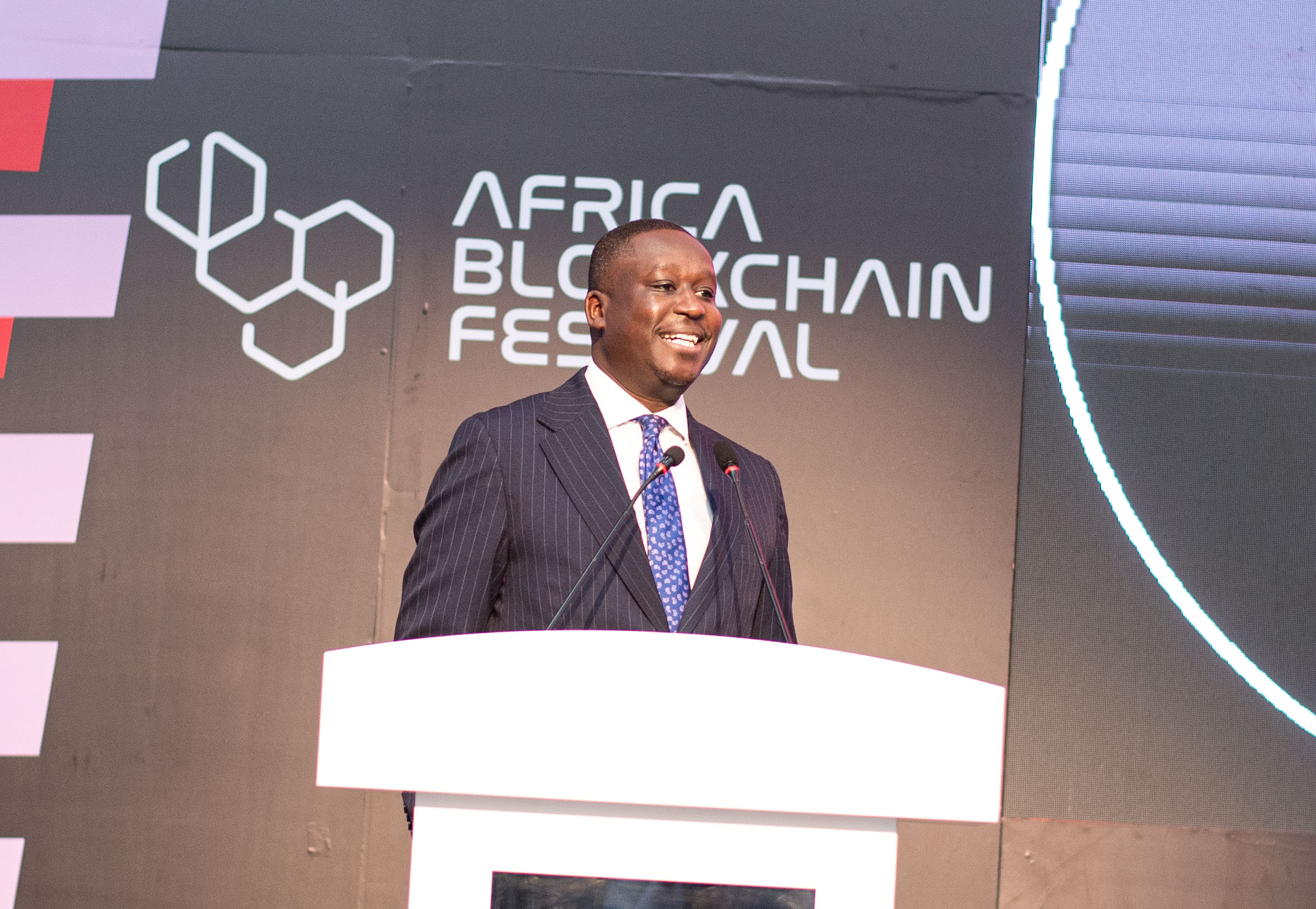
The Nairobi International Financial Centre (NIFC) plans to establish a Sh65 billion ($500 million) Kenya startup fund to finance technology businesses, artificial intelligence (AI) companies and small and medium-sized enterprises (SMEs), as it seeks to attract more international investment into the country’s financial sector.
Half of the proposed capital, equivalent to Sh32.5 billion ($250 million), will target technology and AI startups, while the remaining amount will finance businesses in other sectors. The fund will bring together local and international venture capitalists, with NIFC taking the lead in fundraising and assessing startups for investment.
Daniel Mainda, NIFC chief executive, said the initiative is intended to address the difficulty Kenyan startups face in accessing capital, particularly as international investors become more selective about deploying money into African markets.
“Access to capital is a challenge for Kenyan startups, so how can we provide capital for these startups? That’s why we want to co-host a fund of $500 million so that we can deploy it into that segment,” Mr Mainda said in an interview.


NIFC has started the process of selecting an organisation to co-host the fund alongside a professional fund manager. Mr Mainda said investors are already interested in participating, with the centre coordinating efforts to mobilise capital and identify businesses that can benefit from the investment.
The initiative gives Nairobi an opportunity to expand its role in Africa’s technology financing ecosystem by connecting international investors with businesses seeking capital to develop and scale their operations. It also extends NIFC’s investment mandate beyond attracting financial institutions and investment funds to facilitating the deployment of money into the wider Kenyan economy.
NIFC targets technology and AI startups with half the fund
The proposed Sh32.5 billion allocation for technology and AI businesses comes as artificial intelligence becomes a major area of investment across Africa, with opportunities emerging in enterprise software, financial services, data management and computing infrastructure.
Kenya’s technology ecosystem already has a substantial base of digital businesses, particularly in fintech, telecommunications and financial technology infrastructure. The expansion of mobile money services into merchant financing, business administration and digital credit has also created opportunities for companies developing products that serve small businesses.
Safaricom, for instance, reported 4.5 million merchants during the six months to September 2026, following 90.3% growth in its merchant base. Its M-PESA business services generated Sh8.18 billion in transaction revenue, while merchant transaction volumes reached 4.7 billion, according to the telecommunications company.
Safaricom is also expanding merchant services into areas such as credit, invoicing, reconciliation and business administration, creating opportunities for technology providers developing tools for businesses that rely on digital payments.
The artificial intelligence opportunity extends beyond applications built by startups. Enterprise adoption also creates demand for cloud computing, data management, cybersecurity and locally hosted infrastructure that allows organisations to deploy AI services.
Dell Technologies and NTT Data have promoted locally hosted AI solutions for businesses, while Liquid C2’s partnership with Google Cloud through Cloudmania is expanding access to cloud services, technical expertise and training for Kenyan resellers and managed service providers.
Kenya’s ability to develop this market will also depend on the availability of skilled workers and supporting infrastructure. The country ranked 22nd among 56 Commonwealth countries in the Ayre Index’s youth AI readiness assessment, scoring 48.7 against a benchmark of 53, according to reporting on the index.
The proposed investment could therefore support businesses across several parts of the technology value chain, from startups developing AI applications to companies providing enterprise infrastructure and digital services.
Kenya’s startup funding declines as investors become selective
The proposed fund comes as Kenyan startups contend with a slowdown in venture capital investment, following several years in which the country attracted substantial funding from international investors.
Kenyan startups raised Sh16 billion in the six months to June 2026, down 45% from Sh29 billion received during the corresponding period last year. The amount was the lowest first-half funding recorded since 2021, highlighting the pressure facing businesses that depend on external financing to expand.
The slowdown reflects a difficult fundraising environment across African technology markets, where global economic uncertainty has made investors more selective about the companies and sectors receiving capital.
Early-stage investment programmes are continuing to support businesses, although their funding levels remain considerably smaller than the vehicle proposed by NIFC. Madica, for example, secured an additional $6 million from Flourish Ventures to extend its investment programme for African startups over three years.
The programme plans to support another 25 to 30 companies, building on an earlier portfolio of 18 startups across 10 African countries. Its model combines early-stage financing with business-building support, targeting founders who often struggle to secure investment through conventional venture capital networks.
The experience highlights the importance of pairing capital with expertise that helps businesses develop commercially viable products, strengthen management and prepare for expansion.
African startup financing discussions have also expanded beyond conventional equity investment. At Moonshot 2026, Nigeria’s Securities and Exchange Commission encouraged founders to consider crowdfunding, commercial paper, debt markets and stock-market listings as alternative sources of capital.
These financing options are relevant to NIFC’s wider ambition because startups and established SMEs have different investment requirements. While venture capital can support companies pursuing rapid expansion, businesses with predictable revenues may be better suited to debt financing or other instruments that do not require founders to surrender equity.
Digital finance expands opportunities for SMEs
The proposed fund will also target businesses outside the technology sector, reflecting the importance of SMEs in employment and economic activity.
Access to finance remains a major challenge for smaller businesses, particularly those that lack formal financial statements, conventional collateral or an established borrowing history. Digital financial services are providing lenders with additional information through transaction records, payment activity and other indicators of business performance.
NCBA Group has highlighted the role of digital platforms in extending financing to SMEs through services that combine payment acceptance, working-capital loans, supplier credit, overdrafts and inventory management.
Its LOOP BIZ+ platform illustrates how financial institutions are integrating business payments and credit into services designed around merchants’ daily operations.
Safaricom’s expansion of M-PESA merchant services points to a similar opportunity. By connecting payments with financial and business management tools, digital platforms can help merchants build transaction histories that support access to credit and other financial products.
This is particularly relevant to NIFC’s decision to allocate half of its proposed fund to businesses outside technology and AI. SMEs in retail, manufacturing, logistics, agriculture and other sectors can benefit from financing that supports inventory purchases, equipment, distribution and expansion.
A financing vehicle that brings together different classes of investors could provide an additional channel for capital to reach these businesses, while strengthening the relationship between Kenya’s financial services industry and its wider enterprise sector.
NIFC targets Sh650 billion in foreign investment by 2030
The proposed startup fund forms part of NIFC’s wider ambition to establish Nairobi as a regional and international financial centre by attracting global financial institutions, investment funds and other businesses.
Since becoming operational in 2022, the centre has attracted approximately 40 companies into Kenya, including global health insurance companies Bupa Global and Lloyd’s of London, which were certified in June.
Companies certified through NIFC receive tax incentives and a simplified licensing framework designed to encourage international businesses to establish operations in Kenya.
The incentives include a reduced corporate income tax rate of 15% for the first 10 years and 20% for the following 10 years, compared with the standard 30% rate. To qualify, firms must inject at least Sh3 billion into the Kenyan economy, operate as holding companies, establish their regional headquarters in Kenya and ensure that at least 70% of their senior management are Kenyan nationals.
NIFC says it has facilitated Sh26 billion ($200 million) in foreign direct investment from companies it has certified. It is targeting Sh650 billion ($5 billion) in facilitated FDI and certification of at least 150 companies by 2030.
The startup fund is expected to support these ambitions by creating another route through which international investors can deploy capital into Kenyan businesses.
For Nairobi, the initiative could broaden the city’s financial services proposition, linking its ambitions to attract global institutions with the financing needs of local technology companies and SMEs.
Go to TECHTRENDSKE.co.ke for more tech and business news from the African continent and across the world.
Follow us on WhatsApp, Telegram, Twitter, and Facebook, or subscribe to our weekly newsletter to ensure you don’t miss out on any future updates. Send tips to info@techtrendsmedia.co.ke

