CBK Governor warns heavy government borrowing could undermine efforts to make loans cheaper

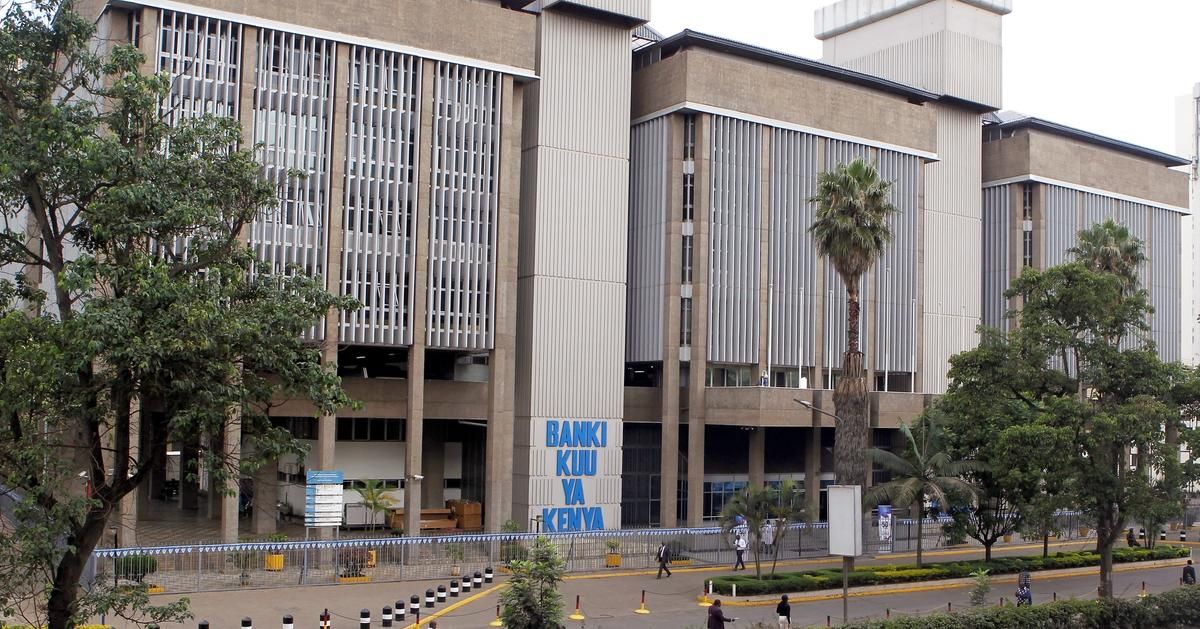
Central Bank of Kenya (CBK) Governor Kamau Thugge has called on the National Treasury to reduce government borrowing from the domestic market, arguing that monetary policy alone cannot deliver lower lending rates without support from fiscal policy.
Appearing before the National Assembly’s Finance and Planning Committee, Thugge said the government needed to reduce its fiscal deficit and domestic borrowing if Kenya was to achieve more affordable credit. He told lawmakers that monetary and fiscal policy must work together, warning that the two cannot operate in opposing directions while the Central Bank pursues lower interest rates.
The Governor’s remarks put the government’s financing requirements at the centre of the debate over borrowing costs. CBK can adjust its monetary policy instruments to influence interest rates, but government demand for financing also affects conditions in the domestic credit market, where banks and other investors allocate funds between public and private borrowers.
Thugge says monetary policy alone cannot lower lending rates
Thugge told the committee that monetary policy was insufficient on its own to achieve lower lending rates, adding that fiscal policy needed to support the Central Bank’s efforts.

“So we can’t have a situation where they are not working together,” he said, linking lower borrowing costs to a smaller fiscal deficit and reduced government borrowing.
The Governor argued that reducing the government’s financing requirements would help create conditions for lower interest rates and improve the affordability of loans. His position reflects the relationship between public borrowing and private-sector financing, since the government competes with businesses and households for funds available in the domestic market.
When banks and investors allocate a substantial share of their resources to government securities, less funding may be available for private-sector lending. Government borrowing can also influence the returns demanded by investors across the domestic market, affecting the wider cost of financing.
The Governor’s argument is that monetary easing needs to be accompanied by a reduction in the government’s demand for domestic financing if borrowers are to benefit from lower rates.
Treasury’s domestic borrowing requirements have risen through supplementary budgets
Thugge used the Treasury’s borrowing requirements to illustrate how government financing plans have changed during budget implementation.
He told lawmakers that the domestic borrowing requirement for the 2025/26 financial year initially stood at KSh634.8 billion before being increased to KSh994.8 billion through a supplementary budget.
The Governor also presented a domestic borrowing requirement of KSh987 billion in the figures he discussed, saying CBK hoped the amount would not change significantly through further supplementary budgets.
“We hope this 987 does not change very much in the event that there are supplementary budgets that will be coming,” Thugge told the committee.
His comments highlighted the effect of supplementary budgets on the government’s financing requirements, particularly when additional expenditure leads to higher domestic borrowing.
The Governor also reviewed CBK’s performance in meeting the borrowing targets assigned to it by the Treasury. He said the Central Bank had achieved 100% of its assigned targets for several years, with some exceptions where supplementary budget requests were submitted close to the end of the financial year.
Thugge said CBK had again funded 100% of the target in the previous financial year and expected to meet its allocation in the current year.
Government borrowing remains a major consideration for credit affordability
The Treasury’s 2027/28 budget projections provide further context to the Governor’s argument. The projected fiscal deficit stands at KSh1.353 trillion, equivalent to 5.9% of gross domestic product, while net domestic borrowing is projected at KSh929.1 billion.
These financing requirements make government borrowing an important consideration in the domestic interest rate environment. The amount the Treasury raises locally affects the pool of funds available to other borrowers and the returns investors expect from lending to the government.
For commercial banks, government securities provide an alternative to lending to households and businesses. Their allocation decisions are influenced by the relative returns, risks and capital requirements associated with different assets.
Thugge’s position is that reducing the government’s financing needs would help ease pressure on domestic funding conditions and support the transmission of monetary policy into lower lending rates.
CBK says fiscal and monetary policy must work together
The Governor’s comments build on CBK’s broader argument that lower interest rates depend on more than changes to the Central Bank Rate.
Monetary policy influences the cost of money in the economy, while fiscal policy determines how much the government needs to borrow to finance its expenditure. When government borrowing remains high, the effect of monetary easing on private-sector financing can be limited.
Thugge therefore wants the Treasury to reduce its fiscal deficit and domestic borrowing as the Central Bank works to improve credit affordability.
His intervention also places responsibility for lower borrowing costs across government institutions. CBK can influence monetary conditions, but the Treasury’s borrowing decisions shape the environment in which banks price and allocate credit.
Go to TECHTRENDSKE.co.ke for more tech and business news from the African continent and across the world.
Follow us on WhatsApp, Telegram, Twitter, and Facebook, or subscribe to our weekly newsletter to ensure you don’t miss out on any future updates. Send tips to info@techtrendsmedia.co.ke


