
Inside CBK's AI strategy: Machine learning, mobile payments data and economic nowcasting

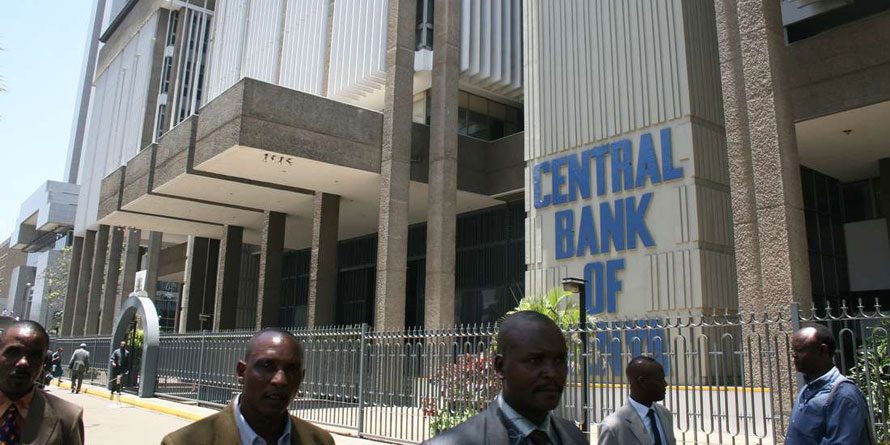
The Central Bank of Kenya (CBK) is expanding its use of artificial intelligence across its operations, with nearly 300 use cases identified across 14 departments, as the regulator explores new ways to forecast inflation, track economic activity and analyse financial data.
The bank’s AI strategy includes machine learning for inflation forecasting, economic nowcasting using alternative data, and tools to analyse mobile payments and online supermarket prices. According to CBK’s Head of Research, the bank is implementing several applications in 2026 while assessing the opportunities and risks associated with the technology.
The applications range from automating routine tasks to analysing large datasets and exploring agentic AI systems capable of performing tasks that would otherwise require human intervention. The aim is to give researchers and other departments additional tools to process information and support the bank’s work.
Economic research is a key focus. Volatile economic conditions can make forecasting more difficult, while delays in the release of official statistics leave policymakers working with information that may not fully reflect current conditions.



CBK identifies nearly 300 AI use cases across 14 departments
CBK’s Head of Research said the bank had identified almost 300 AI use cases across 14 departments and was implementing a number of them during the year.
The applications include routine automation in banking, payments and research, where tasks previously completed manually can be performed more quickly. Other uses involve machine learning, generative AI and agentic AI, which offer different capabilities for analysing information and carrying out tasks.
The bank is also piloting an AI-based chatbot in its Financial Markets Department, according to the Head of Research.
The four broad categories identified by the bank range from intelligent automation to machine learning, generative AI and agentic systems. These technologies differ in their level of autonomy, from handling repetitive tasks to analysing complex information and executing defined workflows.
CBK is assessing the applications individually while considering the risks associated with their deployment. The approach reflects the different requirements of systems used for routine administrative work and those that could influence economic analysis or financial operations.
Machine learning to complement inflation forecasting models
CBK is exploring machine learning to improve economic forecasting, particularly during periods of volatility when relationships between economic variables can become less stable.
The Head of Research cited the energy crisis that began in late February 2026 as an example of the conditions complicating inflation forecasts. Sudden changes in energy costs can affect prices directly and feed through to other parts of the economy, making the scale and timing of inflationary pressures harder to estimate.
Conventional forecasting models typically organise the economy into different blocks, including the real economy, monetary conditions and the external sector, before modelling the interactions between them. During periods of disruption, some of these relationships can change, reducing the reliability of projections based on historical patterns.
Machine learning could help CBK refine those estimates by allowing models to learn from previous forecasting errors, according to the Head of Research. If a forecasting exercise underestimates second-round effects, for example, the model could be adjusted to give those effects greater weight in subsequent projections.
CBK is working with a combination of models intended to minimise forecasting errors and improve projections during volatile periods. The Head of Research said AI would complement the bank’s traditional forecasting methods rather than replace them.
Economists would continue to apply their judgment when interpreting the results, assessing whether the model’s outputs make sense in the prevailing economic conditions and considering the relationships between different variables.
AI could help CBK track economic activity before GDP data arrives
The central bank is also exploring economic nowcasting, a method used to estimate the current state of the economy before official statistics become available.
The Head of Research said timely economic information is important for monetary policy because the Monetary Policy Committee needs to assess current conditions when making decisions.
He cited the release of second-quarter GDP statistics as an example of the challenge. The data became available at the beginning of October 2026, roughly three months after the quarter ended, leaving policymakers dependent on other indicators to assess what was happening in the economy between official releases.
CBK already uses high-frequency indicators, including revenue estimates from different sectors, and is exploring AI methods that could supplement these sources.
One area under consideration is the use of satellite observations to assess economic activity through changes in night-time lights, electricity consumption, vegetation and atmospheric conditions.
Night-time illumination can provide clues about patterns associated with industrial and commercial activity, while vegetation changes can offer information about agricultural conditions. AI methods can process large volumes of satellite observations and help researchers extract indicators that complement conventional economic statistics.
The bank is also examining mobile payments as a source of information about economic activity. The Head of Research said CBK had observed a relationship between GDP and the value of mobile payments, estimating that mobile payments could be roughly 2.5 times GDP.
That relationship could help researchers develop rough estimates of economic activity between official GDP releases using daily, weekly or monthly payment data. Such estimates would not replace national accounts, but could provide additional indicators while policymakers wait for official figures.
Mobile payments generate transaction data more frequently than quarterly GDP statistics. Analysing changes in those transactions could therefore help CBK assess shifts in economic activity with less reliance on delayed economic releases.
Online supermarket prices could improve inflation monitoring
CBK is exploring web scraping to supplement its existing methods of monitoring inflation, according to the Head of Research.
The aim is to gather information about price movements during the month rather than relying exclusively on the monthly release of official inflation figures.
The bank already uses agricultural surveys, inflation-expectations surveys, chief executive surveys and market-perception surveys to inform its economic analysis. Online supermarket prices could provide another source of information about changes in the cost of consumer goods.
The Head of Research said the Kenya National Bureau of Statistics has 330 items in its consumer price classification. AI methods could help match products sold online to the relevant categories while accounting for differences in brands, product descriptions and quantities.
Large language models could also assist in validating some of the collected data, helping researchers organise online listings into categories that can be used for price analysis.
The resulting information could give CBK additional insight into price movements as it prepares for monetary policy discussions. Online supermarket prices would supplement existing surveys and indicators, helping the bank assess potential inflationary pressures before the next official release.
The approach would still depend on the quality and coverage of the data collected. Online listings may not capture every retailer or consumer purchasing pattern, making it important to interpret the results alongside established measures of inflation.
Agentic AI raises new questions for payments and governance
CBK is also considering applications of agentic AI, which the Head of Research described as systems trained to carry out tasks that would otherwise require human intervention.
Payments are one potential area of application. However, greater autonomy in financial services also raises questions about how systems are authorised to act, how their decisions are monitored and where human intervention remains necessary.
The distinction is important because AI can analyse information, identify patterns and recommend actions without necessarily being authorised to execute transactions. Separate controls are needed to determine which actions a system can perform and when human approval is required.
CBK is assessing the opportunities and risks associated with agentic systems as part of its broader AI work. The bank’s approach also reflects wider regulatory questions around the use of AI in financial services, including accountability, explainability, privacy and security.
The Head of Research said human judgment remained important when evaluating AI-generated forecasts and analytical outputs. He also highlighted the risk that staff could inadvertently expose sensitive information when using automated tools.
Governance is therefore part of the implementation process, rather than a separate consideration after a system has been deployed. The bank is assessing applications individually to determine where AI can be useful and what safeguards are needed.
AI risks also feature in CBK’s bank capitalisation argument
Artificial intelligence has also entered the wider debate over the resilience of Kenya’s banking sector.
During an engagement with the National Assembly’s Finance and Planning Committee, CBK Governor Kamau Thugge cited AI among the emerging risks banks need sufficient capital to manage. He was defending the KSh10 billion minimum core capital requirement, arguing that stronger financial buffers would help institutions respond to the challenges associated with technological change.
Thugge also referred to cybersecurity threats and climate-related risks when explaining why banks need stronger capital positions. He argued that institutions must have enough resources to address emerging challenges without allowing financial difficulties at individual banks to threaten the wider banking system.
The comments add a separate banking-sector dimension to CBK’s AI work. While the bank’s internal strategy concerns how the central bank can use AI to improve research and operations, the recapitalisation argument concerns the financial capacity commercial banks need to manage risks associated with new technologies.
The two initiatives serve different purposes, but both reflect the growing importance of technology and risk management across Kenya’s financial system.
CBK weighs AI opportunities against operational risks
CBK’s planned applications span routine automation, economic research, financial markets and the analysis of alternative data. Machine learning could help refine inflation forecasts, while nowcasting methods could provide additional information about economic activity between official statistical releases.
Mobile payments and online prices offer further potential sources of timely information, although the usefulness of these indicators will depend on data quality, coverage and how the results are assessed alongside conventional measures.
Agentic AI presents another set of opportunities, particularly for tasks that involve multiple steps, but it also raises questions about oversight, authorisation and accountability. The bank is assessing these risks as it implements applications across its departments.
The Head of Research has emphasised that AI is intended to complement conventional models and human judgment. Economists will still need to interpret forecasts, evaluate underlying assumptions and determine how the results should inform policy decisions.
For CBK, the challenge is to make use of the technology without compromising the quality of its analysis or the security of the information it handles. Its approach combines experimentation with governance, as the bank explores how AI can support economic monitoring and its wider responsibilities.
Go to TECHTRENDSKE.co.ke for more tech and business news from the African continent and across the world.
Follow us on WhatsApp, Telegram, Twitter, and Facebook, or subscribe to our weekly newsletter to ensure you don’t miss out on any future updates. Send tips to info@techtrendsmedia.co.ke

