How Aviator really works: A Kenyan tech guide to the crash game (and playing smart)

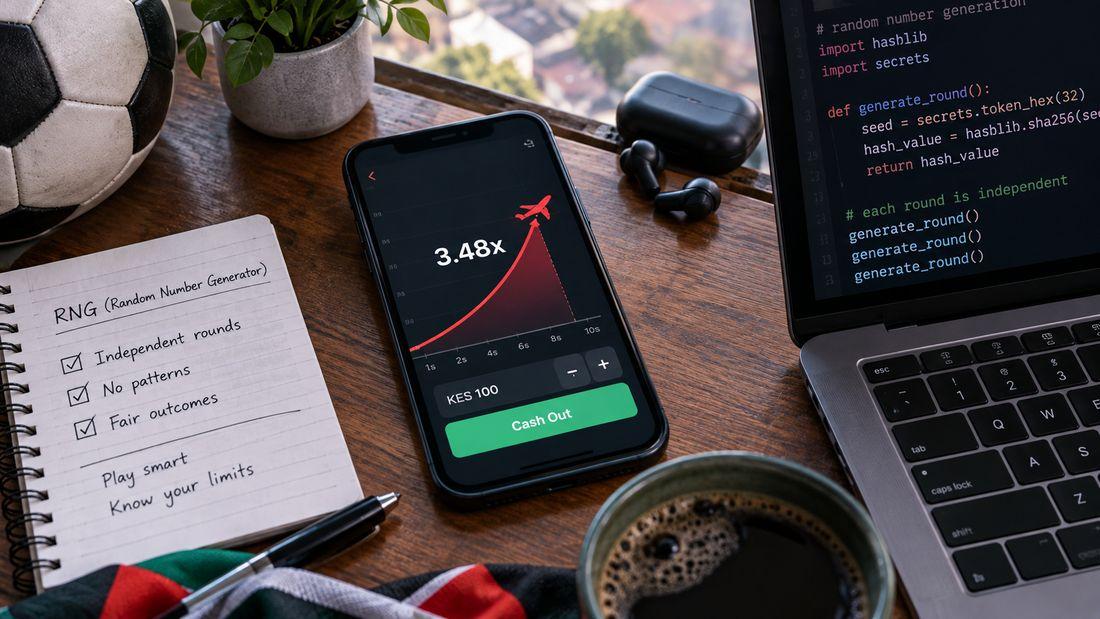
In short: Aviator is a crash game: a multiplier rises until a plane “flies away”, and you win only if you cash out first. Its outcomes come from a random number generator, and reputable versions are “provably fair”, meaning each result is fixed and verifiable before the round starts. That has one blunt technical consequence — past rounds cannot predict the next, so prediction apps do not work. It is legal in Kenya for players 18+, and the only real control is cashing out early with a set limit.
If you spend any time in Kenyan tech and finance circles, you have seen the screenshots: a red curve, a multiplier frozen at some improbable number, and a caption promising a “predictor” that cracked it. It is worth taking that claim seriously enough to actually test it — not with vibes, but with how the software underneath actually works.
So here is how Aviator works Kenya readers can verify rather than take on faith. This is a technical explainer for people who like to know what is happening beneath the interface: what a crash game really is, what a random number generator does, what “provably fair” means in practice, and why every prediction tool being marketed to you is, at a mechanical level, impossible. The responsible-play conclusions at the end are not a disclaimer bolted on — they fall directly out of the maths.

The crash-game concept in one minute
A crash game strips betting down to a single variable. You place a stake, a multiplier starts at 1.00× and rises continuously, and at some point the round ends — the plane “crashes” or flies off-screen. Cash out before that instant and you win your stake times the multiplier at the moment you tapped; miss it and you lose the stake. Aviator is the best-known example, but the format is the same across the genre: one number going up, one decision about when to get off.


What makes it feel different from slots is the illusion of agency. A slot spin resolves the instant you tap; a crash game unfolds over several seconds while you watch, which fools the brain into treating it as a real-time contest you can influence. Mechanically it is not. The end point of the round is not being decided live as the curve rises — it was already decided before the curve started moving. Understanding that one fact reframes everything that follows: the tension you feel watching the plane climb is real, but it is tension about revealing a result, not about shaping one.
RNG and ‘provably fair’, explained
Every legitimate crash game is driven by a random number generator: an algorithm that produces an unpredictable value for each round. That value maps to the crash point — the multiplier at which the round ends. A well-implemented RNG on a licensed platform is independently tested so that outcomes are statistically random and cannot be nudged by the operator round to round.

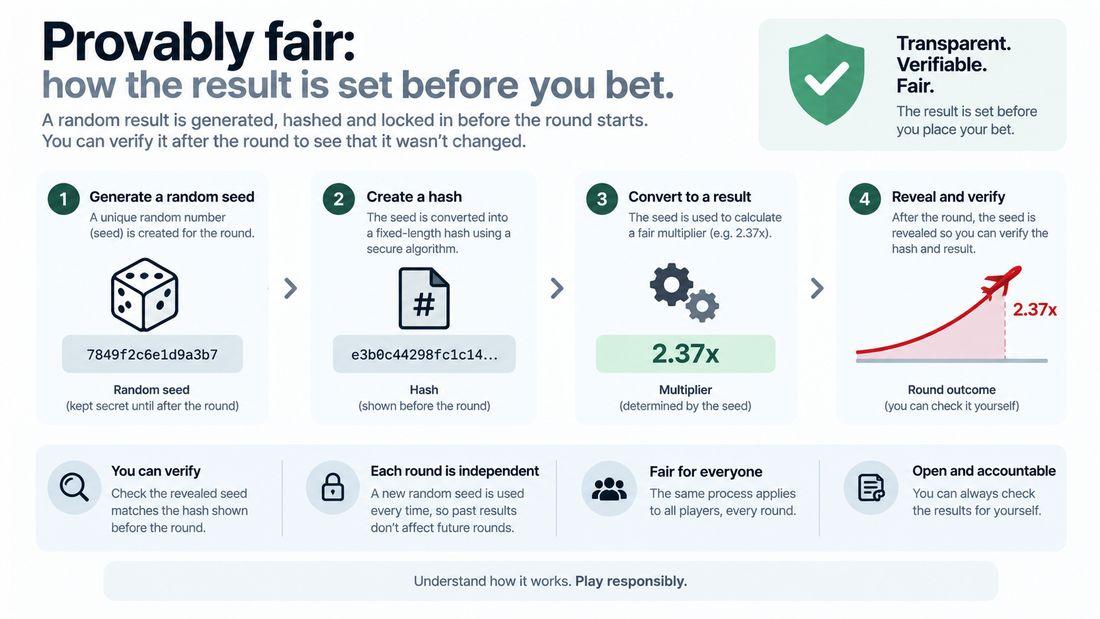
“Provably fair” goes a step further and is worth understanding properly, because it is the crash-game RNG feature most often misrepresented. Before a round, the server generates the outcome and publishes a cryptographic hash of it — a fingerprint that commits to the result without revealing it. Your client contributes its own seed. After the round, the server reveals the original value, and you can hash it yourself and confirm it matches the fingerprint that was published beforehand. In plain terms: the result was locked in before you bet, and you can check, after the fact, that it was not changed. That is genuine transparency about fairness. It is emphatically not a window into the future.
This is the distinction that trips people up. Provably fair proves the operator did not cheat you; it does nothing to help you predict the next crash, because the whole design commits to a result you cannot see until it is too late to act on it. A provably fair crash game is verifiable and unpredictable at the same time — those are not in tension, they are the entire point.
It is worth stressing that the client seed exists precisely so the operator cannot pick a result after seeing your bet. Your side of the transaction contributes entropy the server cannot control, which is why the fingerprint has to be published before either side reveals anything. The system is adversarial by design: it assumes neither party trusts the other and gives both a way to check the round afterwards. That is a genuinely elegant piece of engineering — and it is the same engineering that guarantees you cannot know the outcome in advance, because if you could, so could a cheat.
Why prediction tricks don’t work
Now the predictor apps. The pitch is always some version of “our algorithm reads the pattern and tells you when to cash out.” Set aside the marketing and look at the information available: a genuine predictor would need to know a value that, by construction, is generated randomly and hidden behind a cryptographic commitment until the round resolves. There is no pattern in a properly seeded RNG stream to read, and no side channel that leaks the committed result early. The tool cannot do what it claims because the mathematics forbids it, not because it is poorly made.
What these apps actually do falls into a few buckets. Some are pure scams that harvest your login details or charge a subscription for a random-number display dressed up as a prediction. Some show plausible-looking “signals” that are simply guesses — right often enough by chance to seem credible, since a low-multiplier prediction will frequently land. And some are affiliate funnels designed to push you toward unlicensed sites. None of them beats the RNG, because nothing can. If a result is committed and hidden until after your decision window closes, no amount of software on your side changes the odds by a single percentage point.
The math of cashing out early
Here is where the tech reader gets the one genuinely useful insight. Because outcomes are random and the house holds a long-run edge, your expected value over many rounds is negative regardless of strategy — but the variance of your results changes dramatically with your cash-out target. Aim low, at say 1.3×–1.5×, and you win small amounts often with shallow swings. Aim high, at 10× or more, and you lose most rounds while occasionally hitting a big one, with brutal variance in between.
Neither approach beats the edge; the house margin is baked into the distribution of crash points either way. What the choice actually controls is the shape of your session, not its expected outcome. A low, consistent target keeps a fixed budget lasting longer and the experience calmer; chasing high multipliers burns through the same budget faster in pursuit of a rare payout. There is no “optimal” target that turns a negative expectation positive — anyone claiming one has either made an arithmetic error or is selling something. The honest framing is that early, disciplined cash-outs are a way to control how you spend an entertainment budget, not a way to grow it.
That is also why an auto cash-out set in advance is the tidiest tool the game offers. It removes the real-time emotional decision entirely: you commit to a number while thinking clearly, and the software executes it without the greed or panic that creep in as the curve climbs. It will not make you money over time, but it makes your own behaviour predictable, which is the only variable you actually govern.
It helps to separate two questions that gamblers constantly blur: “is the game fair?” and “can I win at it?” Fairness is a property of the software — a tested RNG and provable outcomes answer it, and Aviator on a licensed site passes. Whether you come out ahead is a property of probability and the house edge, and there the honest answer is that, over enough rounds, you will not. Those are different claims, and a good crash game satisfies the first precisely so it never has to pretend about the second. Keeping them separate in your head is what stops a fair game from being mistaken for a beatable one.
Smart play: limits, 18+, licence
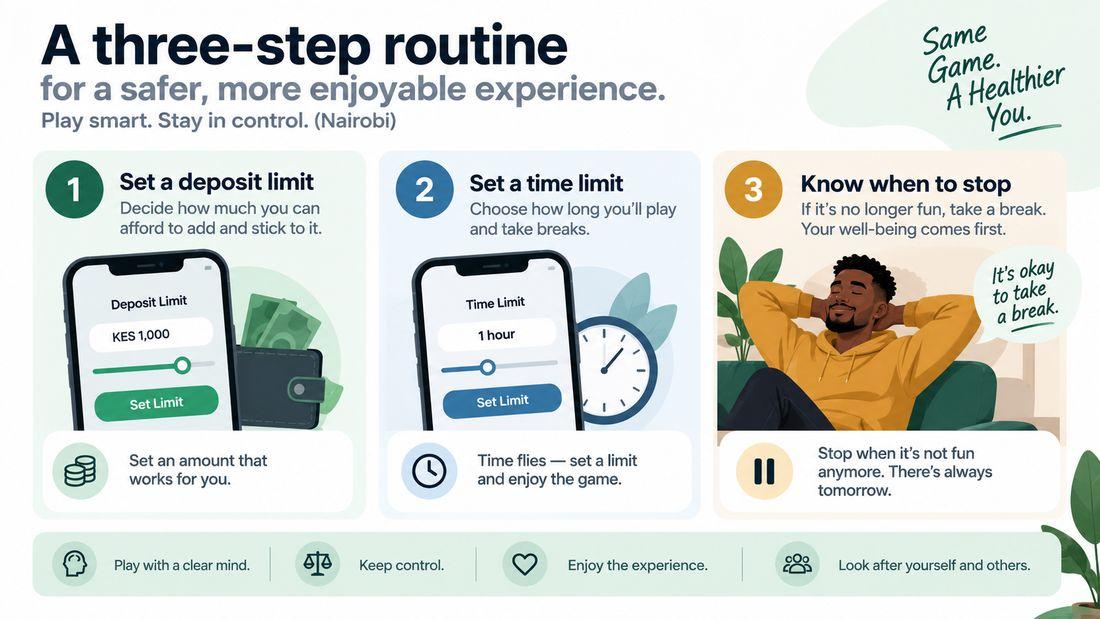
Everything above points to the same practical setup. Decide a deposit limit before you start — an amount whose loss would not affect your week — and set it in the account tools rather than trusting willpower. Pick a modest cash-out target and, ideally, automate it. And never chase: after a loss the RNG is exactly as indifferent as it was before, so raising your stake to “win it back” only raises the amount at risk against unchanged odds.
If you want to see a correctly implemented version rather than a sketchy clone, the Aviator crash game on a licensed operator will expose its fairness information and its limit controls in the interface, which is exactly what a scam site avoids doing.
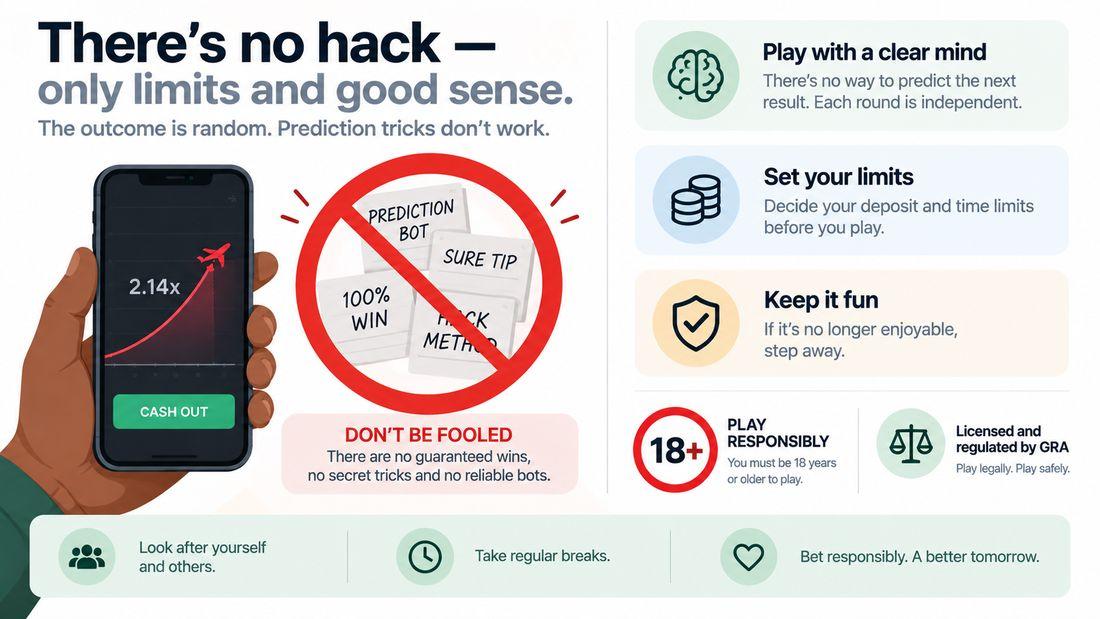
Licensing is the non-negotiable layer. In Kenya, operators are authorised by the Gambling Regulatory Authority, which requires tested RNGs, published responsible-gambling tools and enforcement of the 18+ minimum. A licensed site has a verifiable footprint; an unlicensed one asks you to trust screenshots. The single most protective technical decision you can make is refusing to deposit anywhere that cannot show its licence.
The same reasoning applies to the wider set of casino games Kenya players browse — slots, live tables and other crash titles all carry a built-in house edge, and all should be played only where the licence and the audits are real. You can review the catalogue on the Bangbet Kenya casino and apply the same checks to every title on it.
Treat Aviator as what it is: an elegantly simple, provably fair, provably unpredictable game of chance. Enjoy the mechanics, respect the RNG, and keep the stakes small. When you want to look at it properly, the Bangbet Kenya website is a straightforward, licensed, 18+ starting point — no predictor required, because none exists.
| Play responsibly. Casino games are for adults aged 18+ and are entertainment, not a way to make money. Set a deposit limit, never stake money you cannot afford to lose, and stop when your limit is reached. In Kenya, betting and gaming are regulated by the Gambling Regulatory Authority (GRA, gra.go.ke), which licenses operators and enforces the 18+ minimum. There is no such thing as a guaranteed win. |
Frequently asked questions
Is Aviator rigged?
No — outcomes use an RNG and are often provably fair; past rounds don’t affect the next.
Do predictor apps work?
No; they can’t predict random outcomes.
Sources & further reading: 1) https://gra.go.ke/ (licence/age; record access date). 2) game-provider or operator rules for mechanics, RTP and product claims. 3) recognised responsible-gambling support source. Attribute every number and time-sensitive claim.
Regulator: Gambling Regulatory Authority (GRA) — licensed-operators register (rel: nofollow at publish)
Official source: Football Kenya Federation (rel: nofollow at publish)
Licence check (as of 1 October 2026): before publishing, confirm Bangbet Kenya’s current listing on the Gambling Regulatory Authority (GRA) public register and record the operator licence number in the Editor Packet. 18+, play responsibly.