Apple’s iPhone 18 Pro refines the formula while the new Duo opens a different path for the iPhone

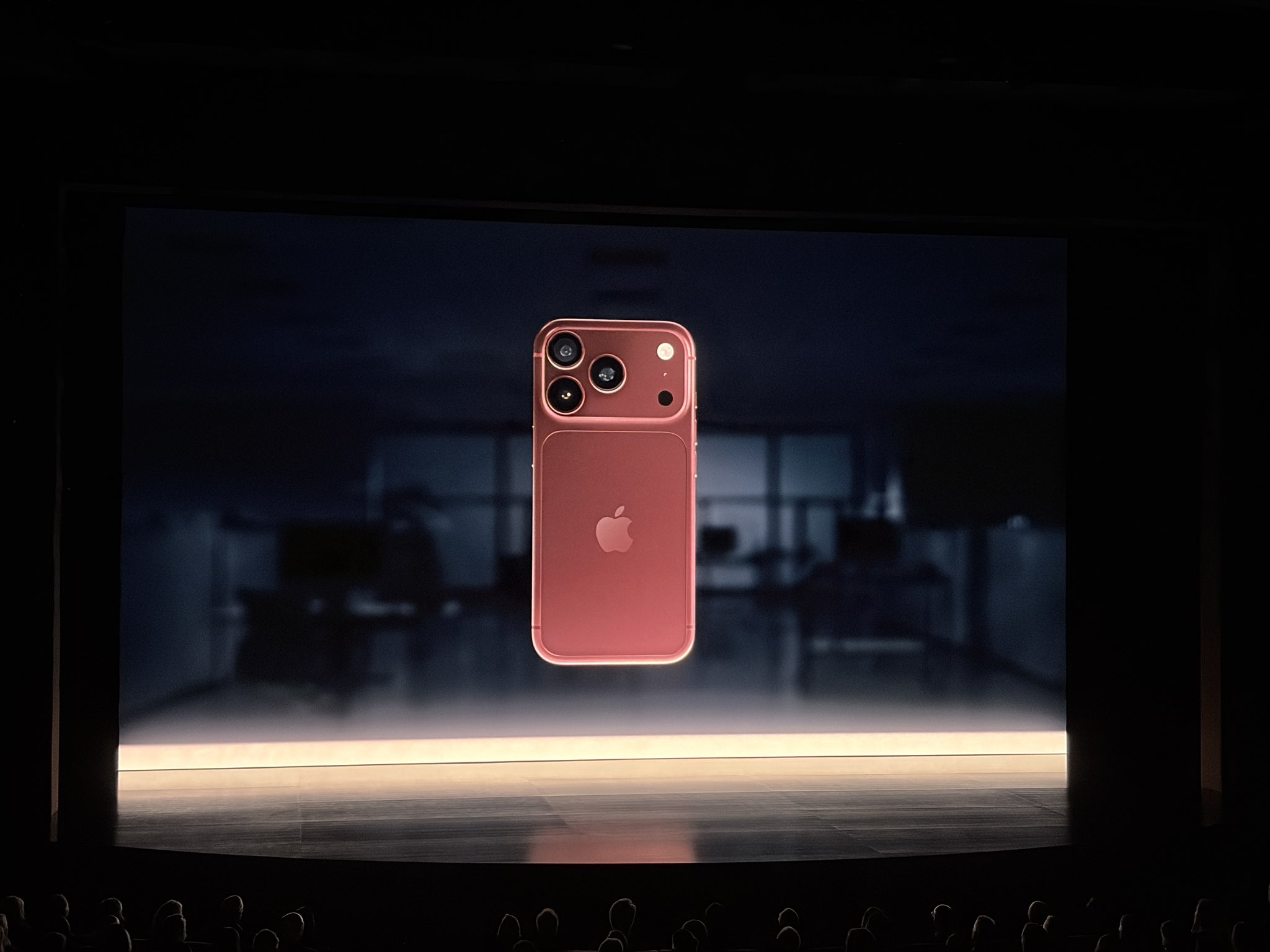
Apple’s iPhone 18 Pro arrives with a familiar shape, but the September 9 launch makes it clear that Apple is putting more of its engineering effort inside that shape.
The 18 Pro and 18 Pro Max bring a 48MP main camera with variable aperture, the 2nm A20 Pro chip, a larger thermal system, longer battery life, a smaller Dynamic Island and a new C2 modem. At the same event, Apple introduced the iPhone Duo, its first foldable iPhone, creating a much sharper dividing line between refinement and reinvention.
That makes the iPhone 18 Pro more interesting than a specification sheet suggests. Apple has spent much of the iPhone’s history making particular generations memorable through a combination of hardware and software changes: the iPhone 4 established the Retina-era design, the 5S brought Touch ID, the iPhone X changed the interface around Face ID and gestures, and the 11 Pro gave the modern Pro line its three-camera identity. The 13 Pro added ProMotion, the 15 Pro introduced titanium and USB-C, while the 17 Pro brought another major physical redesign and a new thermal approach. The 18 Pro takes a different route, concentrating its changes on photography, computing, thermals and battery life.
The iPhone 18 Pro is a deeper refinement
The exterior will immediately tell an existing 17 Pro owner that Apple has chosen continuity. The 18 Pro is similar in design to its predecessor, which makes the new internal hardware more important to how this generation is judged. The $1,199 starting price for the 18 Pro and $1,299 for the Pro Max also put more pressure on those improvements to be useful rather than merely impressive on a specification sheet.
The strongest change is the camera. Apple has added a 48MP Fusion Main camera with a physical variable aperture, using six blades that move between four aperture settings. The system can widen the aperture in darker conditions, use ƒ/1.8 for portraits and narrow to ƒ/4 when more of a group or scene needs to remain in focus. That gives the main camera a physical optical control that complements the computational processing already doing much of the work on modern smartphones.
The camera finally gives the Pro a physical advantage
Variable aperture is not a new smartphone concept, so the significance of Apple’s implementation needs to be stated carefully. Earlier phones, including Samsung models, have used variable-aperture systems, but the 18 Pro brings the idea into Apple’s current computational photography pipeline and exposes it through the Camera app. The company is also giving users manual control over aperture, shutter speed and white balance, alongside a histogram for judging exposure.

That combination changes the character of the Pro camera. A typical iPhone owner can still leave the system to make most decisions automatically, while photographers who want control can adjust the physical aperture and shutter speed themselves. Apple’s camera system therefore sits somewhere between the traditional smartphone approach of computational automation and a more conventional photographic workflow.
The change is particularly useful because aperture affects more than brightness. A wider opening can admit more light and produce shallower depth of field, while a narrower opening can keep more of a scene in focus. On a phone, where sensors and lenses remain physically constrained, Apple’s ability to combine those optical choices with computational processing gives the main camera another variable to work with.
Apple Reference Image changes the camera conversation
There is another camera feature that could matter beyond photography itself. Apple Reference Image creates a signed reference from sensor data at capture and stores it alongside the normal editable photograph. Private Cloud Compute develops that signed data into an unalterable reference image, allowing the original capture to be compared with an edited version.
That is a response to a problem that has become harder to ignore as generative AI becomes part of everyday image creation. A photograph can now be edited, extended or generated with tools that make visual inspection alone less useful for establishing provenance. Apple’s approach does not make every image universally “real”, but it gives compatible images a cryptographically signed reference tied to the original camera capture.
For journalists, photographers and organisations that need to establish where an image came from, that distinction could matter. Apple is also adding support for the SynthID standard for identifying AI-generated or edited images, although availability varies by region and some parts of the system arrive later.
A20 Pro is about sustained performance
The A20 Pro is another major part of the 18 Pro story. It uses a 2nm process, a six-core CPU, a seven-core GPU and dual 16-core Neural Engines, giving the chip 32 Neural Engine cores in total. Apple says the GPU is up to 40 percent faster than the A19 Pro and that memory bandwidth is 50 percent higher.
The more practical change is the thermal system. Apple has increased the vapor chamber’s surface area to three times that of the 17 Pro and redesigned the chip packaging so the silicon can connect directly to the cooling system. The company says this enables up to 40 percent higher sustained performance than the previous generation.
That distinction between peak and sustained performance is important for demanding games, video workflows and AI processing. A phone can deliver a high benchmark score for a short period and then reduce performance as heat builds. A more capable cooling system is useful precisely because it addresses the period after the initial burst, when sustained workloads become more demanding.
Battery becomes a practical upgrade
Battery life is another area where the 18 Pro has a change users can understand without looking at a benchmark. Apple says eSIM-only versions of the 18 Pro can deliver up to 36 hours of video playback, while the Pro Max reaches up to 45 hours. The Pro can reach 50 percent charge in around 15 minutes using wired charging, while Apple says five minutes of wired charging on the Pro Max can provide around seven hours of video playback.
Apple also gives the Pro Max a separate figure of up to 30 hours of usage based on a usage model built from real-world data. That should not be confused with the 45-hour video playback figure, since the two measurements describe different workloads. The larger battery and silicon efficiency therefore matter as much for how long the phone can remain useful during a normal day as they do for headline playback figures.
AI is central, but availability matters
Apple is also presenting the iPhone as an “intelligent personal hub”, with Siri AI able to work with personal context across messages, email and other information, understand what is on screen and interact with compatible applications. The event transcript makes clear that Apple sees the iPhone itself, rather than a separate AI device, as the centre of this experience.
There is an important qualification. Siri AI launches as a beta with iOS 27, initially in English, with French, Japanese, Korean, Portuguese and Spanish scheduled for October. Apple also says some server-dependent Apple Intelligence features have daily usage limits, while regional and language availability can differ. That means the AI story should be judged partly on what users can actually access in their market rather than on the full capability Apple demonstrated on stage.
That is particularly relevant to Kenya and other African markets. Apple has not listed Kenya among the first-wave markets for iPhone 18 Pro availability, so the U.S. starting price should not be treated as a Kenyan retail price, and the precise local availability of the new AI functions needs confirmation when Apple’s regional rollout is clearer.
iPhone Duo is the bigger physical change
Then Apple introduced Duo.
The foldable has a 5.4-inch outer display that opens into a 7.6-inch internal screen, with a titanium frame, an under-display camera for the inner screen and Touch ID built into the side button. Apple has also redesigned iOS 27 around the larger display, allowing applications to sit side by side and giving the interface different layouts when the device is opened.
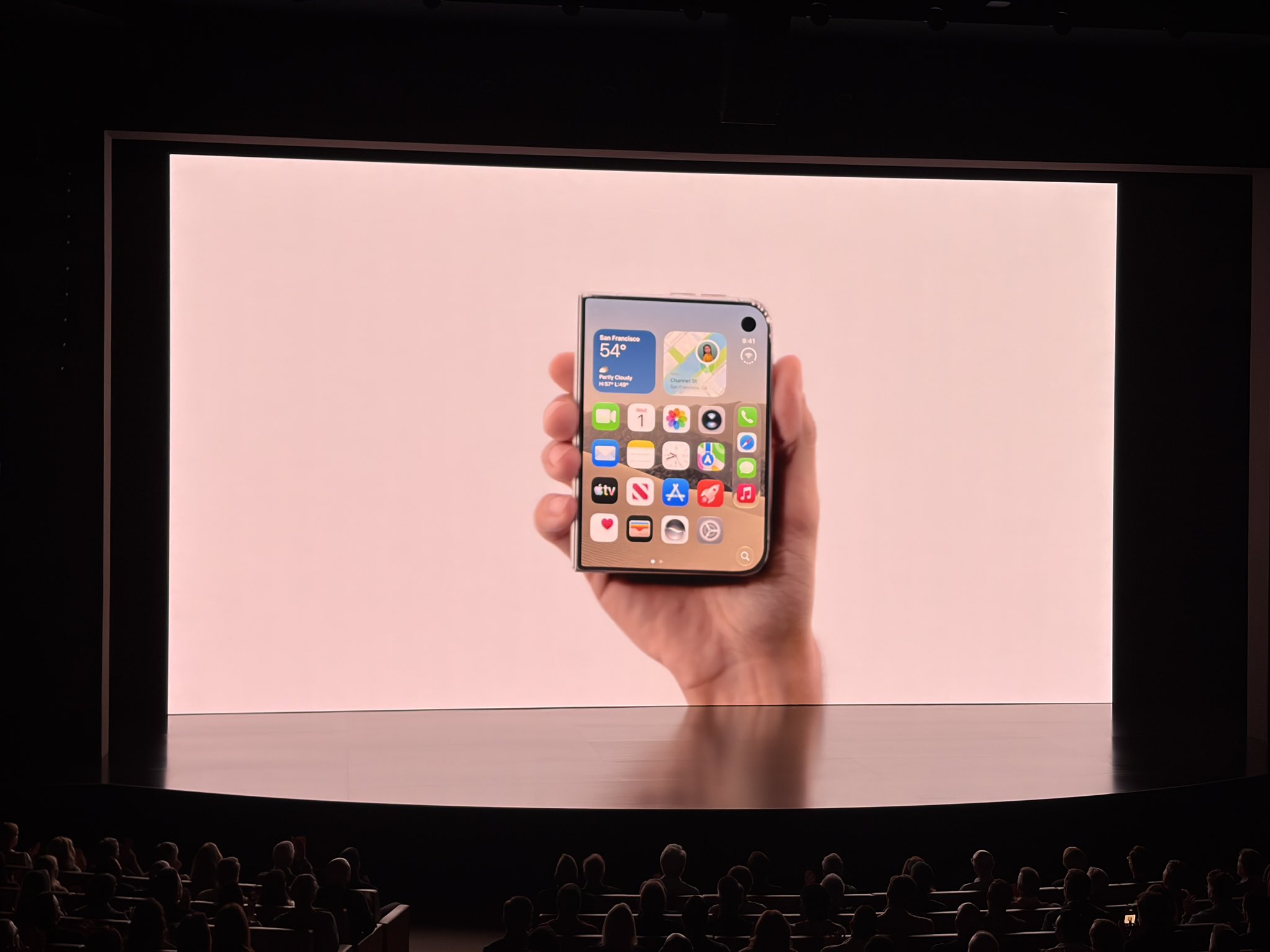
At $1,999 for 256GB, Duo sits far above the $1,199 iPhone 18 Pro and $1,299 Pro Max. That pricing creates a clearer hierarchy inside Apple’s smartphone range: the Pro remains the premium conventional iPhone, while Duo occupies a new category above it.
The timing also matters in a competitive sense, even if Apple is arriving after Samsung and other manufacturers established foldable phones. Apple now has to demonstrate that its hardware and software integration provides a sufficiently different experience to justify the premium. The 7.6-inch display, multitasking features and foldable-specific version of iOS 27 give it a basis for that argument, but the longer-term judgement will depend on how the device performs outside Apple’s launch presentation.
Apple now has two answers for the future of the iPhone
The iPhone 18 Pro is therefore best understood as a mature iPhone pushed deeper into its existing strengths. Its variable-aperture camera gives the Pro a new physical dimension, A20 Pro and the redesigned cooling system focus on sustained computing, and the battery improvements address one of the most visible limitations of high-performance smartphones. Apple has also begun treating image provenance as part of the camera experience and AI as part of the phone’s core function.
Duo answers a different question. It changes the physical definition of the iPhone and forces Apple to rethink how iOS behaves when a pocket-sized device becomes a much larger screen. That makes the September 9 launch unusual because the most significant conventional iPhone is not necessarily the product that changes the company’s hardware formula most dramatically.
The 18 Pro may ultimately be remembered for how far Apple pushed the conventional smartphone through cameras, silicon and sustained performance. Duo has the clearer opportunity to become the product people associate with the next major physical step in the iPhone’s history. Apple has effectively put both ideas on the table at once: refine the phone people already know, and change what the phone can be.
Real ESG impact doesn’t happen in panels alone, it happens in the rooms where financiers, operators, and policymakers actually align. Our GreenShift Forum 2026 cuts the noise, bringing together the people rewiring Africa’s sustainability and energy frameworks for one focused day in Nairobi. Secure your seat.
Go to TECHTRENDSKE.co.ke for more tech and business news from the African continent and across the world.
Follow us on WhatsApp, Telegram, Twitter, and Facebook, or subscribe to our weekly newsletter to ensure you don’t miss out on any future updates. Send tips to editorial@techtrendsmedia.co.ke