
John Ternus takes over Apple with AI, the foldable iPhone and a management reset ahead

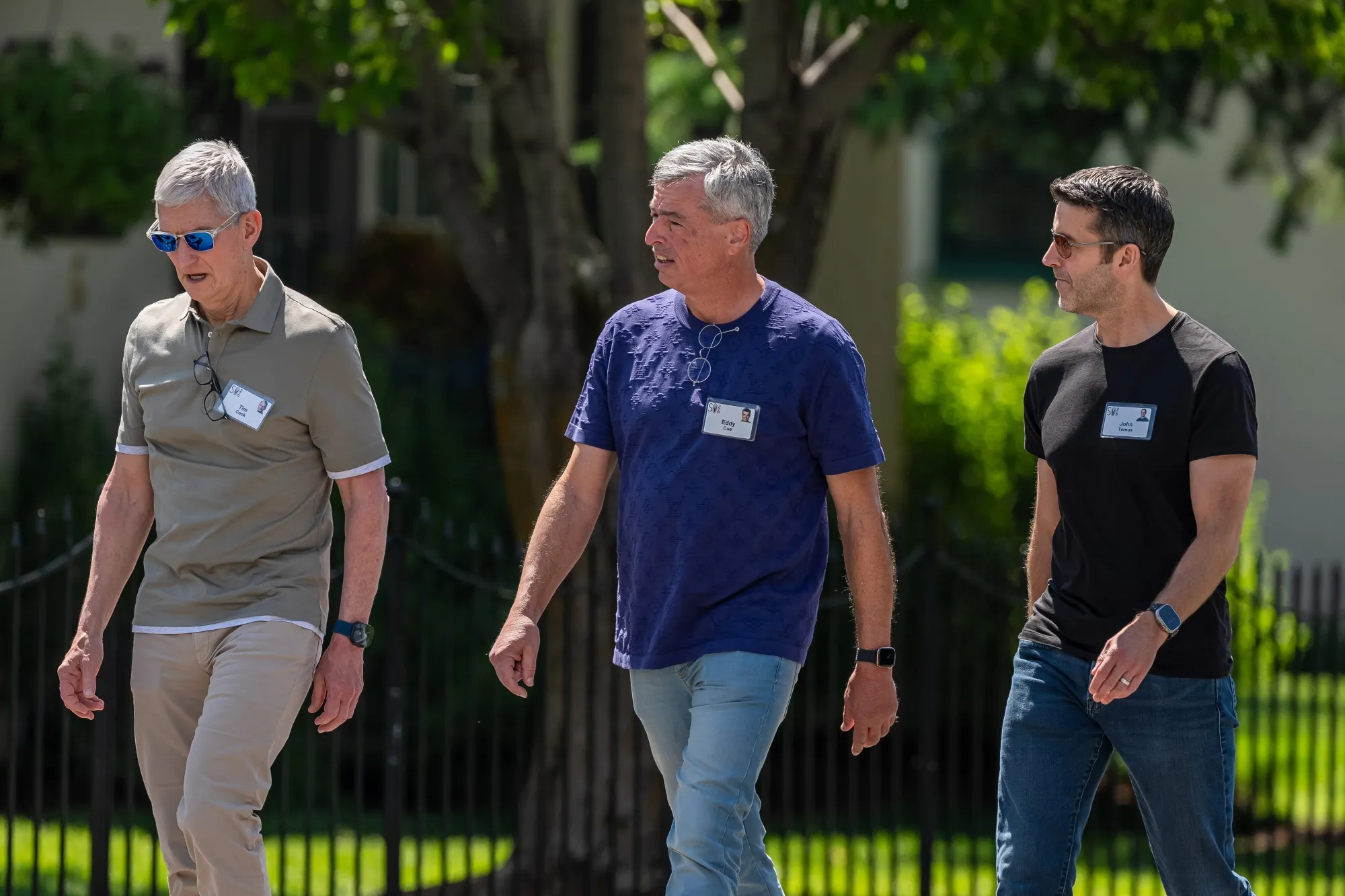
John Ternus becomes Apple CEO on September 1, taking over from Tim Cook after 15 years at the helm. But the handover comes with a complication that goes beyond the change in title: Ternus inherits an Apple executive team that is already being rebuilt.
Cook is moving into the role of executive chairman rather than leaving Apple, preserving a direct link with the company he has led since succeeding Steve Jobs in 2011. His final day as CEO came with a message to employees in which he said he was handing the helm to someone he considered “brilliant and wonderful and capable,” while expressing confidence in Ternus’s understanding of product development.
That continuity will matter as Apple enters one of the most consequential transitions in its recent history. Ternus arrives with responsibility for defending the iPhone franchise, fixing Apple’s uneven artificial intelligence effort and deciding how much of the company’s management structure should remain intact as a generation of veteran executives approaches retirement.
Ternus takes the helm as Cook steps back
Cook’s succession has been planned rather than sudden. Apple has already replaced several senior executives who formed the backbone of his administration, including longtime CFO Luca Maestri and COO Jeff Williams. General counsel Kate Adams and environment chief Lisa Jackson have also departed or moved out of their previous positions.
That preparation gives Ternus some breathing room, but it also means he is inheriting a company in the middle of a wider personnel transition. The new CEO does not have the luxury Cook enjoyed when he succeeded Jobs, when much of Apple’s senior leadership remained firmly in place and was still several years away from retirement.
The difference is important because Apple’s culture has been heavily shaped by executives who have worked alongside Jobs, Cook or both. Some of those leaders have spent decades inside the company, accumulated considerable institutional knowledge and, in several cases, built organizations that are difficult to replace with a single successor.
Ternus, 51, is therefore taking over an Apple whose senior ranks are older and more established than they were when Cook became CEO.
Apple’s leadership transition is already underway
One of the clearest examples arrived just before Ternus’s first day in the job.
Phil Schiller, 66, has stepped down from responsibility for the App Store and Apple’s product events, according to Bloomberg reporting. Schiller will remain at Apple as an Apple Fellow and work on other initiatives, but the move removes two of his most significant remaining operational responsibilities.
Schiller is hardly an ordinary executive departure. He joined Apple decades ago, worked closely with Jobs and became one of the company’s most recognisable public figures during the launches of products including the iPhone, iPad, iPod and Mac. He also played a central role in creating the App Store and later became responsible for navigating its increasingly complicated relationship with developers, regulators and competitors.
The timing makes the change particularly significant. Ternus takes over as CEO just as another member of Apple’s old guard relinquishes responsibilities that once sat outside the core services organization.
Schiller’s App Store exit gives Eddy Cue more authority
Apple is moving responsibility for the App Store into the services division led by Eddy Cue, reversing an organizational arrangement that had separated the App Store from Cue’s group in 2015.
Carson Oliver will run the App Store on a day-to-day basis and report directly to Cue. Ann Thai, who had been responsible for areas including alternative app distribution and third-party marketplaces, will report to Oliver, while Apple Arcade executive Alex Rofman will also sit under the new structure.
The reorganization gives Cue an even broader role at Apple at precisely the moment Ternus begins his tenure. Cue already oversees a large collection of businesses spanning services, entertainment, music, sports and cloud-related operations, and Bloomberg’s Mark Gurman expects him to become one of the more influential executives in the Ternus administration.
Schiller’s departure also illustrates why Ternus will eventually have to rethink Apple’s management architecture rather than simply replace individual executives one for one. The App Store and product events are moving into different parts of the organization, with Nola Weinstein taking responsibility for events and reporting to communications chief Kristin Huguet Quayle.
For Ternus, that kind of redistribution could become a recurring feature of the next few years.
Ternus faces an experienced but ageing executive bench
Several of Apple’s most important executives are approaching the point at which succession planning will become unavoidable.
Deirdre O’Brien, who oversees retail and people functions, is 60 and has spent nearly four decades at Apple. Her likely retail successor is Vanessa Trigub, who was appointed vice president responsible for retail store operations. Apple could also look internally or externally for a replacement for O’Brien’s people responsibilities.
Johny Srouji, the company’s chief hardware officer, is another potentially important departure. At 61, Srouji has already considered leaving Apple and stayed in part to help with the transition to Ternus. His major silicon projects have reached important milestones, including Apple’s move away from Intel processors and its work to develop its own modem technology.
If Srouji eventually leaves, Apple could divide the combined hardware organization again, with separate leadership for engineering and technologies. Tom Marieb, Sri Santhanam and Zongjian Chen are among the executives Gurman identifies as possible figures in such a restructuring.
Marketing presents another succession question. Greg Joswiak, known internally as Joz, has spent about four decades at Apple and is 62. Lilian Rincon, who now oversees artificial intelligence marketing, and longtime iPhone marketing chief Kaiann Drance are among the potential successors being considered, while Bob Borchers could serve as an interim option.
The scale of that institutional turnover matters because these executives aren’t simply department heads. They hold knowledge about Apple’s products, suppliers, developers, marketing machinery and internal decision-making that has accumulated over decades.
AI and the next iPhone will test the new CEO
The personnel changes would be significant under any circumstances, but Ternus is arriving when Apple also needs to demonstrate that it can compete convincingly in artificial intelligence.
Apple’s AI ambitions have become one of the biggest tests of the company’s ability to turn its enormous installed base and hardware expertise into a new growth engine. The early priority for Ternus will be making Apple’s AI products more coherent and useful while restoring confidence in the company’s ability to execute against rivals.
His first major product cycle will provide an unusually visible test.
Apple is expected to unveil its next generation of iPhones at an event on September 9, only days after Ternus formally becomes CEO. The event is expected to feature the iPhone 18 range, new Apple Watch models and, most importantly, Apple’s first foldable iPhone.
The foldable device gives Ternus an opportunity to establish his own product credentials almost immediately. It also illustrates the kind of experimentation taking place inside Apple as the company looks beyond the traditional iPhone form factor.
Apple reportedly tested a shortened Apple Pencil designed specifically for the foldable iPhone, including magnetic attachment and charging. The accessory is not expected to launch with the device, and the delicate nature of foldable displays presents obvious engineering complications, but the experiment shows Apple has considered ways to extend the phone into territory traditionally associated with the iPad.
That matters less as a product prediction than as a glimpse into the decisions facing Ternus. Apple has to decide which experiments deserve to become products and which should remain prototypes, while maintaining the discipline that has traditionally distinguished its hardware strategy.
Cook remains close as Apple enters the Ternus era
The change at the top will therefore be gradual. Cook is leaving the CEO position but remaining executive chairman, while some of the executives who shaped his administration will continue working alongside Ternus even as their responsibilities are redistributed.
Cook’s final message to employees reflected that balance. He wrote that he would remain at Apple and looked forward to seeing employees at Apple Park and around the world, while saying he was at peace with stepping away from the role he had held for 15 years.
Ternus will have access to that experience, but he will ultimately have to establish his own management style. His background is fundamentally different from Cook’s: Cook came from operations and supply-chain management, while Ternus rose through Apple’s hardware organization and became one of the company’s most important product leaders.
That distinction could become important as Apple confronts the next phase of its business. The company needs to keep its enormous existing businesses running smoothly while making decisions about AI, new hardware categories, services and the executive structure that will carry those businesses into the next decade.
The September 9 product event will provide the first public test of Ternus’s Apple. The harder work, however, will happen behind the scenes, where he must determine which parts of the Cook-era organization should survive, which responsibilities should be consolidated and who will eventually replace the generation of executives who helped build the company into what it is today.
The Ternus era therefore begins with considerable continuity, but the Apple he inherits is already changing at the top.
Real ESG impact doesn’t happen in panels alone, it happens in the rooms where financiers, operators, and policymakers actually align. Our GreenShift Forum 2026 cuts the noise, bringing together the people rewiring Africa’s sustainability and energy frameworks for one focused day in Nairobi. Secure your seat.
Go to TECHTRENDSKE.co.ke for more tech and business news from the African continent and across the world.
Follow us on WhatsApp, Telegram, Twitter, and Facebook, or subscribe to our weekly newsletter to ensure you don’t miss out on any future updates. Send tips to editorial@techtrendsmedia.co.ke


