
Why Safaricom's Ethiopia Stake Grew to 54.17% and Why It May Not Stay There

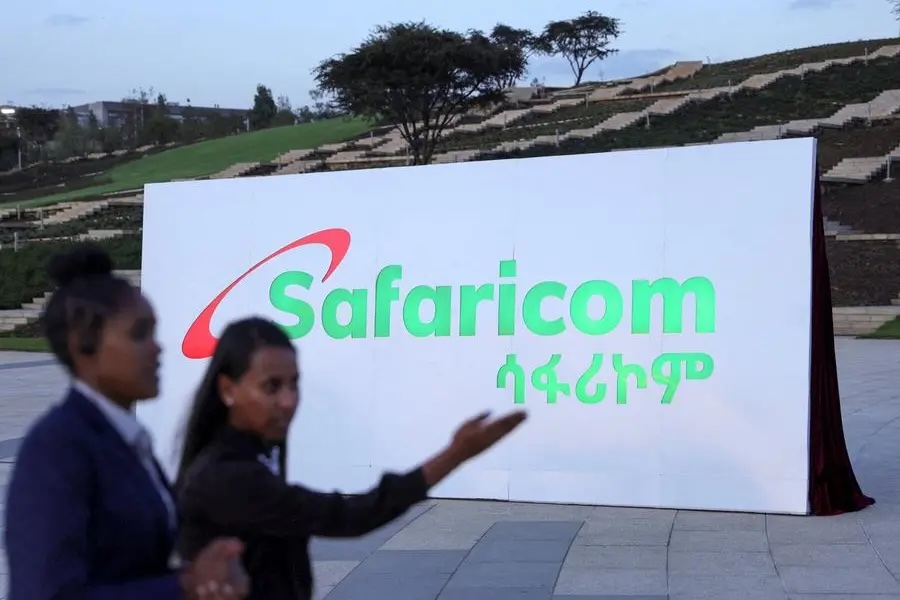
Safaricom’s Ethiopia stake increased to 54.17% after the company led a fresh capital injection into its Ethiopian subsidiary during the financial year ended March 2026. The ownership increase, however, does not necessarily represent a permanent transfer of equity. Documents published in the company’s annual report show that consortium investors who did not participate in the funding round retain contractual rights to restore their previous ownership levels in the future.
That detail changes how the latest ownership figures should be interpreted.
Rather than marking a lasting expansion of Safaricom’s control, the increase reflects how the consortium agreed to finance one of Africa’s largest greenfield telecommunications projects while preserving flexibility for existing investors.
Safaricom Funded the Latest Capital Round Alone
Safaricom and its South African parent, Vodacom Group, participated exclusively in a KSh21.3 billion capital raise through their investment vehicle, Vodafamily Ethiopia Holding Limited.
Safaricom contributed KSh19.64 billion, lifting its ownership in Safaricom Telecommunications Ethiopia Plc from 51.67% to 54.17%. Vodacom’s interest also rose, taking the pair’s combined holding from 57.41% to 60.19%.
Sumitomo Corporation, British International Investment (BII) and the International Finance Corporation (IFC) did not participate in that funding round. Their ownership was diluted proportionately, reducing the consortium’s combined minority stake from 42.59% to 39.81%.
Such dilution is a standard consequence when existing shareholders choose not to participate in a capital call.
Why Other Investors Were Diluted
The latest funding round should not be viewed as an indication that the minority investors are stepping away from Ethiopia.
Safaricom’s annual report states that the shareholders’ agreement allows those investors to reclaim the ownership they temporarily lost.
They can restore their original holdings by purchasing the relevant shares from Safaricom and Vodacom or by participating in future capital raises that Safaricom and Vodacom decide not to join.
That arrangement allows the consortium to keep funding the business whenever capital is required without permanently changing the long-term ownership structure after every financing round.
The increase to 54.17% therefore reflects who funded this particular round rather than a negotiated redistribution of ownership.
The Catch-Up Rights Could Reverse the Ownership Change
The catch-up provision becomes more significant because the Ethiopia business is approaching a different commercial stage.
Safaricom expects the operation to reach break-even by March 2027 after narrowing annual losses from KSh36 billion to KSh21.2 billion.
Revenue reached KSh14 billion during FY2026, led by KSh9.5 billion from mobile data, KSh3 billion from voice services and KSh169.4 million from M-Pesa. Active customers grew to 13.6 million.
Those figures present a business that still requires investment while generating stronger commercial performance than in previous years.
If consortium partners conclude that much of the early execution risk has passed, exercising their catch-up rights could become a more attractive option.
The Ethiopian Business Is Entering a Different Phase
The latest capital injection also supported work beyond network expansion.
Safaricom disclosed that part of the funding reduced deferred vendor liabilities tied to network infrastructure while helping strengthen the subsidiary’s balance sheet. The company has also expanded its use of local borrowing as it gradually reduces reliance on shareholder equity.
Total funding committed to the Ethiopian operation reached KSh341.7 billion by March 2026.
Safaricom alone has contributed about KSh158 billion since the project began, underlining its position as the largest financial backer within the consortium.
That level of investment explains why the company’s ownership increased after other shareholders chose not to inject fresh capital during the latest funding round.
What This Means for Safaricom Shareholders
The immediate financial effect is straightforward.
Safaricom owns a larger share of the Ethiopian business today than it did a year ago. If the minority investors never exercise their contractual rights, Safaricom would retain a greater share of future earnings and dividends once the operation becomes profitable.
The shareholder agreement, however, means investors should avoid assuming that the current ownership percentages are permanent.
The more important development is that the consortium has established a mechanism that keeps funding available without forcing long-term ownership changes whenever some investors decide to skip a capital raise.
For Safaricom, the latest disclosure also highlights another reality.
The company continues to carry much of the financial responsibility for building its Ethiopian operation while moving closer to the point where years of investment are expected to begin contributing positively to group earnings rather than weighing on them.
Download the free Kaspersky SMB Cybersecurity Guide here to learn how businesses can move beyond traditional antivirus and build a more resilient approach to cybersecurity.