

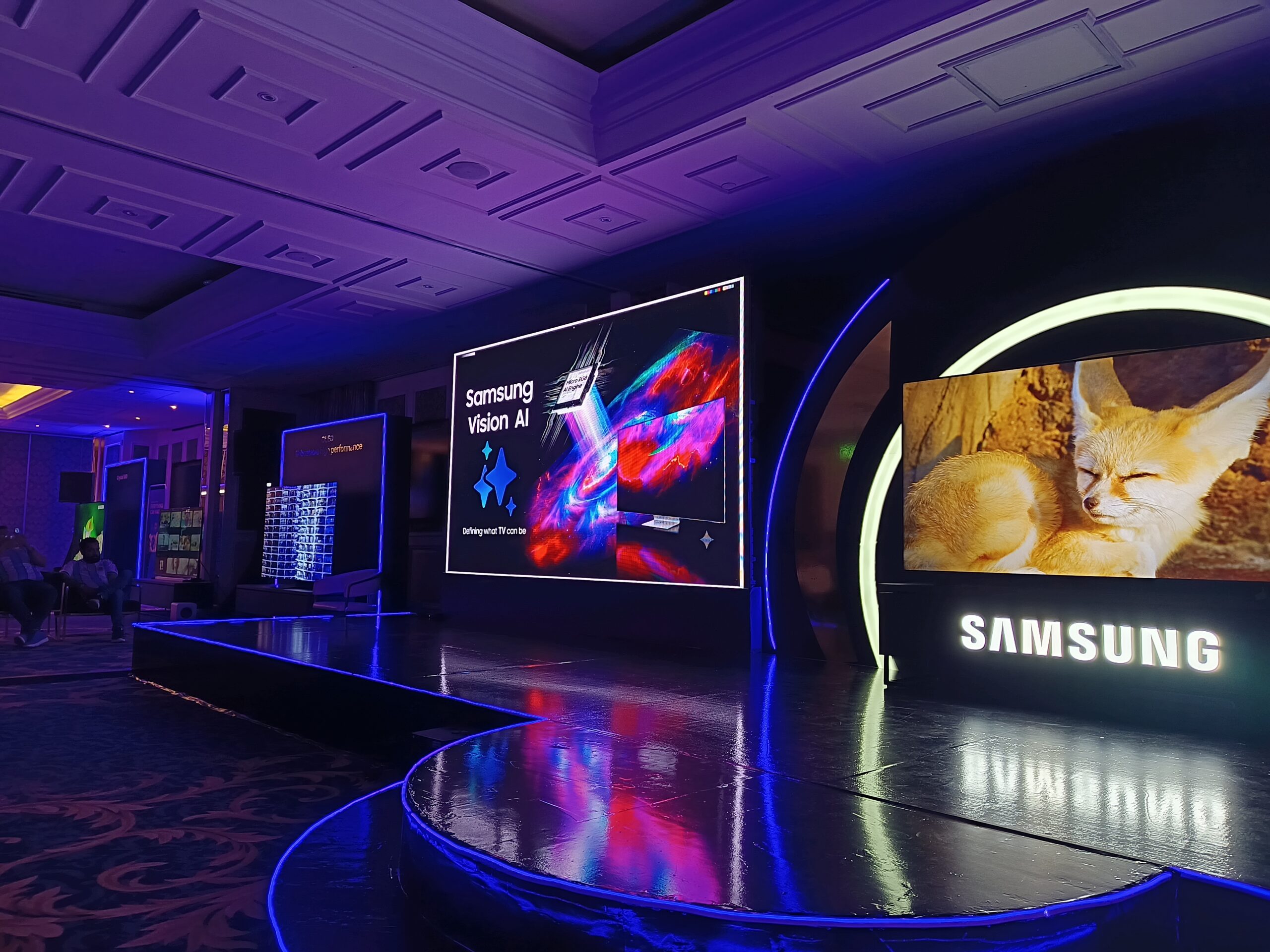
Televisions have for years competed on familiar territory. Manufacturers promised brighter panels, sharper resolution and larger screens, while the connected features often remained secondary.
Samsung now believes that equation is changing.
During the unveiling of its 2026 television lineup in Nairobi, the company spent as much time talking about software, artificial intelligence and connected devices as it did display technology. The presentation suggested that Samsung no longer sees the television as the final stop for entertainment. Instead, it is positioning the TV as the screen people interact with most inside the home.
That ambition runs through Vision AI, SmartThings and Samsung’s broader Galaxy ecosystem.


Samsung’s executives repeatedly returned to one idea throughout the launch.
The television already occupies the largest screen in most homes. The company believes it should also become the easiest place to manage everything connected to it.

That extends the TV beyond streaming services and live sport.
Instead of reaching for a phone to check connected appliances or smart home notifications, Samsung wants those interactions to happen directly from the television.
The result is a screen designed to move between entertainment, home management and everyday information without requiring viewers to switch devices.
SmartThings has traditionally been associated with smartphones.
Samsung is now giving the platform a much more visible role inside the living room.
During the demonstrations, televisions displayed connected devices across the home through a central dashboard. Users could monitor compatible appliances, receive alerts and adjust settings without opening another device.
Notifications from Samsung products also appeared directly on screen, keeping household updates alongside whatever viewers were already watching.
The television becomes the dashboard rather than simply another endpoint.
Samsung’s Vision AI extends beyond improving picture quality.
The company demonstrated how the television understands what is happening on screen before presenting relevant information.
During live football broadcasts, Vision AI Companion identified players and surfaced contextual information while the match continued uninterrupted.
That same approach carries into everyday use.
Rather than asking users to navigate multiple menus, Vision AI is designed to anticipate what information might be useful based on the content currently playing.
The goal is to reduce friction rather than increase the number of features available.
Samsung is also broadening the software ecosystem available through its televisions.
Native integrations with Microsoft Copilot and Perplexity AI allow users to ask conversational questions directly from the TV interface, whether searching for films, looking up information or discovering new content.
The television becomes another access point for generative AI rather than depending on a laptop or smartphone.
That approach also strengthens Samsung’s wider Galaxy ecosystem by extending AI experiences across multiple categories of devices.
Samsung confirmed that its latest premium televisions will receive seven years of Tizen OS upgrades.
While long software support has become common in smartphones, televisions have rarely received the same attention.
The commitment reflects Samsung’s view that connected televisions are evolving into long-term computing platforms rather than products that remain unchanged after purchase.
Security forms part of that strategy as well.
Samsung Knox protects user information across the television while SmartThings Find can help locate compatible Galaxy devices from the TV interface.
The most revealing part of Samsung’s presentation was not a demonstration of brighter colours or sharper images.
It was the amount of time devoted to software.
Vision AI, SmartThings, Galaxy AI, Copilot, Perplexity and long-term Tizen support all pointed toward the same objective: making the television the central interface for the connected home.
That represents a broader evolution in Samsung’s television strategy.
The company is no longer asking consumers to think about the TV only as a display for films, sport or gaming. It is building a platform that brings together entertainment, artificial intelligence and home management on the largest screen people own.
Download the free Kaspersky SMB Cybersecurity Guide here to learn how businesses can move beyond traditional antivirus and build a more resilient approach to cybersecurity.
Go to TECHTRENDSKE.co.ke for more tech and business news from the African continent and across the world.
Follow us on WhatsApp, Telegram, Twitter, and Facebook, or subscribe to our weekly newsletter to ensure you don’t miss out on any future updates. Send tips to editorial@techtrendsmedia.co.ke